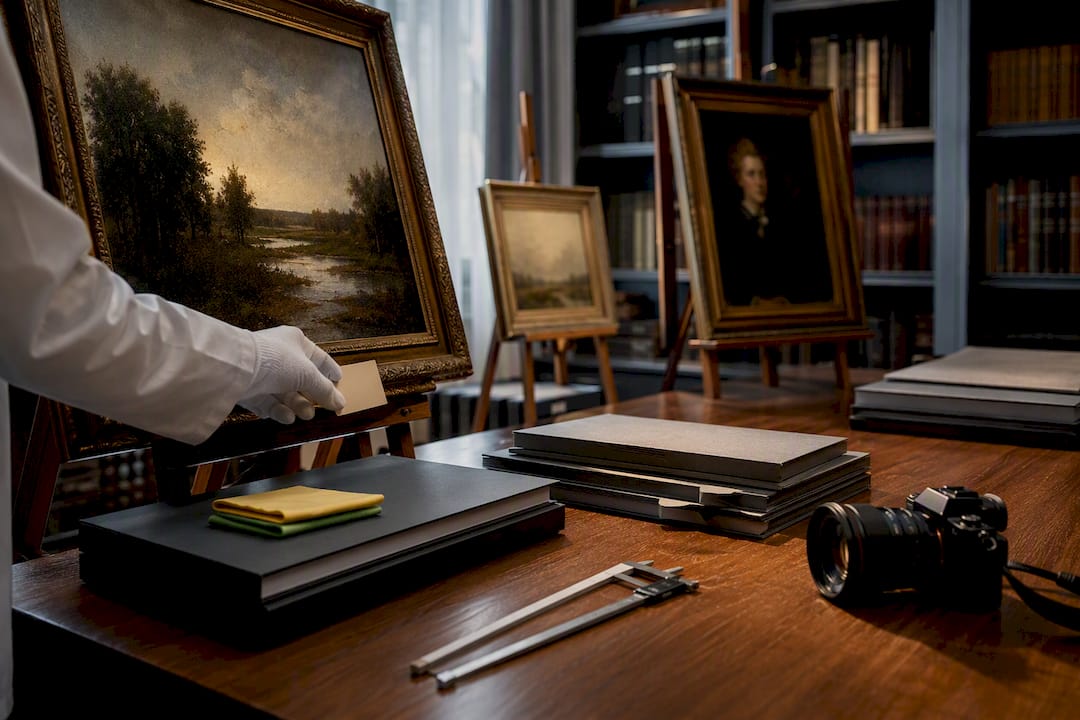

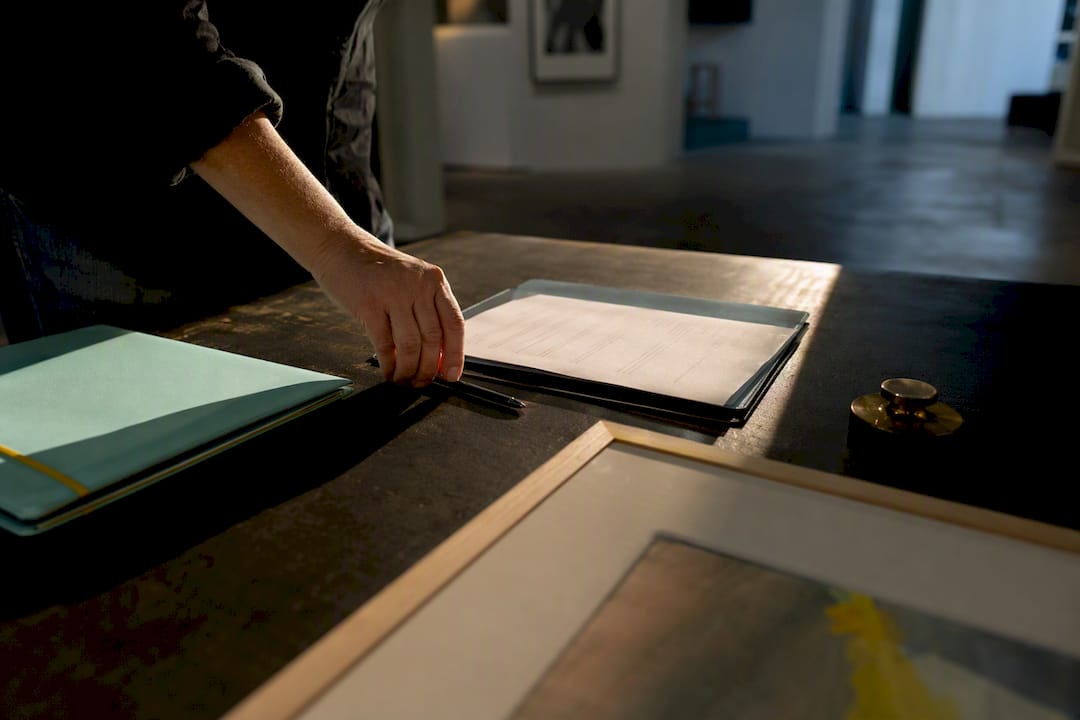
An art bill of sale is the signed document that transfers physical ownership of a work and records the terms of the sale. It must name the buyer and seller, fully describe the artwork, state the price and payment terms, and clarify whether copyright transfers or stays with the artist. Sign it, give each party a copy, and store it with your certificate of authenticity and sale photos.
TL;DR:
- A thorough art bill of sale must clearly specify ownership transfer rights, detailed artwork description, sale price, payment method, and delivery terms to ensure legal clarity.
- Copyright clauses should explicitly state whether the buyer acquires reproduction rights or if the artist retains them, to prevent misunderstandings post-sale.
- Maintaining linked documentation such as signed bills of sale, certificates of authenticity, dated photos, and payment records is essential for establishing provenance and future tax support.
- Signatures, “as-is” condition clauses, and optional notarization mitigate liability and disputes, with visual evidence supporting the artwork’s condition at sale time.
- Consistent recordkeeping using a unique inventory number, linked documents, and specialized platforms like Artworksoft enhance proof of provenance and streamline dispute resolution.
Table of Contents
- What Is an Art Bill of Sale and When Do You Need One?
- The Exact Fields Your Bill of Sale Needs
- Copyright and Reproduction Rights: Don’t Let This Slip Through
- Taxes, Recordkeeping, and Provenance: What to Keep and For How Long
- Signatures, “As-Is” Language, and When to Notarize
- Filling Out Your Template: A Step-by-Step Walkthrough
- Building a Provenance Chain That Actually Holds Up
- Tips for Verifying Artwork Authenticity Before Sale
- Handling Disputes or Claims After the Sale
- The Overlooked Document Artists Keep Skipping
- Sources
What Is an Art Bill of Sale and When Do You Need One?
A bill of sale differs from a simple receipt. A receipt confirms payment happened. A bill of sale does more: it transfers legal title to the physical object and spells out the conditions attached to that transfer. An art sale receipt template from eForms covers artwork description and contact details, but a full bill of sale goes further by addressing ownership rights, warranties, and delivery terms in one document.
You need a formal bill of sale any time you sell directly to a private buyer, especially for works above a threshold where insurance or resale is likely. Galleries often skip this step because their consignment agreements already cover transfer terms, but independent artists selling from a studio or at a fair rarely have that backup paperwork.
The document also does quiet, important work behind the scenes:
- It establishes the sale price as your cost basis reference for future tax reporting.
- It gives an insurer something concrete to point to if the piece is damaged, lost, or stolen.
- It becomes the first link in a provenance chain that raises resale confidence for the next owner.
The Exact Fields Your Bill of Sale Needs
A usable art purchase agreement isn’t complicated, but it fails if you skip a field. Legal-form guidance from US Legal Forms lays out the core requirements: full contact information for both parties, a detailed artwork description, the sale date, the purchase price, and explicit language on copyright transfer or retention.
Build your form around these seven blocks:
- Party details. Full legal names, addresses, phone numbers, and email for both seller and buyer. Include a business or studio name if you’re selling under one.
- Sale metadata. Date of sale, an invoice or reference number, payment method, total price, and any taxes or fees broken out separately.
- Artwork identification. Title, artist name, year created, medium, dimensions, edition number if applicable, and your certificate of authenticity reference number.
- Visual proof. At least one photo attached or referenced, ideally dated and matched to your inventory record.
- Delivery terms. Who handles shipping, who pays for it, and at what point risk of loss shifts to the buyer.
- Rights language. A clear statement on whether copyright and reproduction rights move with the sale.
- Optional protections. A return policy, a condition report, or deposit and escrow terms for high-value pieces.
Pro Tip: Number every bill of sale sequentially and tie that number to your inventory system. If a client, insurer, or auction house ever asks for proof of an earlier sale, you want to find it in seconds, not sort through a shoebox of paper.
Copyright and Reproduction Rights: Don’t Let This Slip Through
Selling a painting does not automatically sell the right to reproduce it. Under standard practice, physical ownership and copyright are two separate things, and your bill of sale should say so in plain language. Practice documents reviewed through US Legal Forms show sellers routinely stating that the buyer acquires the physical object only, with copyright remaining with the artist unless separately assigned.
Two short clauses cover most situations:
- Retaining copyright: “Seller retains all copyright and reproduction rights in the Artwork. Buyer acquires physical possession only and may not reproduce, publish, or create derivative works without Seller’s written consent.”
- Assigning copyright: “Seller assigns all copyright and reproduction rights in the Artwork to Buyer, effective as of the sale date, in exchange for the payment described above.”
If a buyer wants reproduction rights for a specific, limited purpose, like a single catalog image, draft a separate short license instead of folding broad rights into the main sale document.
Taxes, Recordkeeping, and Provenance: What to Keep and For How Long
A signed bill of sale is your strongest piece of evidence for establishing cost basis when you eventually report a sale. Documentation guidance tied to artwork bill of sale templates notes that a well-drafted bill helps support capital gains calculations and stands up as recordkeeping evidence.
Keep these documents together, ideally in both paper and digital form:
- The signed bill of sale itself
- The certificate of authenticity
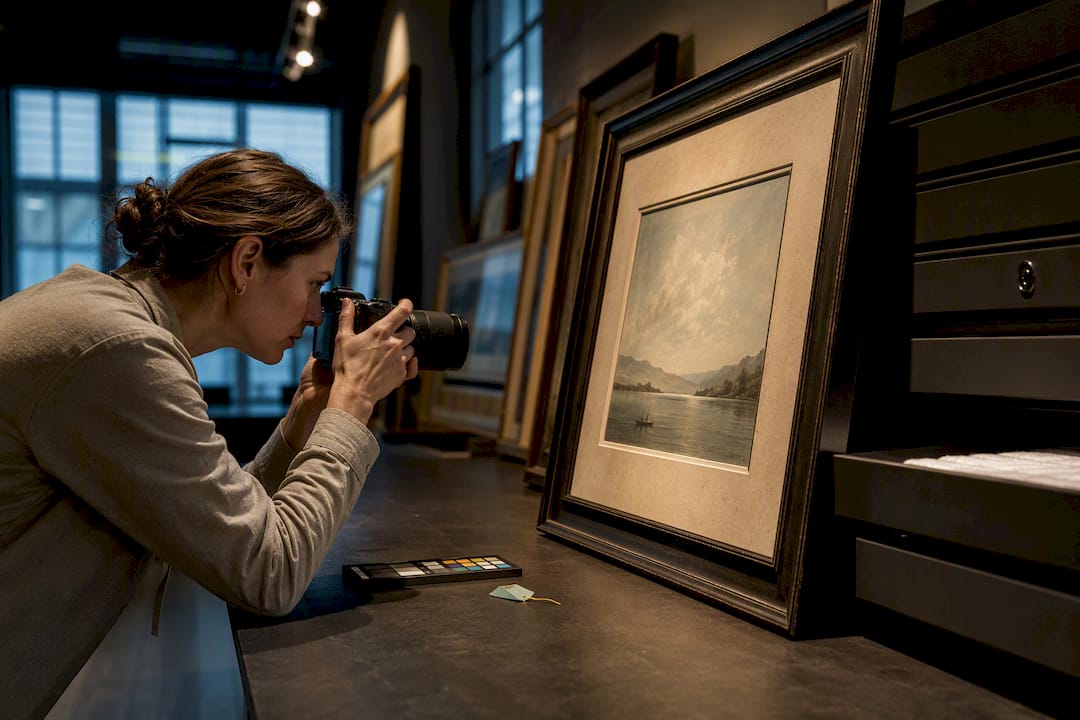
- Dated photos of the artwork at the time of sale
- Payment receipts or bank records confirming the transaction
- Shipping and insurance documentation if the piece traveled
Retain these records for as long as you’d defend a tax position, generally several years past the filing deadline, and longer if the work might return to market. Every prior bill of sale that survives with a piece adds to its provenance chain, and that chain often affects resale value more than the piece’s condition does.
Signatures, “As-Is” Language, and When to Notarize
Every bill of sale needs signatures from both seller and buyer, dated on the same line as the signature itself. Beyond that, a few clauses do most of the liability-limiting work.
An “as-is” clause tells the buyer they’re accepting the artwork in its current condition. List any known flaws, restorations, or condition issues by name rather than relying on the phrase alone; a vague “as-is” statement protects you less than a specific one.
- Use representations and warranties language for higher-value sales, stating the seller confirms the work is authentic and free of liens.
- Add witness signatures or notarization for private sales above a value threshold you consider appropriate, particularly when no gallery or dealer is involved as a third party.
- Skip notarization for lower-value studio sales where a signed, dated document is sufficient.
Pro Tip: Photograph the artwork’s condition at the point of sale and attach the images to the same file as your bill of sale. If a dispute ever surfaces, dated visual evidence settles more arguments than written description alone.
Filling Out Your Template: A Step-by-Step Walkthrough
Start at the top of a one-page template and work down. Fill in the sale date first, then both parties’ full contact details. Move to the artwork block: title, medium, dimensions, year, and edition number if the piece is part of a series. Enter the price and payment method next, followed by delivery terms and the copyright statement.
- Confirm the artist name matches your certificate of authenticity exactly.
- Attach or reference at least one dated photo.
- State delivery responsibility and insurance coverage during transit.
- Insert your copyright clause, retained or assigned.
- Leave space for both signatures and the date.
- Make two copies before either party signs, one for each side.
For a single painting, this fits on one page. For a multi-item sale, list each work as its own numbered line with its own description, price, and edition detail, then total the invoice at the bottom.
- Keep the buyer’s signed original in your files, along with a scanned digital backup.
- Send the buyer a signed copy the same day, either as a physical print or a PDF.
- A shared drive or dedicated documentation tool prevents the “I can’t find it” problem two years later.
Building a Provenance Chain That Actually Holds Up
A bill of sale means little on its own if it isn’t tied to something searchable. The strongest provenance records link a unique inventory number, a certificate of authenticity ID, and attached high-resolution photos to every sale document you generate. Galleries and serious collectors expect that chain, and its absence is often the first red flag in an authenticity dispute.
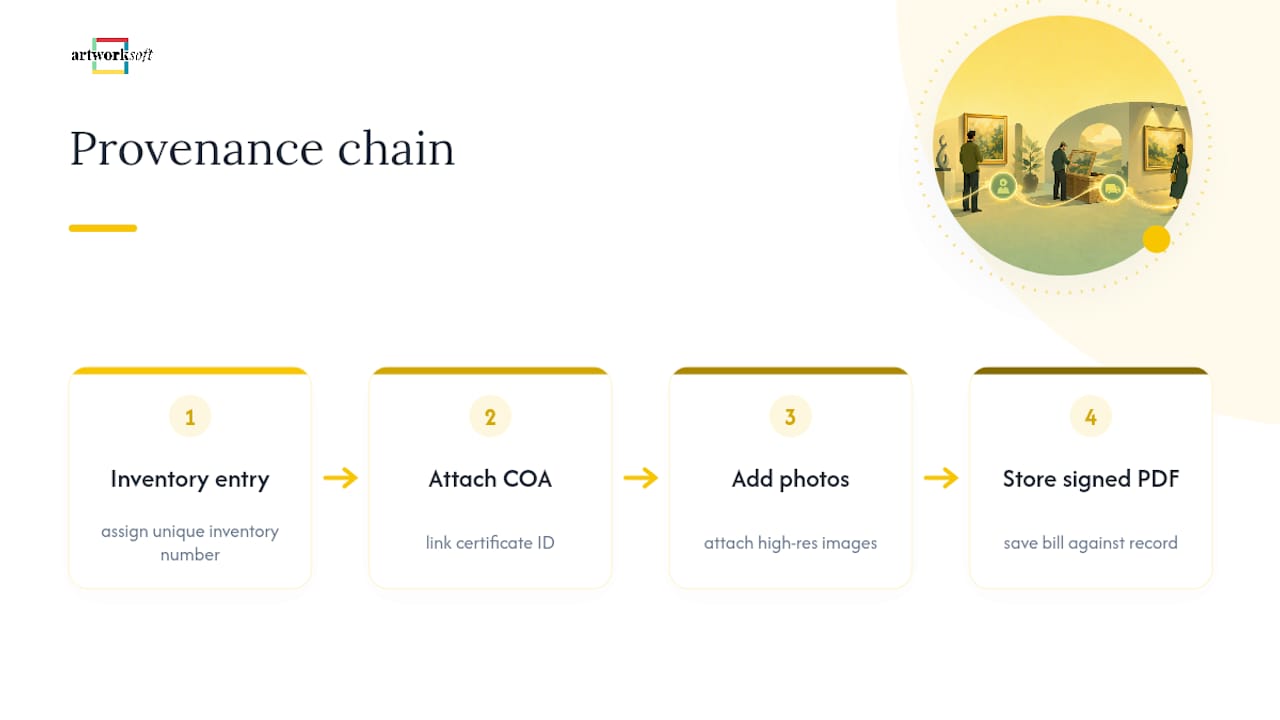
A workable digital routine looks like this: log the piece into inventory, attach its COA and photos, generate the bill of sale as a PDF, then store the signed copy against that same inventory record. Platforms like Artworksoft are built around exactly this kind of linked documentation, tying sales records to artwork profiles so nothing floats around as a loose file.
Tips for Verifying Artwork Authenticity Before Sale
Verification protects both sides of the transaction, and it needs to happen before the bill of sale, not after. Start with the artist’s own records: if you’re the creator, your dated studio photos and inventory log are your first line of proof. If you’re reselling, ask for the original certificate of authenticity and match its details, medium, dimensions, edition number, against the physical piece in front of you.
Cross-check any prior bills of sale or gallery invoices that came with the work. Gaps in that paper trail don’t automatically mean a piece is fake, but they mean you should look harder. For higher-value pieces, a third-party appraiser or conservator can examine materials, signature consistency, and condition against known examples of the artist’s work.
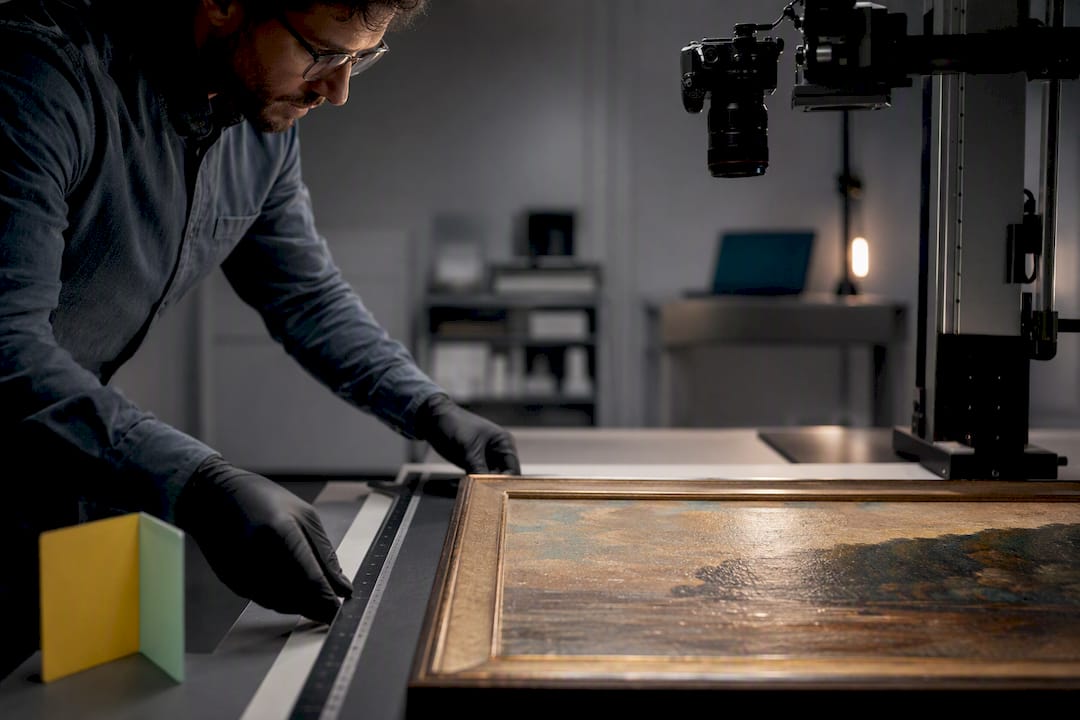
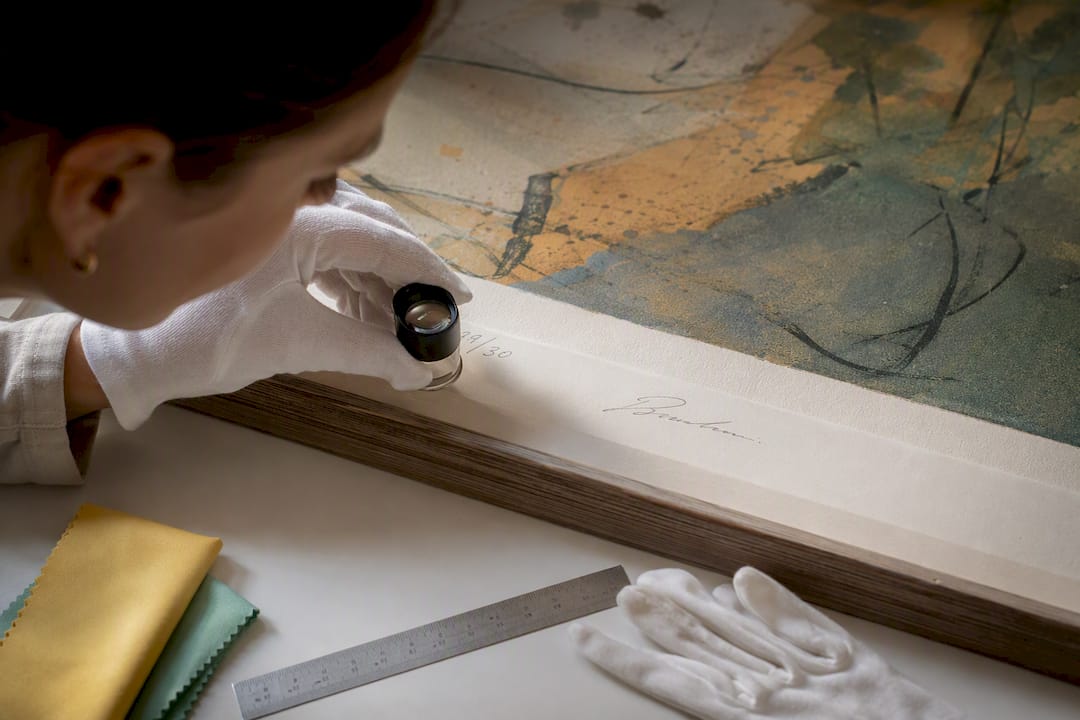
Photograph the piece from multiple angles, including close-ups of the signature and any edition markings, before the sale closes. These images do double duty: they support authenticity now and become part of the provenance record later. If anything about the paperwork or the piece itself feels inconsistent, delay the sale until you can resolve it rather than documenting around the gap.
Handling Disputes or Claims After the Sale
Most post-sale disputes trace back to one of three things: undisclosed condition issues, disagreement over copyright, or a delivery problem like damage in transit. A detailed bill of sale prevents most of these before they start, because it puts the condition, rights, and delivery terms in writing at the moment both parties agree to them.
If a dispute does surface, start by reviewing the signed document together. An “as-is” clause that specifically lists known condition issues at time of sale is far more defensible than a generic disclaimer, and it often resolves the disagreement on the spot. For damage during shipping, your delivery terms should already state who carried the insurance and at what point risk of loss transferred, which points directly to who’s responsible.
For rights disputes, the copyright clause does the same work: it either shows the buyer never acquired reproduction rights, or it shows they did. When a disagreement can’t be settled by re-reading the document, mediation is usually faster and less costly than litigation for sales in the low thousands. Keep all correspondence about the dispute alongside your original file. If the disagreement does escalate, a complete paper trail, bill of sale, photos, payment records, and any follow-up emails, gives an attorney or mediator everything they need without reconstruction work.
The Overlooked Document Artists Keep Skipping
Most conventional advice on this topic treats the bill of sale as boilerplate: fill in a template, get a signature, move on. That undersells what the document actually does. The real value shows up months or years later, when an insurer asks for proof of value, a buyer wants to resell, or a tax return needs a defensible cost basis.
Where the standard advice falls short is treating the bill of sale as a one-time transaction record rather than the first entry in a chain. A signed document sitting alone in a folder is far weaker than one linked to an inventory number, a COA, and dated photos. That link is what turns a piece of paper into evidence a gallery, appraiser, or the IRS will actually trust.
If you’re prioritizing one thing first, make it consistency: use the same field structure and numbering system for every sale, from your first studio transaction to your fiftieth. Artists who treat documentation as an afterthought are the ones who struggle to prove provenance when it counts most.
— Nealda
Independent artists who want this process handled without rebuilding a template every time can start with Artworksoft’s free art inventory system, which links each artwork’s profile, certificate of authenticity, and sales record into one searchable file. The platform generates the documentation and PDF transaction records that make a provenance chain easy to prove later, and pairs well with sound shipping and storage practices from climate-controlled storage providers when a sold piece needs to travel before it changes hands.