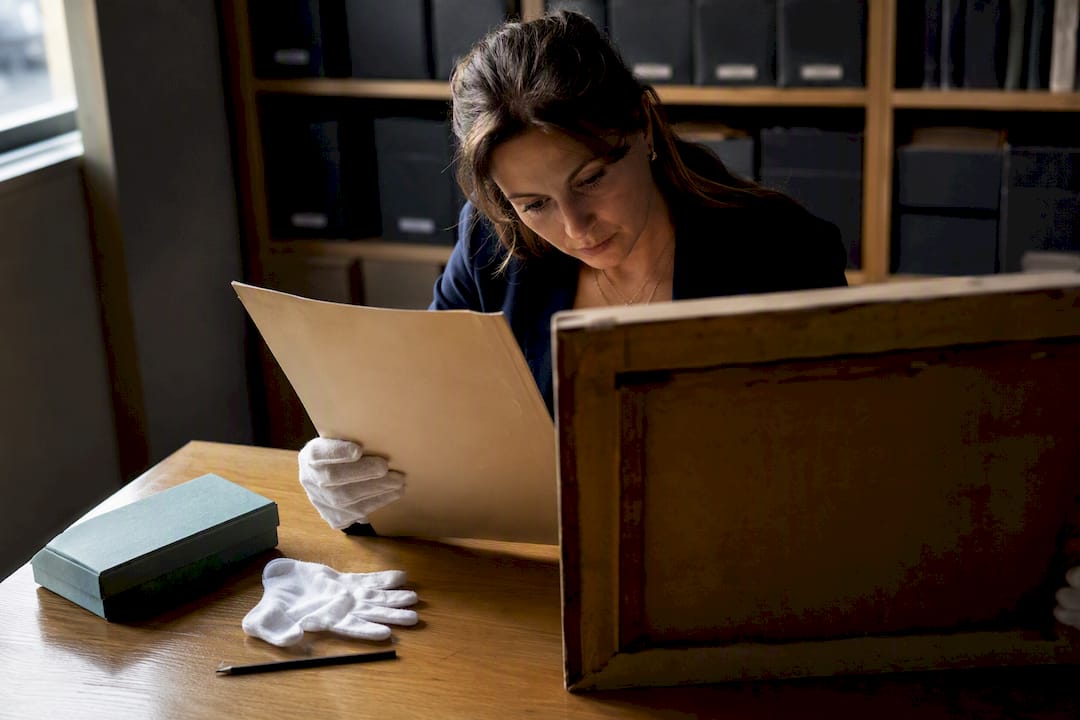
Provenance is the documented chain of ownership behind an artwork or cultural object, from its creation to today. If you are starting from scratch, examine the object for labels, stamps, or inscriptions, then search the Getty Provenance Index and a major museum database such as the Smithsonian’s Archives of American Art. Those two starting points will tell you within a few hours whether the object has a documented history worth pursuing further.
TL;DR:
- Most provenance leads are found in private collections, dealer archives, or lost records, as museum holdings only represent about 1% of known provenance data.
- Starting with physical examination of the object, then cross-referencing market records and institutional databases, helps build a reliable ownership timeline.
- Gaps are common, especially for older works, and red flags like sudden ownership jumps or undocumented wartime transfers require careful documentation and expert consultation.
- Digital tools like network analysis and linked open data significantly speed up provenance research and facilitate better record management.
- Provenance research builds gradually through fragments, making organized documentation and confidence ratings essential for trustworthy results.
Table of Contents
- What Provenance Research Actually Covers
- Where Should You Start Looking for Records?
- What Is the Right Order to Research Provenance?
- How Do You Read a Stock-Book Line or Finding-Aid Entry?
- How Do You Handle Gaps and Wartime-Era Red Flags?
- Which Digital Tools Speed Up Provenance Analysis?
- What Should You Realistically Expect From This Work?
- Documenting What You Find as You Go
- Sources
- FAQ
What Provenance Research Actually Covers
Provenance is not the same as provenience. Provenience refers to an archaeological findspot, while provenance tracks the documented ownership history of an object from creation to the present, according to Yale’s provenance research guide. The term comes from the French provenir, meaning “to come from,” and that etymology matters because it frames the discipline correctly: you are reconstructing a path, not just a pedigree.
A complete provenance record typically includes:
- Every known owner’s name, in chronological order
- Dates of acquisition and transfer for each owner
- The method of transfer (purchase, gift, inheritance, bequest)
- Locations where the object was held or exhibited
- Citations to the source documenting each link in the chain
Heirloom jewelry matters beyond curiosity. It informs attribution when an artist’s authorship is uncertain, supports valuation because a documented history reduces buyer risk, and underpins ethical stewardship by surfacing objects that may carry contested histories, including wartime losses.
Where Should You Start Looking for Records?
Four categories of sources cover most provenance leads, and each yields different kinds of evidence.
- The Getty Provenance Index. It gives open access to millions of archival records, including dealer stock books, sales catalogs, and archival inventories, and is one of the most comprehensive tools for tracing ownership and market pathways across centuries.
- Museum finding aids and collection records. The Met, the Smithsonian, and Yale all maintain searchable collection records and archival finding aids that document acquisition history for objects that passed through their holdings.
- Auction catalogs, dealer stock books, and estate records. These primary documents often list stock numbers, purchaser names, and sale prices, according to a Smarthistory case study on reading dealer archives.
- Catalogues raisonnés and printed bibliographies. Scholarly reference texts compiled for a specific artist frequently list exhibition history and prior ownership that never made it into digital databases.
Keep in mind that museum holdings represent only a sliver of what is out there. Getty’s own data suggests artworks identified in museums make up roughly 1% of the Provenance Index’s full dataset. Most leads point toward private collections, dealers, or unknown whereabouts, so cast your search wider than institutional walls.
What Is the Right Order to Research Provenance?
A repeatable sequence keeps research from becoming chaotic, especially once you are juggling multiple leads on the same object.
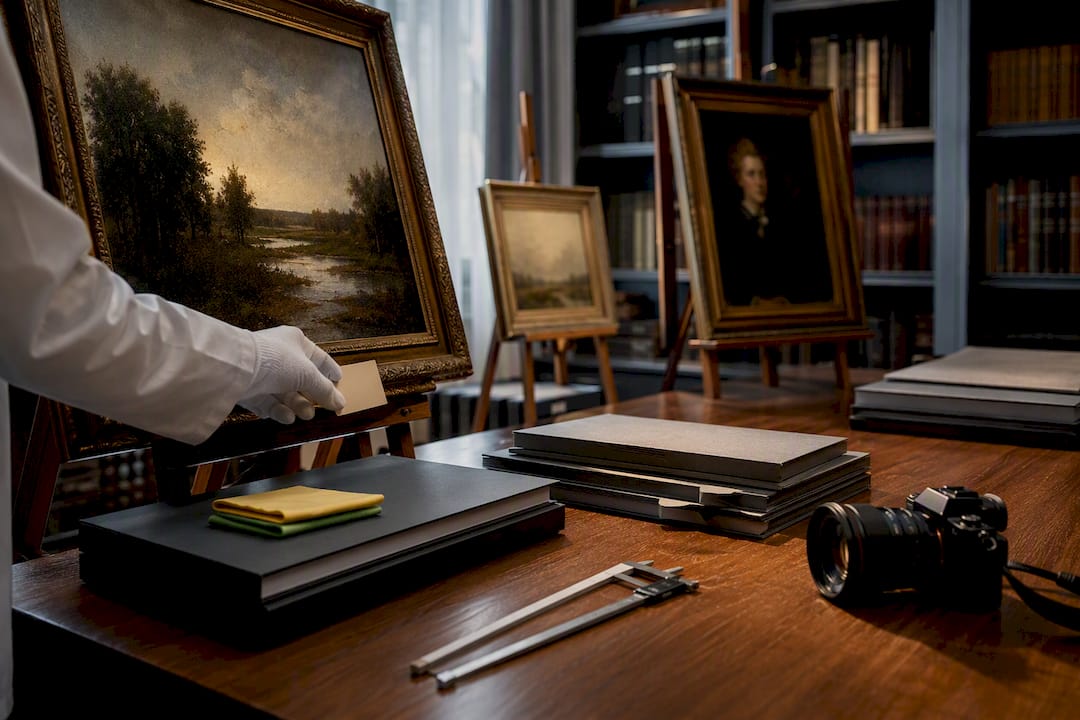
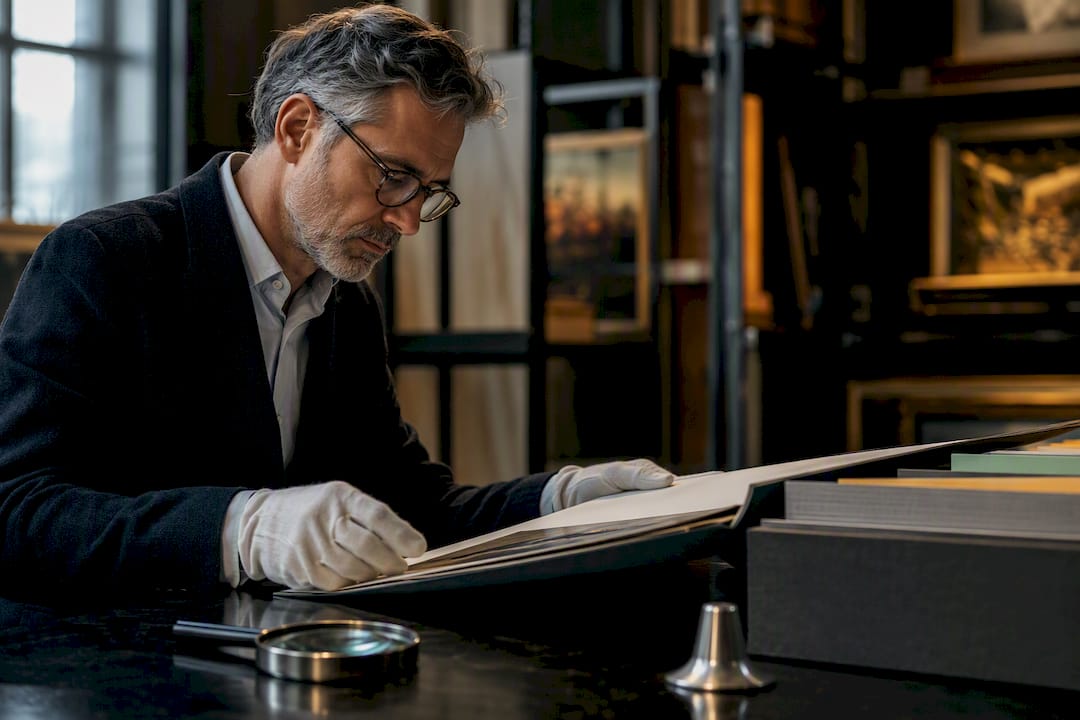
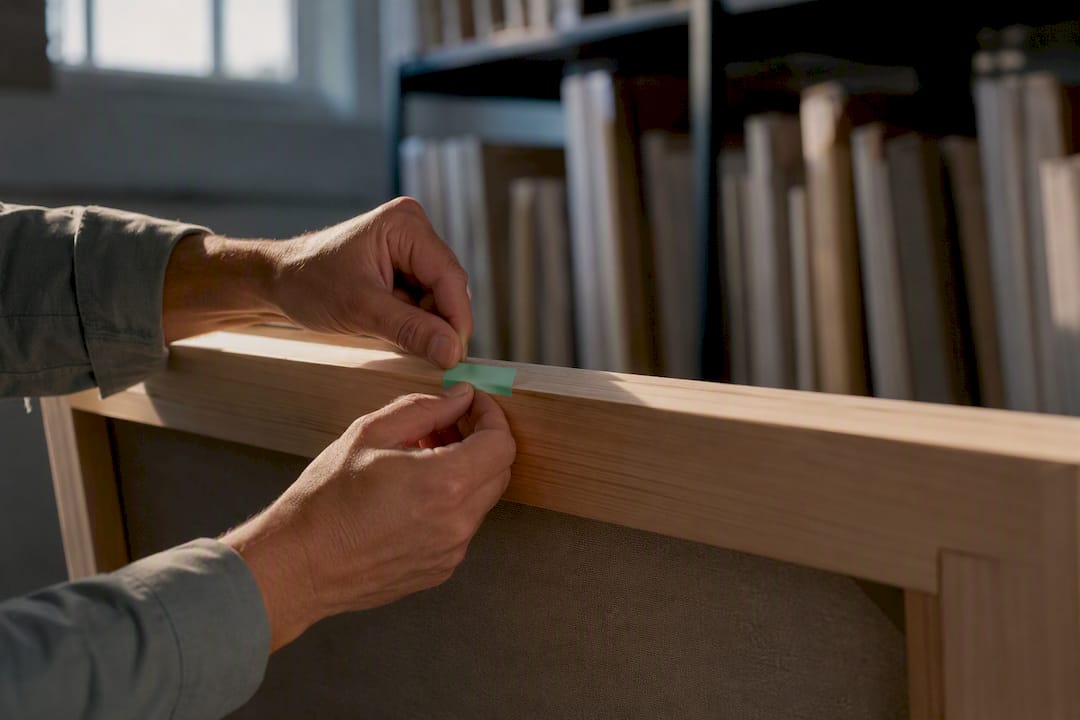
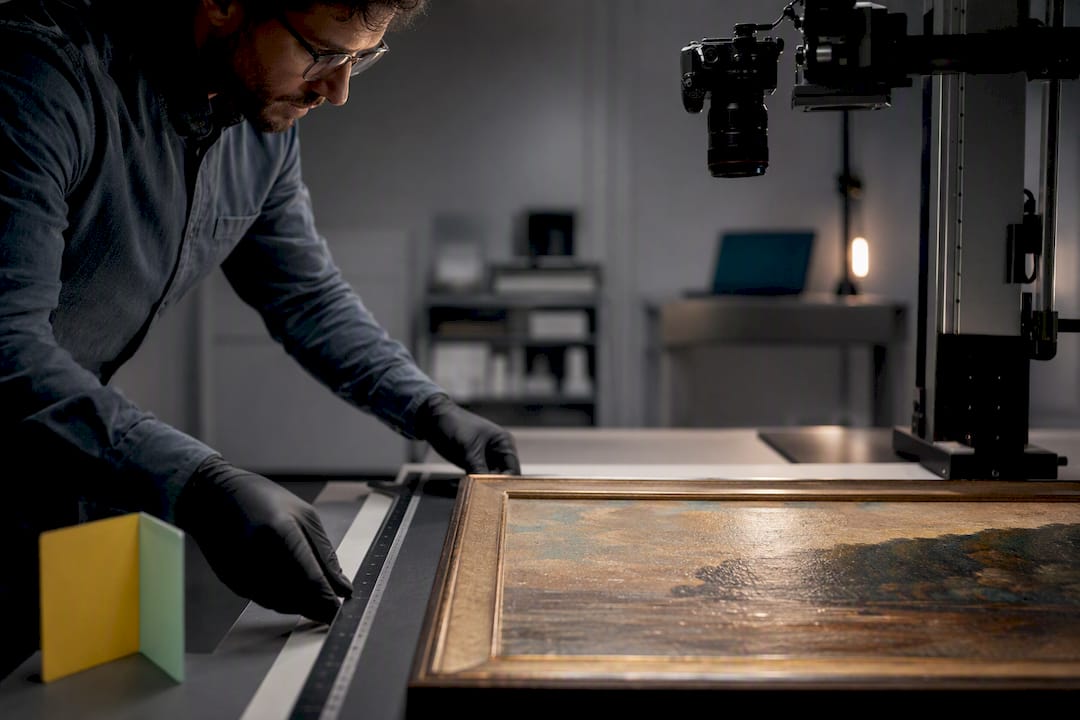
- Start with the object itself. Examine labels under the frame, collector stamps, mounting inscriptions, and any inventory numbers. These physical clues rarely make it into institutional records, which makes direct examination a formal first step, not an afterthought.
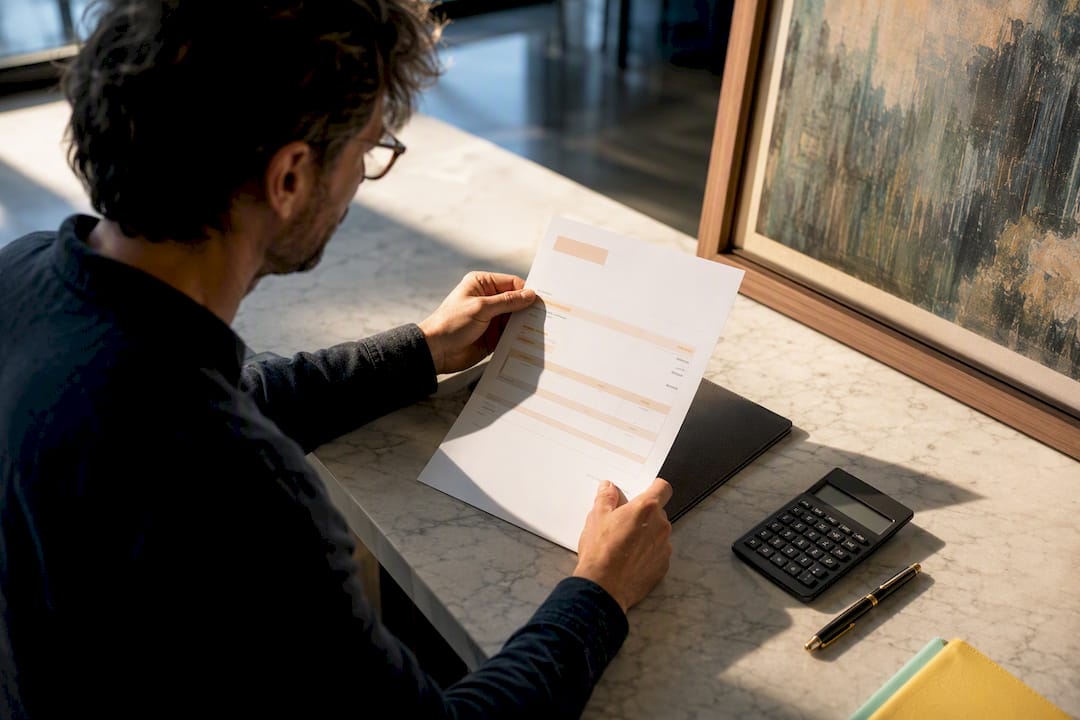
- Check your own paperwork. Bills of sale, insurance appraisals, and family correspondence often contain the first verifiable link.
- Search institutional databases. Run the object through the Getty Provenance Index and relevant museum collection records.
- Move to market sources. Cross-reference auction catalogs and dealer stock books for matching descriptions, dimensions, or stock numbers.
- Follow the archival trail. Correspondence, inventories, and exhibition histories held in archives like the Archives of American Art often confirm or contradict market records.
- Document and rate confidence. Record every source and assign a confidence level (confirmed, probable, speculative) to each link in the chain.
- Escalate when needed. Request copies from archives, contact curators or archivists directly, and bring in a provenance specialist for complex or high-value cases.
Pro Tip: Keep a running chronology document from day one, even if it has gaps. A partial timeline with clearly marked uncertainty is more useful to the next researcher than a clean narrative that quietly glosses over what you could not verify.
How Do You Read a Stock-Book Line or Finding-Aid Entry?
Archival entries reward slow reading. A dealer stock-book line might read as a compressed string of abbreviations, but it usually encodes a purchase date, a stock number, a buyer’s name, and a price, all in a few characters.
- Stock numbers and inventory stamps identify an object within a dealer’s internal system and can be matched across multiple archives to confirm the same piece changed hands.
- Auction lot references (a sale date plus a lot number) let you pull the original catalog entry, which often lists prior ownership the auction house had already verified.
- Primary versus secondary evidence matters: a signed bill of sale outranks a secondhand family recollection, even when the recollection turns out to be accurate.
- Corroboration comes from matching at least two independent sources, such as a dealer stock book and an exhibition catalog, before treating a link as confirmed.
Once you have gathered enough entries, assemble them into a simple timeline with a citation attached to every link. That habit alone separates usable provenance research from a folder of disconnected notes.
How Do You Handle Gaps and Wartime-Era Red Flags?
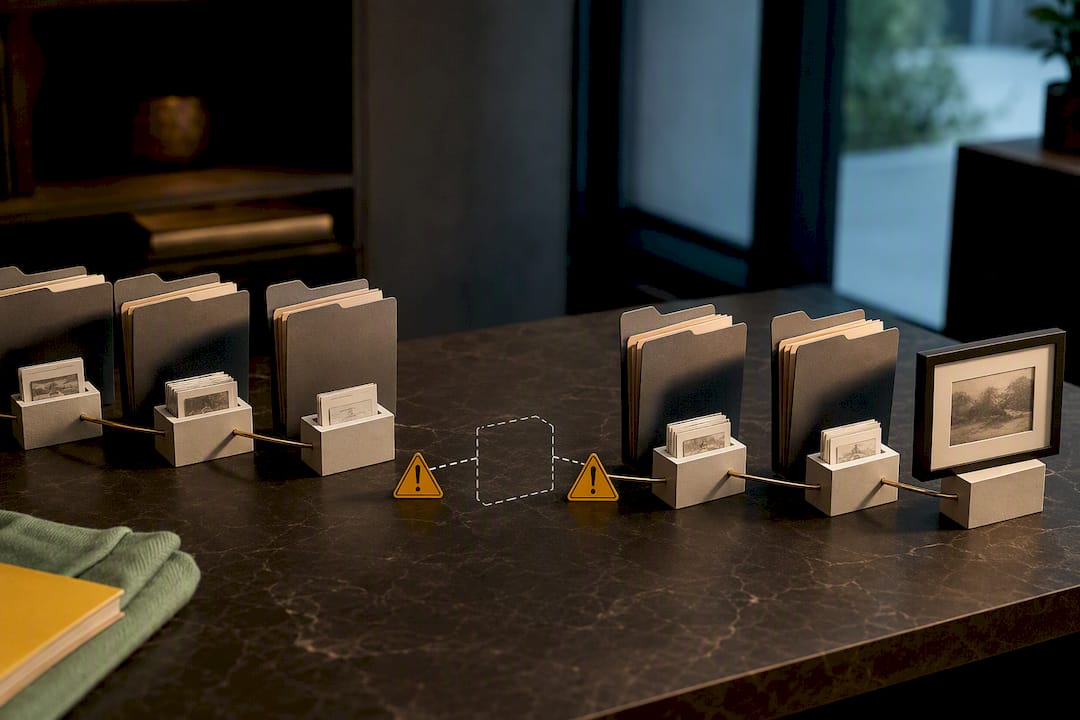
Gaps are the rule, not the exception. Complete, unbroken ownership records for older works are rare, since oral agreements, informal exchanges, and lost paperwork routinely broke the paper trail long before anyone thought to preserve it, according to Yale’s provenance research guidance. Document what you cannot confirm rather than smoothing over it.
Watch for these red flags, particularly for objects that may have changed hands in Europe between 1933 and 1945:
- Sudden ownership jumps with no documented sale or transfer
- Anonymous dealers or buyers listed only by initials
- Undocumented transfers during wartime years or immediately after
- Conflicting dates between a dealer stock book and an exhibition catalog
Major museums treat this work as ongoing rather than finished. The Met, for instance, continuously updates its published collection records as new provenance information is verified, and other institutions follow similar disclosure practices. If your research surfaces a plausible wartime-era gap, follow the same protocol museums use: document the evidence carefully, contact an institutional provenance specialist, and consult legal counsel before making or responding to a restitution claim. Artworksoft’s overview of art case law is a useful primer on the legal terrain before that conversation starts.
Which Digital Tools Speed Up Provenance Analysis?
Provenance research used to mean stacks of photocopies and a lot of manual cross-referencing. That is changing. Linked open data projects such as PROV-A apply network analysis to map relationships between dealers, collectors, and objects at a scale no researcher could manage by hand, and the Getty Provenance Index itself is moving toward linked open data to improve how records can be queried and connected.
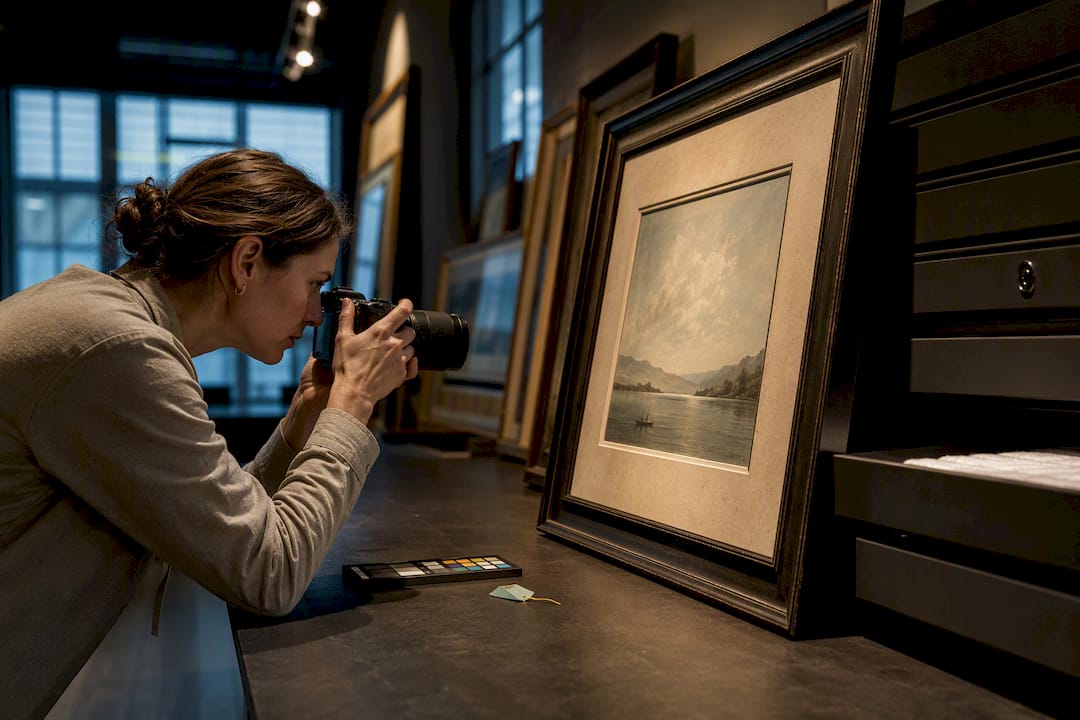
- Digitize object photographs, labels, and documents as soon as you find them, not after the research is finished.
- Export metadata in portable formats so your findings can move between institutions without being re-typed.
- Use a collection management workflow (see Artworksoft’s guide to digital archiving) to keep movement history, transaction records, and provenance notes attached to the same object record.
- Consider network visualization tools when a single object connects to a dense web of dealers and prior owners.
What Should You Realistically Expect From This Work?
Provenance research rarely produces a single decisive document. It builds through fragments: a stock number here, a faded label there, a dealer’s correspondence that confirms one link and raises three new questions. Archivists and curators become your most valuable collaborators, not obstacles to route around.
Set timelines accordingly. Tell stakeholders you are documenting confidence levels, not delivering a verdict, and the whole process becomes far less frustrating for everyone involved.
— Nealda
Documenting What You Find as You Go
Archival research answers the historical question. Once you have assembled owners, dates, and sources, you still need a reliable place to keep that record attached to the object itself, and that is where a structured collection management system earns its place alongside the archive box.
Some collection management systems are built to hold exactly the kind of record provenance research produces: metadata fields for each owner and transfer, photo storage for labels and inscriptions photographed during examination, a movement log for exhibition and loan history, and transaction records tied to sales or transfers. When your research reaches a confirmed point, you can generate a professional PDF, including a Certificate of Authenticity, that carries your documented provenance forward to a buyer, a museum registrar, or a fellow researcher. That structure also makes later verification faster, since the next person working on the object inherits an organized record instead of a folder of loose notes. Start with the free plan to see how your provenance findings look once they are attached to a real, portable artwork record.
Sources
- Collecting and Provenance Research: Introduction — Yale
- Getty Provenance Index — Getty Research Institute
- A guide to provenance research at the Archives of American Art — Smithsonian
- Provenance research at The Met — The Metropolitan Museum of Art
FAQ
What Is the Difference Between Provenance and Provenience?
Provenance is the documented ownership history of an object from creation to today, while provenience refers specifically to an archaeological findspot. The two terms are often confused but describe different kinds of evidence.
Where Should I Start My Provenance Research?
Examine the object itself for labels, stamps, or inscriptions, then search the Getty Provenance Index and a relevant museum database such as the Smithsonian’s Archives of American Art. Those two steps typically reveal within hours whether a documented history already exists.
How Long Does Provenance Research Usually Take?
Timelines vary widely depending on the object’s age and how well-documented its market history is, and complex cases involving wartime-era gaps can take months of archival correspondence. Expect an iterative process rather than a fixed deadline.
What Should I Do if I Find a Wartime-Era Gap?
Document the evidence carefully, contact an institutional provenance specialist, and consult legal counsel before pursuing or responding to any restitution claim. Museums like The Met follow this same protocol when new provenance concerns surface.
Can Software Help Manage Provenance Records?
Yes. A collection management platform can store ownership metadata, movement history, and transaction records alongside the artwork, then generate professional documentation such as Certificates of Authenticity once your research is confirmed.