
An insurance-ready art inventory entry must include clear identification, dated high-resolution photographs, an objective condition record, provenance proof, a recent appraisal, chain-of-custody documentation, and your policy details. Skip any of these, and an underwriter or claims adjuster has grounds to reduce or deny recovery. Copy the fields below into a spreadsheet or a system like Artworksoft, and start building records before you need them, not after.
TL;DR:
- A comprehensive inventory must include clear identification, provenance proof, recent appraisal, condition records, and chain-of-custody documentation to ensure full insurance coverage.
- Photographic documentation should include multiple views, labels, damage details, and shipping images, with original files preserved and metadata intact for proof years later.
- Provenance and valuation records must be attached as linked, up-to-date files including invoices, certificates, exhibition, auction records, and recent appraisals for credible claims.
- Shipping and storage records require bills of lading, customs, chain-of-custody logs, and proof of approved shippers to prevent voided coverage during transit.
- Regularly updating and organizing records through structured system like Artworksoft helps maintain a reliable, accessible documentation process that supports swift claims and minimizes coverage disputes.
Table of Contents
- What Fields Does an Art Insurance Inventory Checklist Require?
- How Should You Photograph and Document Condition for Insurance?
- What Provenance and Appraisal Documents Do Insurers Expect?
- What Shipping and Storage Records Do You Need for Claims?
- How Should You Organize and Back Up Your Inventory Records?
- How Do Insurers Use Your Inventory During Underwriting and Claims?
- Why Consistent Process Beats a One-Time Documentation Push
- How Artworksoft Turns This Checklist Into a Working System
- Sources
- FAQ
What Fields Does an Art Insurance Inventory Checklist Require?
Every object in your collection needs a complete record before an insurer will treat it as fully covered. Fine-arts policies carry exacting requirements for identifying works, appraising value, and establishing ownership, and gaps in any of these areas can reduce what you recover after a loss.
Build each item-level entry with these fields:
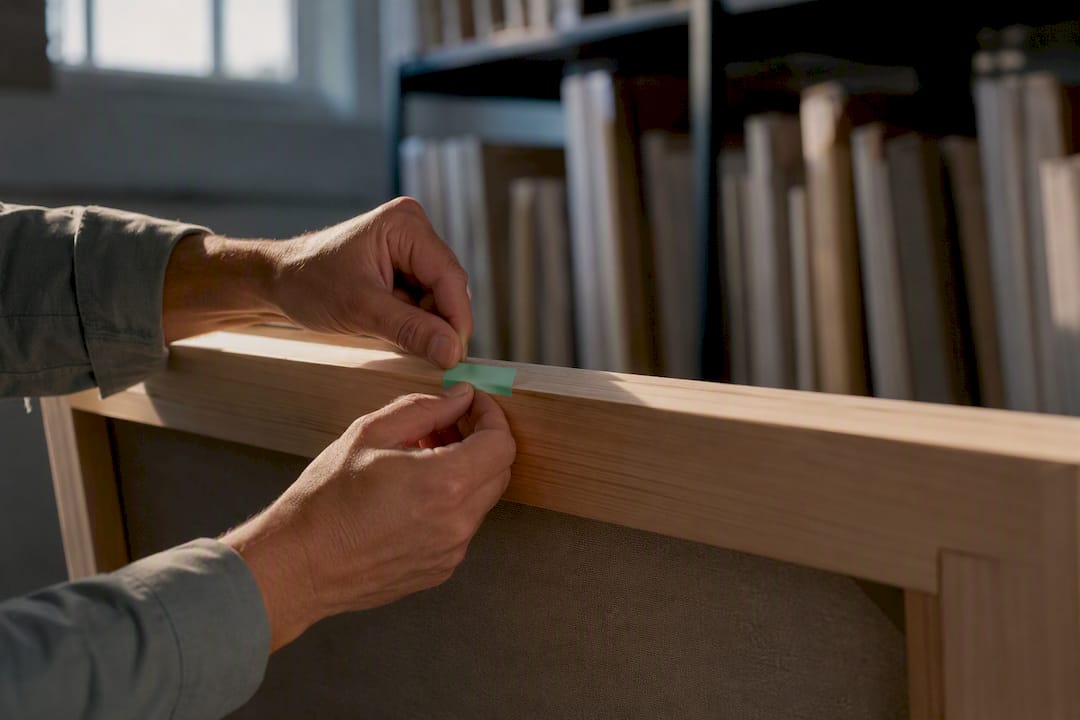
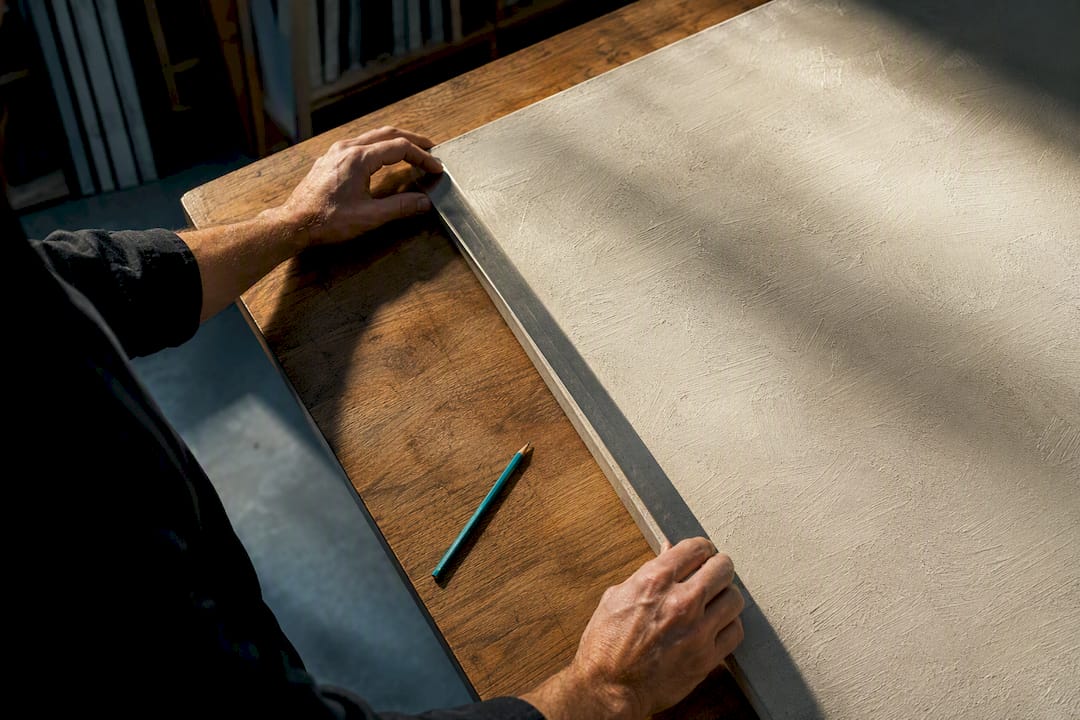
- Identification: artist or maker, title, creation date, medium, dimensions, edition number or signature location, and a unique inventory ID that ties every document back to this specific object.
- Provenance and ownership proof: original invoices, Certificates of Authenticity, auction receipts, exhibition records, and any prior insurance documentation attached as scanned files, not just noted in a field.
- Valuation: insured or declared value, the date of the most recent appraisal, and the appraiser’s name and credentials.
- Condition: a written baseline description plus update triggers, meaning the record gets refreshed before and after any movement, loan, or exhibition.
- Administrative details: current storage location, insurance policy number, and loan or consignment status if the piece has left your direct control.
A declared-value art insurance policy depends on this documentation existing before a claim, not assembled afterward. Adjusters compare your declared value against what your paperwork actually supports, and thin records mean a thin payout regardless of what the piece is worth on the open market.
How Should You Photograph and Document Condition for Insurance?
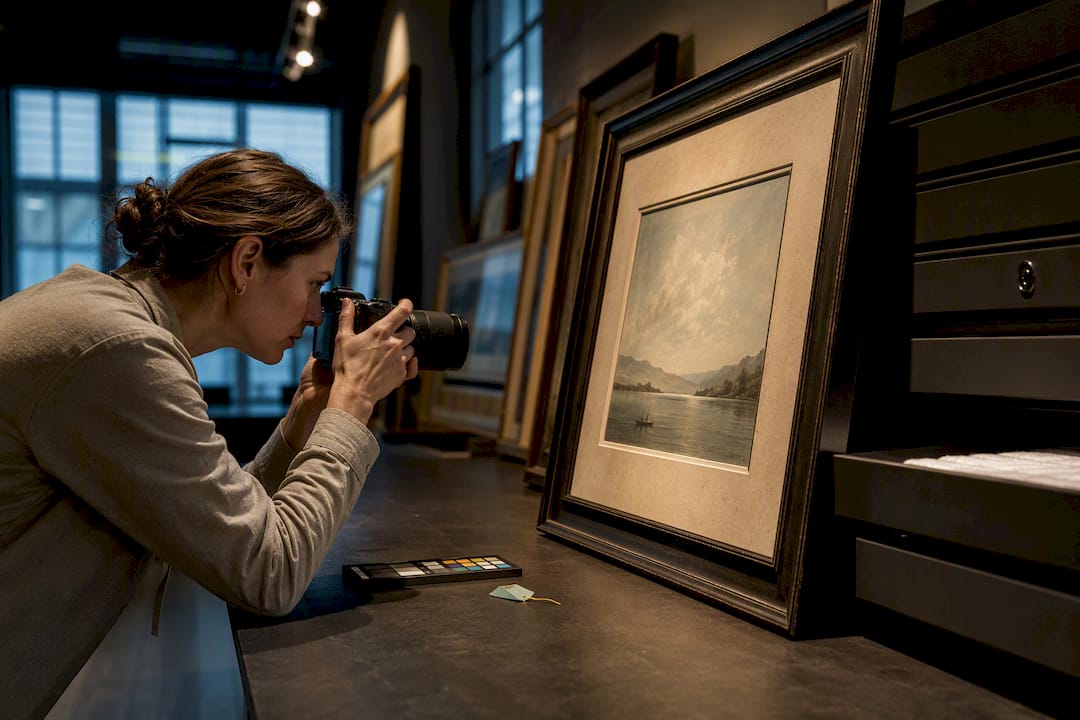
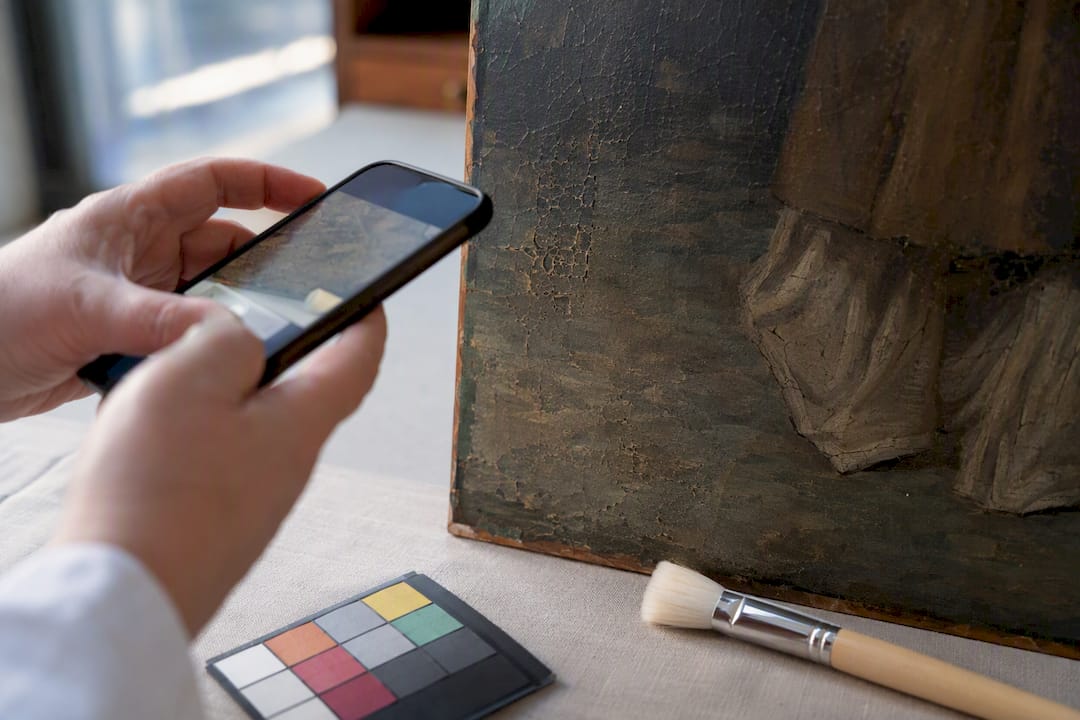
Photography for insurance purposes is different from photography for marketing or catalog use. Insurers want evidence, and evidence has to withstand scrutiny months or years after the image was taken.
Follow this sequence for every object:
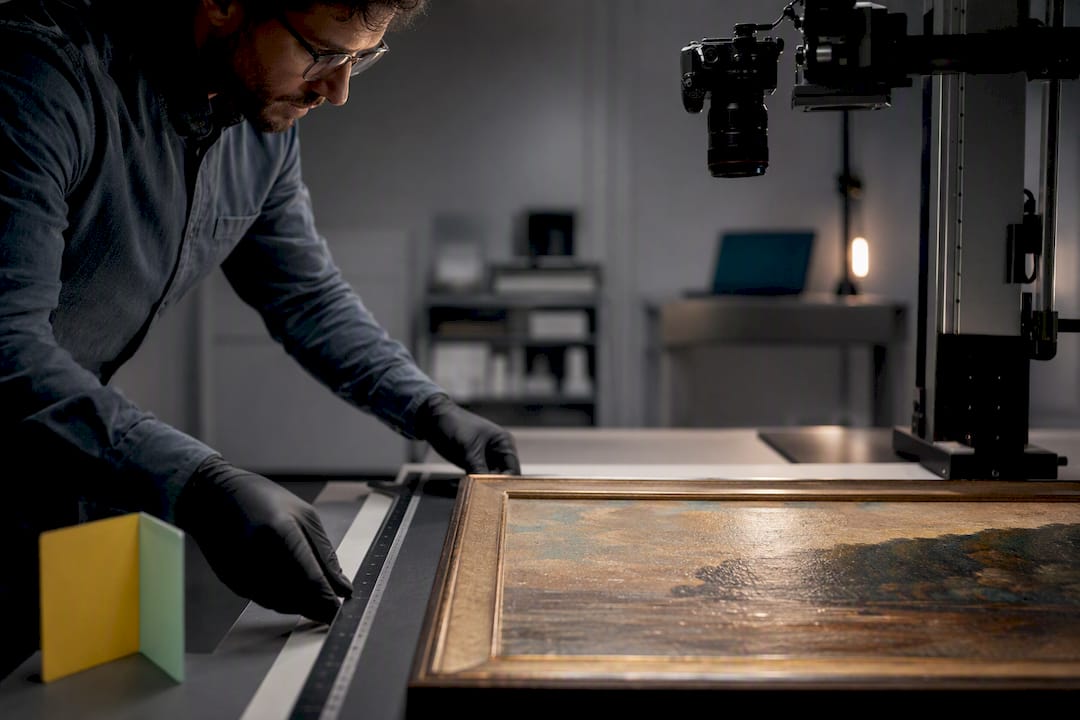
- Full front view under even, color-accurate lighting, capturing the entire work with no cropping.
- Reverse view, including any labels, stamps, inscriptions, or frame backing.
- Detail shots of signatures, edition numbers, existing damage, and any areas of prior conservation.
- Contextual shot showing the piece in its current location or display setting.
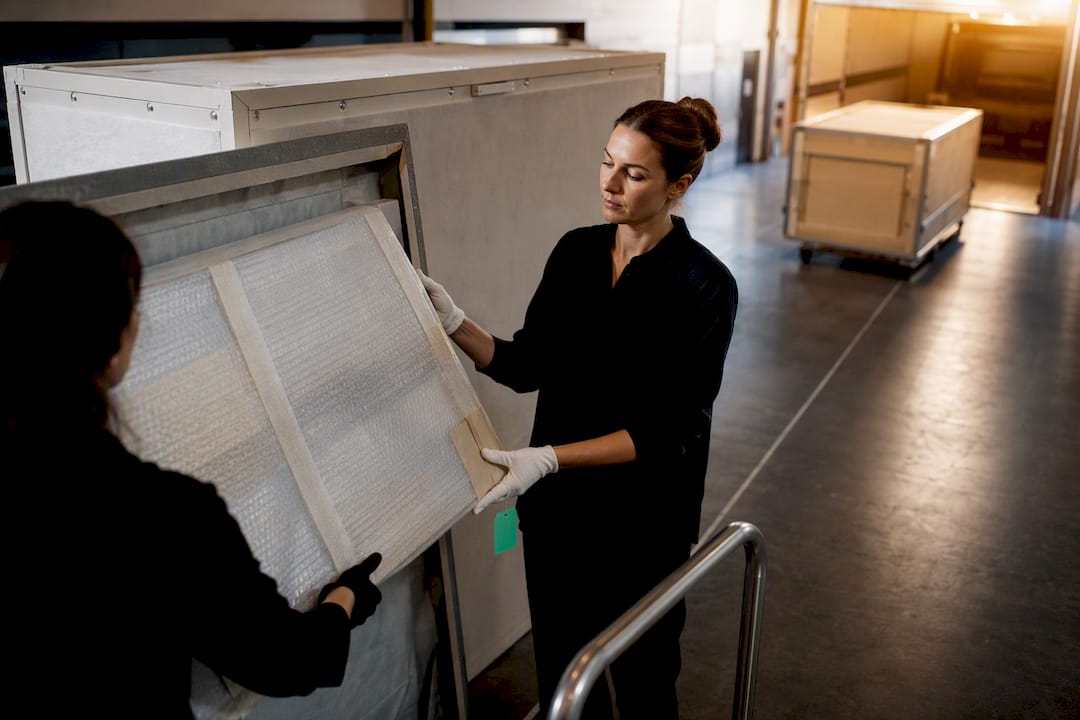
- Packaging and crate photos taken immediately before any shipment, documenting how the object was prepared for transit.
Keep original files untouched, preserve EXIF metadata, and use a consistent naming convention tied to your inventory ID so a file can be located in seconds during a claim. Condition reports should use objective language, describing what is observed rather than judging its severity, and should note any prior conservation work by date and practitioner. Insurers often expect a formal condition report and pre-shipment photos before transit, since undocumented condition changes before and after movement are one of the fastest ways to weaken a claim. A detailed photo guide for inventory purposes can help standardize this across a collection with multiple contributors.
Pro Tip: A quality smartphone photo taken in consistent, diffused daylight often beats a rushed professional shoot. Reserve professional photography for high-value pieces or condition disputes where color accuracy and resolution genuinely matter for a claim.
What Provenance and Appraisal Documents Do Insurers Expect?
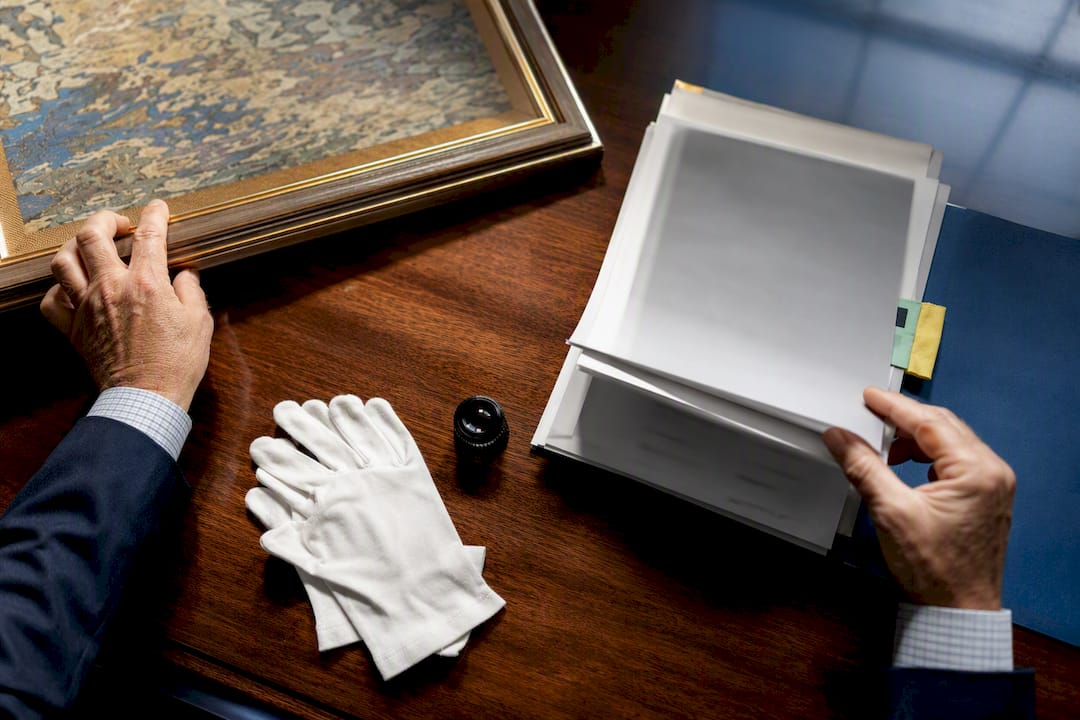
Underwriters and adjusters look for a defensible paper trail, not just a stated value. A registrar-style pre-loss foundation that includes identification, provenance, valuation, and condition data in one linked record consistently produces better claims outcomes than scattered files.
Keep these documents attached to every inventory entry:
- Bills of sale and original purchase invoices.
- Certificates of Authenticity issued by the artist, estate, or a recognized authenticating body.
- Exhibition history and auction records, where applicable.
- Formal appraisal reports, including the appraiser’s name, credentials, and the date of assessment.
Appraisal recency matters more than most collectors assume. Insurers typically expect formal appraisals above carrier-specific thresholds, and recommend refreshing valuations every two to five years depending on how volatile that artist’s market has been. A declared-value statement should be attached to your policy whenever the insured amount exceeds your carrier’s threshold, and it should reference the specific appraisal it relies on. Linking each provenance and appraisal file directly to its inventory entry, rather than storing them in a separate archive, cuts retrieval time to minutes when an adjuster asks for backup. Readers researching how authentication affects an artwork’s valuation will find the connection between paperwork and payout runs deeper than most collectors expect.
What Shipping and Storage Records Do You Need for Claims?
Movement is when most documentation gaps surface, and it is also when insurers scrutinize records most closely. Fine-arts policies carry strict conditions on storage and transport, and using a non-approved shipper or skipping paperwork can void coverage entirely.
Maintain these records for every move:
- Bills of lading, waybills, and pro forma invoices for each shipment.
- Customs documentation or permits when a piece crosses a border.
- Chain-of-custody entries logging dates, handler names, condition checks, and crate or shipment ID numbers.
- A Certificate of Insurance confirming nail-to-nail coverage, requested from your carrier before the piece leaves storage.
- Storage intake records and, for climate-sensitive works, environmental monitoring logs.
Declared-value endorsements and nail-to-nail transit coverage close gaps that standard policies leave open, but only if your inventory actually records that the approved shipper and protocol were used. Working with a vetted fine art mover who can verify USDOT registration and provide agreed-value condition reports gives you documentation an adjuster will accept without argument.
How Should You Organize and Back Up Your Inventory Records?
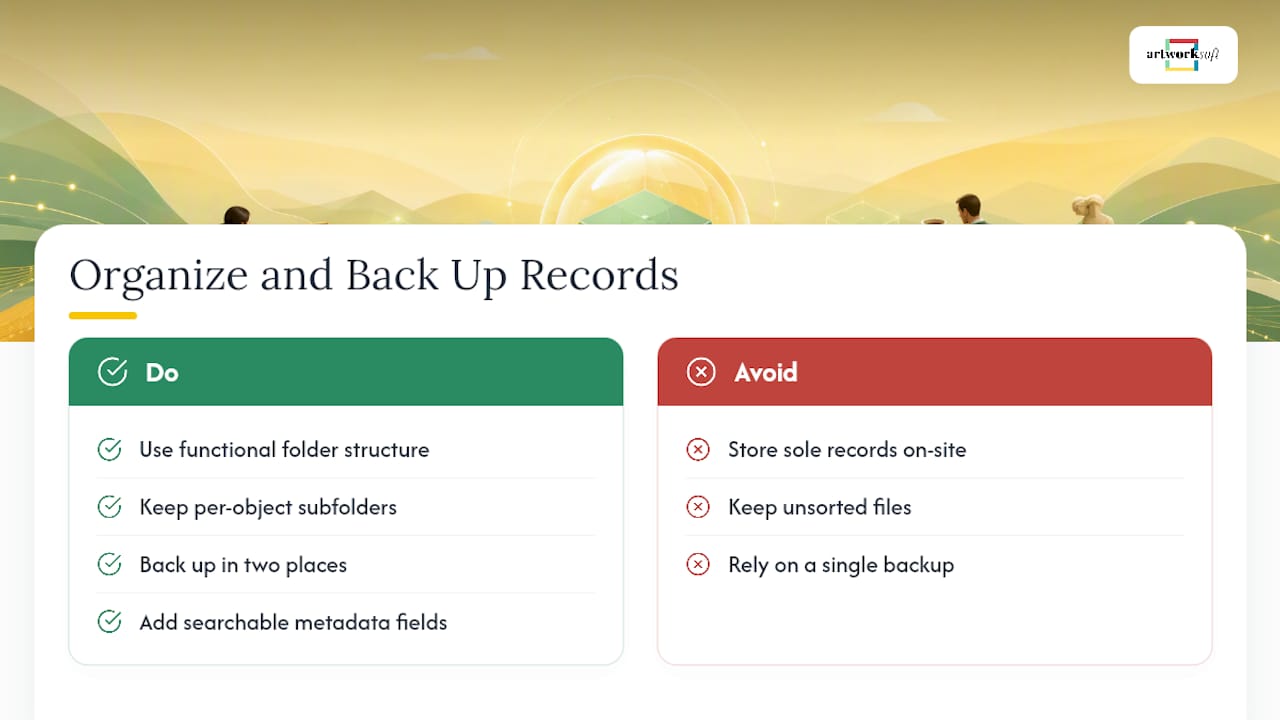
A pile of unsorted files defeats the purpose of keeping them. A practical folder structure separates records by function: pre-loss documentation, an incident folder reserved for active claims, per-object subfolders, conservation history, valuations, and communications with insurers or appraisers. This structure has been shown to improve claims handling because adjusters can locate exactly what they need without wading through unrelated files.
Back up everything in at least two places: a cloud system and an off-site physical copy. Never store your only records at the same premises as the collection itself, since a fire or flood that damages the art can destroy the paperwork proving what it was worth. Build searchable metadata into your system, including inventory ID, artist, medium, and location, so a query returns results instantly rather than requiring a manual search. Artworksoft maps these checklist fields directly into its platform, generating Certificates of Authenticity, invoices, and movement logs automatically as records update, which keeps documentation current without manual re-entry.
How Do Insurers Use Your Inventory During Underwriting and Claims?
Underwriters check appraisal recency, condition documentation, chain-of-custody records, and whether shippers used were approved carriers. Claims adjusters run the same checklist after a loss, comparing your declared value against what the paperwork supports.
Common reasons insurers deny or reduce claims include missing provenance documents, appraisals that are years out of date, condition reports with no pre-movement baseline, and use of unapproved handlers during transit. Structured, dated documentation with clear chronology is often the deciding factor in whether a claim moves quickly or gets contested.
Run this verification before any loan, sale, or shipment:
- Confirm the appraisal is within your insurer’s recommended window.
- Verify condition photos exist from before the move, not just after.
- Check that the shipper is approved under your policy.
- Confirm the Certificate of Insurance covers the full transit period.
Periodic inventory audits catch these gaps before a loss forces the issue, not after.
Why Consistent Process Beats a One-Time Documentation Push
Most collections that fail an insurance claim did not lack information; they lacked a repeatable process for capturing it. A one-time documentation sprint gets stale within a year as pieces move, sell, or come back from loan. What holds up over time is a routine: photograph on intake, update condition after every movement, and revisit appraisals on a fixed schedule rather than waiting for a renewal notice to prompt it. Small teams that build this into their calendar scale their record-keeping the same way a large institution does, just with fewer hands doing the work.
— Nealda
How Artworksoft Turns This Checklist Into a Working System
Building this checklist by hand in a spreadsheet works until your collection grows past a few dozen pieces, and then version control and missing fields become the real risk. Artworksoft is built around this exact structure: every inventory entry links identification, provenance files, condition history, and valuation into one record, with Certificates of Authenticity, invoices, and movement logs generated automatically as details update.
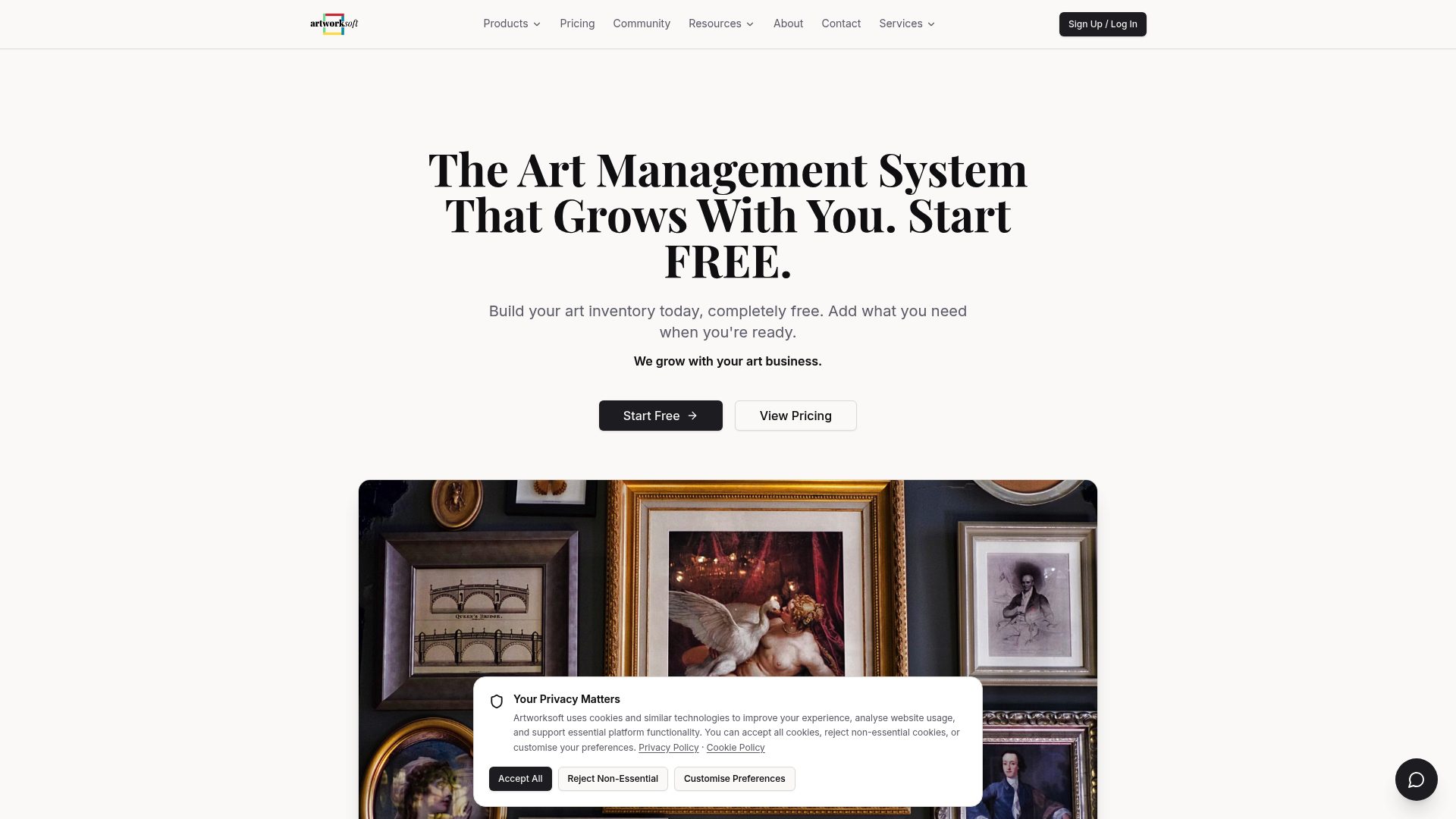
The Free Plan lets you start building provenance-backed records for your collection without upfront cost, and the Provenance Plan adds full lifecycle tracking starting at $5 per month for collectors ready to formalize their documentation. Galleries and collections that want hands-on setup can use the Onboarding & Collection Management Service to get every existing record migrated and structured correctly from the start. If your inventory currently lives in a spreadsheet, start by reviewing your field mapping before import so nothing gets lost in the transition.
Sources
- Fine Arts Coverage Subject To Some Very Fine Conditions – The Rough Notes Company Inc.
- Documentation For Declared-Value Art Insurance Policies – UNION
- How to Fill Out a Fine Arts Insurance Application – LegalClarity
- Mastering Art Insurance Claim Documentation in 2026
FAQ
What Is the Most Important Item on an Art Insurance Inventory Checklist?
A current, credentialed appraisal paired with dated photographic evidence matters most, since these two items directly support your declared value during underwriting. Without them, insurers have little basis to validate the amount you’re claiming.
How Often Should I Update My Art Appraisals?
Most insurers recommend updating appraisals every two to five years, depending on how volatile the artist’s market has been. Pieces by artists with active, fast-moving markets need more frequent updates than stable, established names.
Does Artworksoft Cost Anything to Start?
Artworksoft offers a Free Plan with no published cost for building your initial inventory, and a Provenance Plan starting from $5 per month for full lifecycle tracking. Current pricing details are available directly on the Artworksoft pricing page.
What Documents Do I Need Before Shipping an Artwork?
You need a bill of lading or waybill, pre-shipment condition photos, a Certificate of Insurance confirming transit coverage, and confirmation that your shipper is approved under your policy. Missing any of these is a common reason insurers dispute transit-related claims.
How Do I Document a Restoration or Alteration?
Record the date, the conservator’s name and credentials, a description of the work performed, and before-and-after photographs attached to that object’s inventory entry. This creates a continuous condition history that insurers and future buyers can both verify.