

Artwork storage classification is the systematic grouping of artworks by material type, format, and preservation needs to determine appropriate physical housing and environmental controls. Artists, collectors, and gallery owners who apply the right types of artwork storage classifications protect their collections from deterioration, reduce handling risk, and maintain accurate records. Classification is not a single decision. It operates at two levels: the catalog taxonomy that names and organizes a work, and the physical storage plan that determines how and where it lives.
1. Classification by material and format
The most widely used classification framework groups artworks by their primary material. CatalogIt’s entry classifications organize collections under parent categories such as Art, Work on Paper, Archive, and Publication, with subcategories including Painting, Sculpture, Drawing, Photograph, Textile, and Mixed Media. This taxonomy gives collectors and galleries a consistent vocabulary for cataloging and retrieval.
Each material category carries distinct preservation requirements:
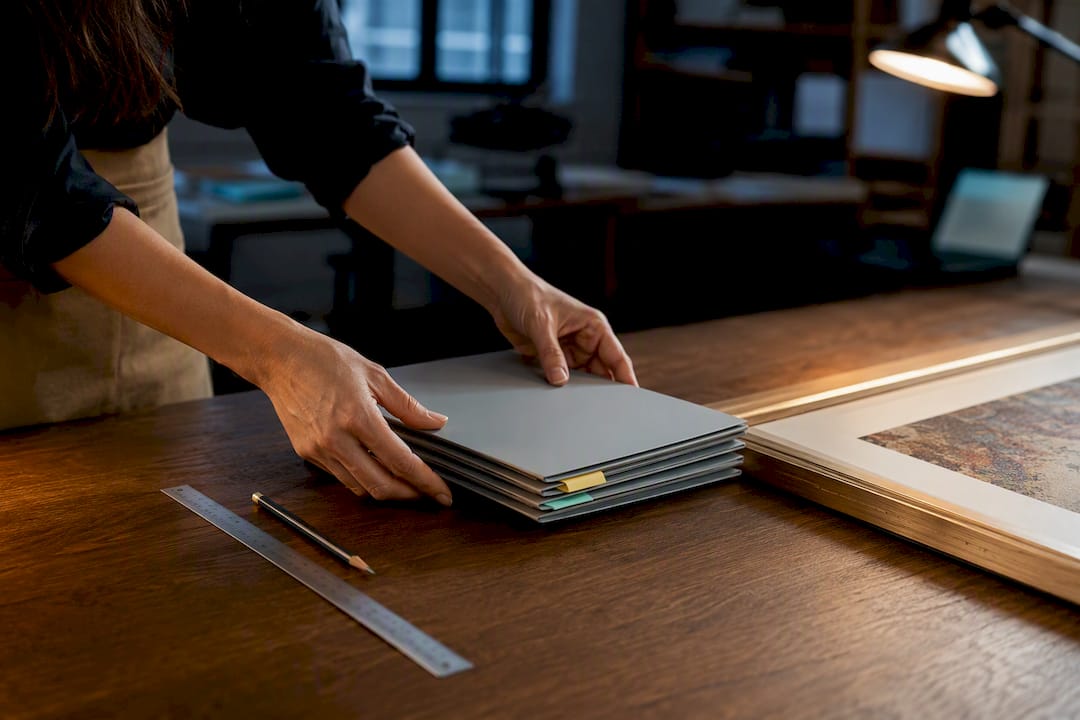
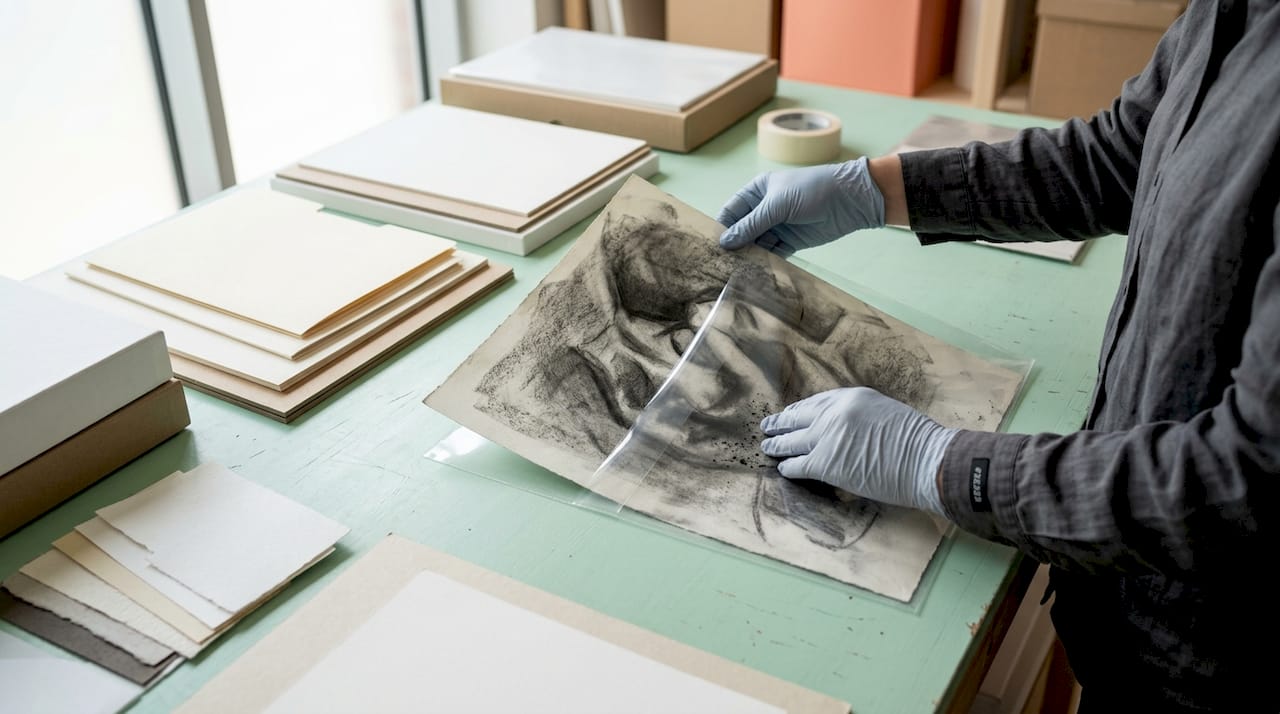
- Works on Paper (drawings, prints, collages, watercolors): Store flat in acid-free folders inside flat file cabinets. Museums Galleries Scotland recommends cool, dry storage with acid-free sleeves and boxes, avoiding basements where humidity fluctuates.
- Paintings: Store upright on padded racks with protective screens between canvases. Climate control is critical to prevent cracking or flaking of paint layers.
- Sculptures: Storage varies by material. Bronze requires different housing than ceramic or wood. Padded mounts and custom crating protect three-dimensional forms.
- Textiles: Store rolled on acid-free tubes or flat in shallow drawers. Avoid folding, which creates permanent stress lines.
- Photographs: Require archival-quality plastic sleeves or acid-free paper envelopes, stored away from light and in stable humidity.
- Mixed Media: Classify by the most vulnerable component. A piece combining paper and metal should follow paper storage protocols.
Pro Tip: Match every storage enclosure to the most sensitive material in the work. A charcoal drawing placed in a static-inducing plastic sleeve will attract dust and damage the surface within months.
2. Classification by size and physical form
Physical dimensions and shape create a second layer of classification that directly determines which art storage solutions are practical. Flat works, rolled works, oversized pieces, and three-dimensional objects each require different housing strategies.
- Flat storage: Folders and flat file cabinets work for works on paper and unframed prints up to standard sheet sizes. Interleaving with acid-free tissue prevents surface abrasion.
- Rolled storage: Large drawings, maps, and fabric works roll onto archival tubes. The tube diameter matters. A tube that is too narrow creates stress at the core of the rolled material.
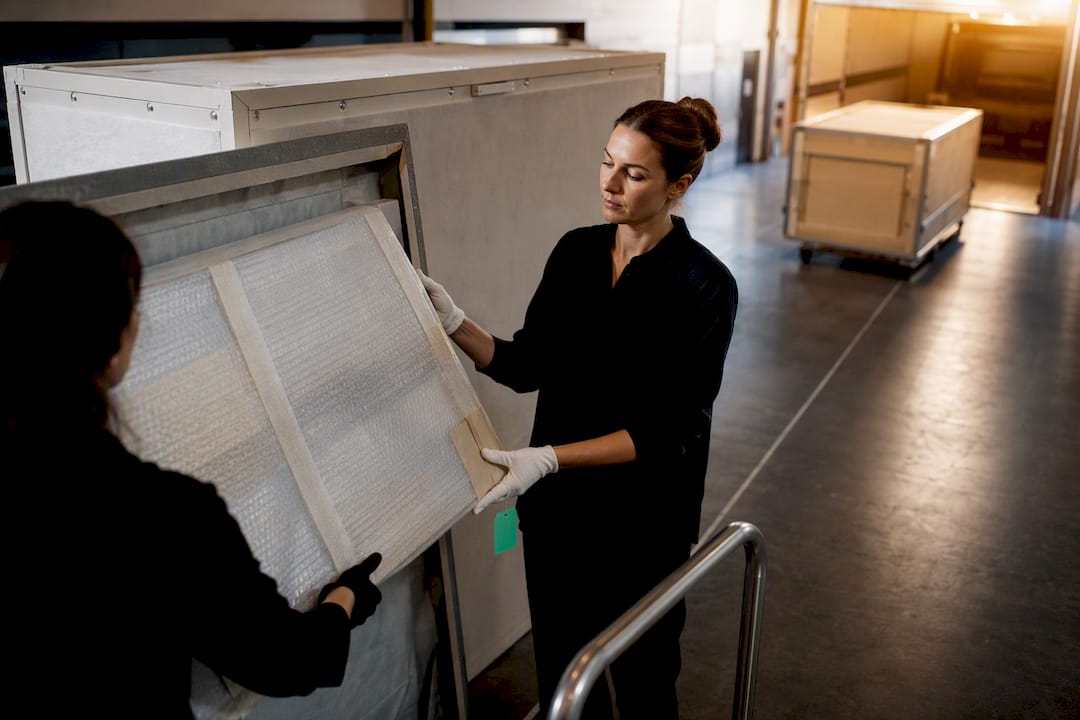
- Oversized objects: Custom crates or padded shelving accommodate works that exceed standard cabinet dimensions. NPS Conserve O Grams provide guidance on creating microclimates for oversized museum objects where standard enclosures cannot contain the piece.
- Three-dimensional objects: Sculptures, ceramics, and assemblages need padded supports that distribute weight evenly and prevent contact between surfaces.
The CARLI preservation resources, drawing on NEDCC leaflets, specifically address storage enclosures for oversized paper artifacts. The guidance confirms that size-based classification is not optional. It directly determines which enclosure type is physically possible.
Pro Tip: Plan handling and storage logistics before acquiring a large or unusually shaped work. Retrofitting storage after the fact costs more and increases the risk of damage during the adjustment period.
3. Environmental and preservation-based classifications
Storage classifications based on environmental sensitivity address the conditions a work needs to survive long-term. This layer of classification is where most preventable damage occurs, because collectors and galleries often underestimate how much humidity and temperature variation affect different materials.
The key environmental classifications are:
- Controlled climate storage: Works requiring stable temperature and relative humidity year-round. Paintings on canvas, photographs, and works on paper fall into this group.
- Microclimate storage: Used when a full room cannot be controlled. NPS Conserve O Grams advise microclimate boxes for sensitive or oversized objects where enclosure constraints exist. A microclimate box creates a localized stable environment inside a larger, less controlled space.
- Buffered material storage: Acid-free, buffered boxes and folders neutralize acidic off-gassing from paper and board. Unbuffered materials are used for protein-based items like wool or silk, where alkaline buffering causes chemical damage.
- Ambient storage: Works made from stable, non-hygroscopic materials that tolerate moderate environmental variation without significant risk.
EN 15757:2010 identifies microbiological growth as a risk above 60% relative humidity, while low humidity causes brittleness in hygroscopic materials like paper and wood. ISO 11799:2015 reinforces the need for climate stability and compartmentalization in archive and library collections. These standards apply directly to private collections and gallery storage, not just institutions.
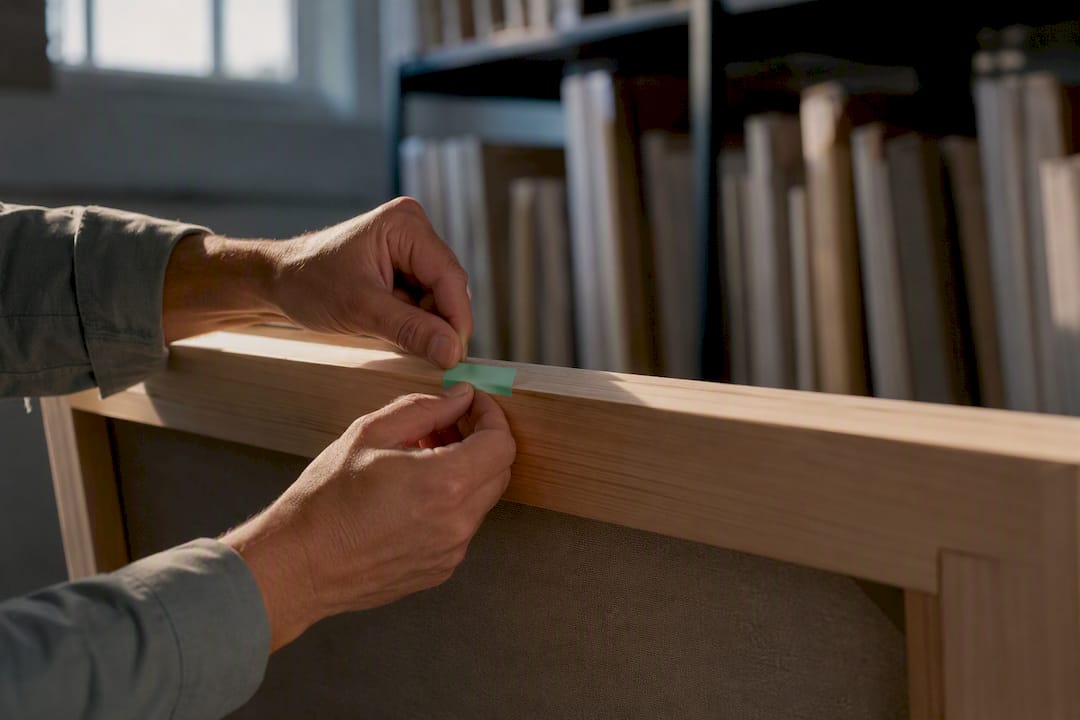
Pro Tip: Label every storage box with the work’s catalog number, material type, and environmental requirement. Minimal handling combined with clear labeling reduces the chance of a work being moved to an incompatible environment.
4. Organizational classifications and cataloging taxonomies
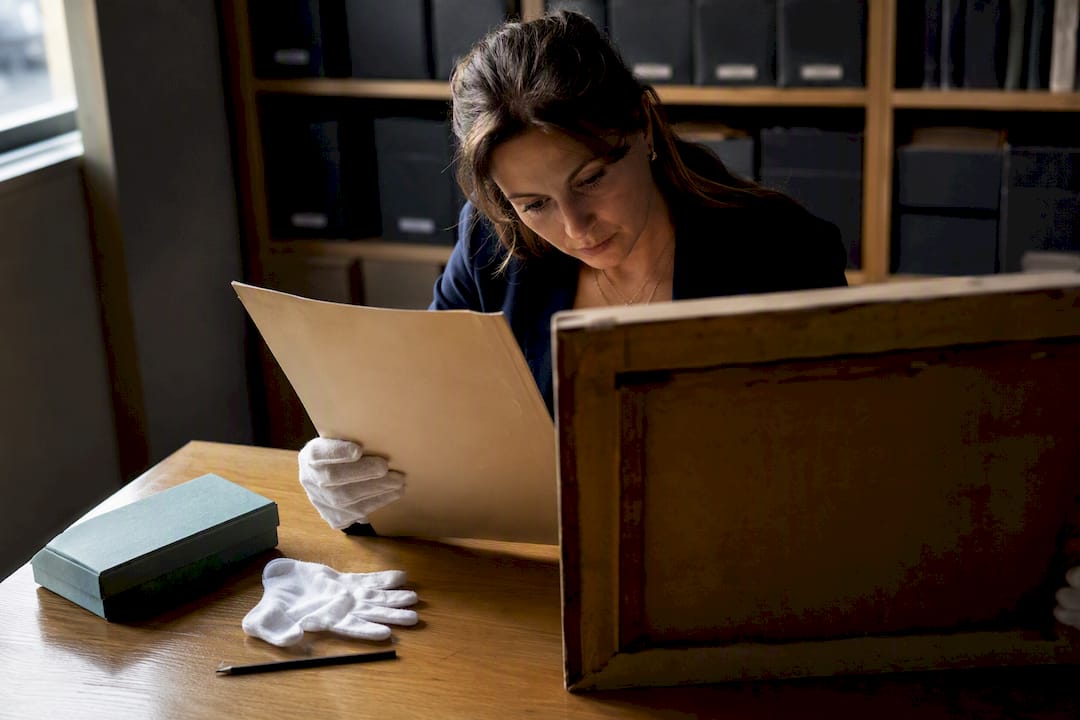
Classification happens twice for every artwork. The first classification is the catalog entry, which names the object and places it within a taxonomy. The second is the physical storage plan, which determines housing, location, and environmental controls. CatalogIt advises that mismatches between these two classifications cause preservation errors, such as placing charcoal works in static-inducing plastics or storing protein-based textiles in alkaline-buffered boxes.
The table below shows how catalog classification and physical storage classification work together:
| Catalog entry type | Physical storage requirement |
|---|---|
| Work on Paper (Drawing, Print) | Acid-free folders, flat files, cool dry environment |
| Painting (Oil, Acrylic) | Upright padded racks, climate-controlled room |
| Photograph (Silver gelatin, Inkjet) | Archival plastic sleeves, stable humidity and temperature |
| Textile (Woven, Embroidered) | Rolled on acid-free tubes or flat in shallow drawers |
| Sculpture (Ceramic, Bronze) | Padded mounts, custom crating, stable temperature |
Artworksoft supports this dual classification model through its artwork profile management system, which links catalog fields to location and condition records. This connection means a change in storage location updates the work’s record automatically, reducing the risk of a mismatch between where a work is documented and where it physically lives.
Best practices for organizational classification include consistent labeling, periodic audits, and clear naming conventions that all staff or collaborators follow. An art documentation system that records both catalog type and physical storage location closes the gap between taxonomy and physical care.
5. How to classify artwork storage for different users
Artists, collectors, and galleries each face different classification challenges. The right approach depends on collection size, budget, and how frequently works move between locations.
For emerging artists managing new portfolios:
- Classify works by material first. Group all works on paper together, all three-dimensional works together, and all photographic works together.
- Use acid-free folders and flat files for paper-based work from the start. Retrofitting storage later is more expensive than building correct habits early.
- Record each work’s material, dimensions, and storage location in a digital system before the collection grows beyond easy recall.
For collectors with diverse holdings:
- Apply environmental classification as a second layer after material classification. Identify which works need climate control and which tolerate ambient conditions.
- Separate works by risk level. High-value or fragile pieces warrant microclimate boxes or dedicated climate-controlled storage.
- Schedule regular art inventory audits to verify that physical storage matches catalog records.
For galleries managing sales and exhibitions:
- Build flexible classification systems that accommodate works moving between storage, display, and loan.
- Track artwork movement and logistics as part of the classification record. A work’s storage classification should update every time it changes location.
- Integrate classification with condition reporting so that any deterioration is flagged at the point of storage, not discovered at the point of sale.
Budget-friendly storage options, such as acid-free folders and flat file cabinets, cover the majority of paper-based and photographic works without significant investment. Climate-controlled storage units or purpose-built art storage rooms represent a larger cost but are justified for high-value or environmentally sensitive collections.
Key takeaways
Effective artwork storage classification requires matching material type, physical form, and environmental sensitivity to the correct housing and cataloging system.
| Point | Details |
|---|---|
| Classify by material first | Material type determines enclosure choice, from acid-free folders for paper to padded mounts for sculpture. |
| Apply size-based classification | Flat, rolled, oversized, and three-dimensional works each require distinct physical storage solutions. |
| Use environmental standards | EN 15757:2010 and ISO 11799:2015 define humidity and climate thresholds that guide storage class selection. |
| Classify twice for every work | Catalog taxonomy and physical storage planning must align to prevent preservation errors. |
| Audit classifications regularly | Periodic inventory checks confirm that physical storage matches catalog records and condition reports. |
Classification is more nuanced than most collections acknowledge
Most artists and collectors treat storage as a logistics problem. Find a shelf, find a box, done. What I have seen over years of working with collections of all sizes is that the damage almost always traces back to a classification gap. Not a storage failure. A classification failure.
The most common mistake is classifying by subject or medium label without thinking through the material vulnerabilities. A “watercolor” and a “gouache” are both works on paper, but gouache is more brittle when dry and more sensitive to humidity fluctuation. Treating them identically because they share a catalog parent category leads to preventable damage.
The second mistake is treating classification as a one-time event. Collections change. Works travel, condition changes, and storage environments shift. Classification needs to be a living record, not a label applied once at acquisition. The collectors I have seen maintain the best-preserved collections are the ones who review their storage classifications on a fixed schedule, at least annually, and update records after every loan or exhibition.
My recommendation is to build classification into the acquisition process itself. Before a work enters the collection, determine its material category, its environmental requirements, and its physical storage class. That decision should happen before the work arrives, not after it has been sitting in the wrong environment for six months.
— Nealda
Artworksoft: art inventory built around classification
Organizing a collection by material, size, and environmental need is straightforward when the right system supports the process.

Artworksoft connects artwork profiles to location records, condition notes, and movement history in one place. Artists, collectors, and galleries can record material type, storage classification, and environmental requirements directly within each artwork’s profile. The system updates location records in real time as works move between storage, display, and loan. Artworksoft also supports art inventory management with classification fields that align catalog taxonomy with physical storage planning. Start with the free Artworksoft system to build a classification framework your collection can grow into.
FAQ
What are the main types of artwork storage classifications?
The main types are material-based (paper, painting, sculpture, textile, photograph), size-based (flat, rolled, oversized, three-dimensional), and environment-based (climate-controlled, microclimate, buffered, ambient). Each classification determines the appropriate physical housing and preservation conditions.
How does humidity affect artwork storage classification?
EN 15757:2010 establishes that relative humidity above 60% promotes microbiological growth, while low humidity causes brittleness in paper and wood. These thresholds determine whether a work requires climate-controlled or microclimate storage.
What is the difference between catalog classification and physical storage classification?
Catalog classification names and organizes a work within a taxonomy, such as Painting or Work on Paper. Physical storage classification determines the housing, location, and environmental controls. Both must align to prevent preservation errors.
How should galleries classify artworks that move frequently?
Galleries should build flexible classification systems that update storage class and location records every time a work moves. Integrating condition reporting with movement tracking ensures that storage classification stays current through exhibitions, loans, and sales.
What storage materials are recommended for paper-based artworks?
Museums Galleries Scotland recommends acid-free sleeves, folders, and boxes stored in cool, dry locations away from basements. Avoid adhesive tapes and use small bundles with proper labeling to reduce handling damage.