
The most effective art business marketing tools 2026 are defined not by individual features but by how well they work together as a system. Artists and galleries that combine presentation tools, collector CRMs, email marketing, social media scheduling, and design platforms create repeatable, scalable workflows that shift promotion from guesswork to consistent output. Marketing consultant Christina Lister identifies five audience trends reshaping arts marketing this year, including value-seeking behavior, AI-optimized search, and scarcity-driven engagement. These trends make the right toolset a business-critical decision, not a nice-to-have.
1. What are the five essential categories of art marketing tools in 2026?
The core art marketing stack includes five categories, each serving a distinct function in the sales and visibility workflow.
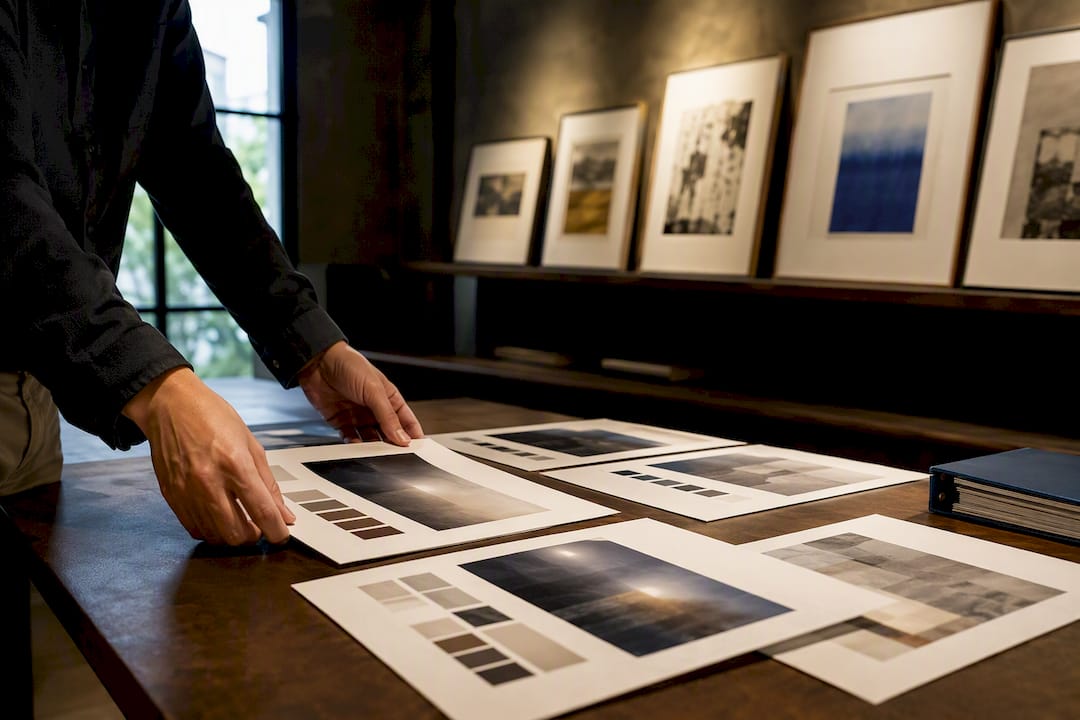
- Presentation tools generate visual mockups and video showcases that help collectors picture artwork in real spaces. Strong visual presentation reduces purchase hesitation and increases perceived value.
- Collector CRMs track relationships, follow-up schedules, and sales pipeline stages. Without a CRM, high-value collector relationships fall through the cracks.
- Email marketing platforms deliver direct communication to an owned audience. Unlike social media, email lists are not subject to algorithm changes.
- Social media schedulers allow artists to batch-create and publish content across multiple platforms on a consistent cadence. Consistency builds audience trust faster than sporadic posting.
- Design tools speed up the creation of social posts, newsletters, and promotional graphics. Templates reduce production time without sacrificing visual quality.
These five categories integrate into workflows that turn art marketing from a reactive task into a planned system. Consistent content presentation, batch cataloging, and scheduled drops increase sales more reliably than follower count alone.
Pro Tip: Choose tools that offer API connections or native integrations with each other. Connecting your CRM to your email platform, for example, automates follow-up sequences without manual data entry.

2. How AI-powered tools are changing art promotion workflows in 2026
AI is the single biggest shift in digital marketing for artists this year. AI tools can automate up to 80% of routine distribution and content creation tasks, including social captions, email subject lines, and full marketing strategy roadmaps. That figure means an artist spending ten hours a week on promotion could reclaim eight of those hours for studio work.
The practical applications are specific:
- Caption generation for Instagram, Facebook, and Pinterest posts based on artwork descriptions
- Email subject line testing that predicts open rates before a campaign launches
- SEO content drafts for individual artwork pages, which are critical for search visibility
- Audience targeting suggestions based on engagement data and collector behavior patterns
- Campaign calendar creation that maps content themes to exhibition dates and seasonal demand
AI tools function as a personal marketing agency for artists who cannot afford to hire one. The key consideration is balance. Automation handles distribution and drafting, but authentic engagement, responding to collector inquiries and sharing genuine studio updates, still requires a human voice.
Pro Tip: Introduce AI tools one at a time. Start with caption generation for one platform, measure the time saved, then add the next tool. Adopting five AI tools simultaneously creates confusion and rarely sticks.
3. Why consolidated platforms reduce cost and complexity
Artists who subscribe to separate tools for portfolio hosting, link-in-bio, booking, payments, and email often pay for significant overlap. Website-in-bio platforms designed for creators consolidate these functions into one system, saving artists around $200 annually compared to maintaining individual subscriptions.
The financial saving is real, but the operational benefit is larger. Software fatigue is a documented problem for independent artists. Logging into five separate dashboards to complete one promotional task creates friction that leads to inconsistent marketing output. Unified platforms eliminate that friction.
Key features artists gain from consolidated systems include:
- Digital product sales without a separate e-commerce subscription
- Booking management for studio visits, commissions, and consultation calls
- Portfolio display with integrated email capture on the same page
- Inventory updates that sync automatically across portfolio, sales records, and public listings
Centralizing artwork data means one input updates everything. An artist who adds a new piece to their inventory sees that work appear in their portfolio, their sales pipeline, and their promotional feed without duplicate data entry.
4. How to choose tools based on your goals and audience
Tool selection starts with identifying your primary business objective. Visibility, collector conversion, and community building each require a different emphasis in the marketing stack.
- Visibility-focused artists need strong SEO tools, social schedulers, and presentation platforms. Individual artwork pages with descriptive text are vital for search ranking. A portfolio page with images but no text is invisible to search engines.
- Conversion-focused artists need a collector CRM, email automation, and a payment-integrated portfolio. The goal is moving a warm lead from interest to purchase with minimal friction.
- Community-focused artists benefit from platforms with built-in audience features, newsletter tools, and social scheduling that supports regular engagement.
Audience behavior also shapes the right tool choice. Marketing consultant Christina Lister notes that value-seeking, risk-averse audiences require different messaging than exclusivity-driven collectors. Tools with segmentation features allow artists to tailor communication by collector type.
Budget is a practical constraint. Most categories offer free or basic tiers that cover core functions. Paid tiers add automation, analytics, and AI features. The standard approach is to start on free plans, validate the workflow, then upgrade when the tool proves its value.
Pro Tip: Run a small campaign with any new tool before committing to an annual subscription. A 30-day test with a defined goal, such as 10% email open rate improvement, gives you real data to justify the cost.
5. Comparison of core art marketing tool categories
The table below compares the six main tool categories by their primary function, key features, and trade-offs. Use it to identify gaps in your current stack.
| Category | Primary function | Key features | Trade-offs |
|---|---|---|---|
| Presentation tools | Visual mockups and showcasing | Room mockups, video display, print previews | Limited CRM or sales features |
| Collector CRMs | Relationship and pipeline management | Contact records, follow-up automation, deal tracking | Requires consistent data entry to stay accurate |
| Email marketing platforms | Direct audience communication | Automation sequences, segmentation, A/B testing | List growth requires a separate lead capture strategy |
| Social media schedulers | Multi-platform content distribution | Batch scheduling, analytics, hashtag tools | Does not replace authentic real-time engagement |
| Design platforms | Content creation for promotion | Templates, brand kits, image editing | Output quality depends on user design skill |
| All-in-one builders | Unified portfolio, sales, and marketing | Payment integration, booking, email capture, inventory sync | May lack depth in any single specialized category |
Integrated suites reduce redundant features and unify workflows. The trade-off is that all-in-one platforms sometimes sacrifice depth in specialized areas. The practical solution is to use an all-in-one platform as the operational core, then add one or two specialized tools where depth matters most for your business model.
6. Paid social advertising: where it fits in the 2026 marketing mix
Paid social advertising is most effective as a campaign-specific tool for driving local exhibition traffic, not as a permanent brand awareness channel. Galleries and artists who run paid ads continuously without a defined campaign objective tend to overspend for minimal return.
The correct approach is to set a small test budget, define a specific goal such as ticket sales or studio visit bookings, run the campaign for a fixed period, and measure the result against the spend. If the return justifies the cost, scale the budget. If not, redirect the spend to owned channels like email or SEO.
Paid social works best when it amplifies content that already performs organically. An artwork post that generates strong organic engagement is a reliable candidate for a paid boost. Boosting low-performing content rarely improves its results.
7. Building an art business profile that supports long-term marketing
An artist’s website is the only marketing asset they fully own. Social platforms change algorithms, reduce organic reach, and occasionally shut down. A well-structured website with individual artwork pages and descriptive text compounds in search value over time.
SEO for artists delivers what paid advertising cannot: long-term discovery without ongoing spend. A single portfolio page with images but no text ranks for nothing. Dedicated artwork URLs with titles, medium descriptions, dimensions, and provenance details rank for specific collector searches and build cumulative authority.
The practical implication is that every artwork added to a public portfolio should have its own URL and at least 100 words of descriptive text. This is not a one-time task. It is an ongoing practice that builds search visibility with each new piece.
Key takeaways
The most effective art marketing strategy in 2026 combines five integrated tool categories, AI automation, and a centralized platform to create consistent, measurable promotional output.
| Point | Details |
|---|---|
| Five-category stack | Presentation, CRM, email, scheduling, and design tools form the complete marketing system. |
| AI automates routine tasks | AI tools handle up to 80% of content creation and distribution, freeing time for studio work. |
| Consolidation saves money | Unified platforms save around $200 annually and reduce software fatigue significantly. |
| SEO compounds over time | Individual artwork pages with descriptive text build long-term search visibility without paid spend. |
| Paid ads need a campaign goal | Paid social works for event-specific traffic, not as a permanent always-on channel. |
What I’ve learned about building a marketing stack that actually works
The conversation about art marketing tools almost always focuses on which single platform is best. That framing misses the point entirely. The artists I’ve seen build consistent sales pipelines are not using the most feature-rich tools. They are using tools that connect to each other and fit their actual daily habits.
The shift from isolated tools to integrated workflows is real, and it matters more than any individual feature. An artist who uses a CRM that does not talk to their email platform will always have a gap in their follow-up process. That gap costs sales.
I’m also skeptical of the advice to run paid social ads continuously. The data is clear: paid ads work for campaigns, not for permanent brand building. Artists who spend $300 a month on always-on Facebook ads with no defined campaign goal are subsidizing Meta’s revenue, not building their own audience. That budget is almost always better spent on SEO content or email list growth.
The most underrated long-term asset in digital marketing for artists is a well-structured website with individual artwork pages. Search engines index those pages for years. A collector searching for “oil painting of coastal Maine” in 2028 can still find a page you wrote today. No social post has that lifespan.
My practical recommendation is to start with the all-in-one platform as your operational base, add one specialized tool where your workflow has a clear gap, and invest consistently in SEO content. Automate what you can with AI, but keep your collector communication personal. That combination outperforms any single tool, at any price point.
— Nealda
Artworksoft as your art business management and marketing hub
Artists and galleries that want a single system to manage inventory, track sales, and support marketing workflows have a direct option in Artworksoft.
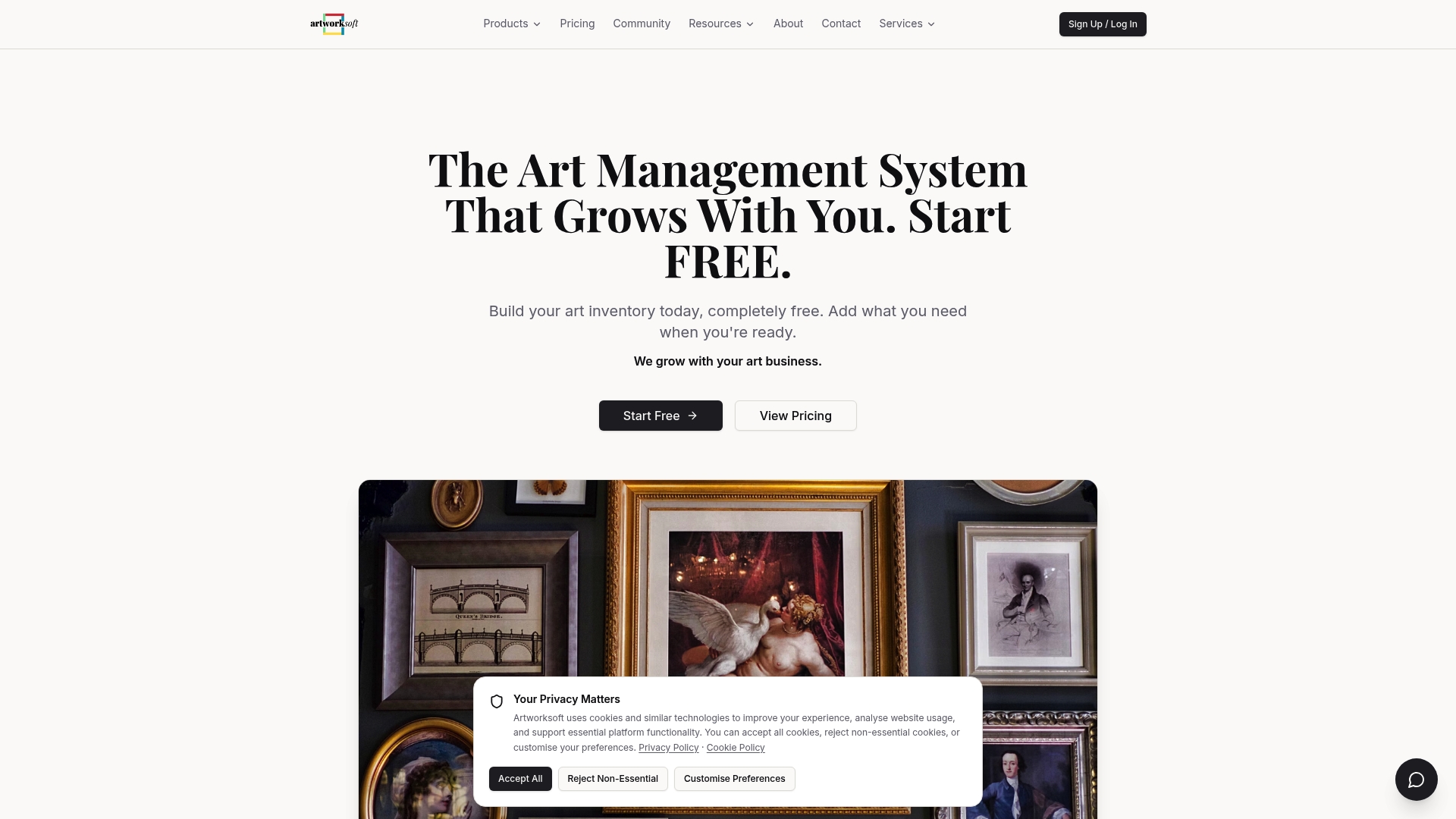
Artworksoft connects artwork profile management, sales transaction tracking, and portfolio organization in one platform. When you add a new piece, your inventory, portfolio, and sales records update together. The platform also generates professional documentation, including Certificates of Authenticity, and includes community features that increase artist visibility. For artists ready to consolidate their operations and market more consistently, starting with Artworksoft is a practical first step.
FAQ
What are the five core art marketing tool categories in 2026?
The five categories are presentation tools, collector CRMs, email marketing platforms, social media schedulers, and design tools. Together, they form a complete system for consistent art promotion and sales.
How much can AI automate in an art marketing workflow?
AI tools can automate up to 80% of routine tasks including social captions, email subject lines, and content scheduling. Artists retain control of authentic collector engagement and creative direction.
Why does SEO matter more than paid ads for long-term art sales?
SEO generates compounding value by making individual artwork pages discoverable in search results over time, without ongoing spend. Paid ads stop delivering results the moment the budget runs out.
How do consolidated platforms save artists money?
All-in-one creator platforms replace separate subscriptions for portfolio hosting, link-in-bio tools, booking systems, and payment processors, saving artists around $200 annually while reducing administrative complexity.
How should artists use paid social advertising effectively?
Paid social advertising works best as a campaign tool for driving traffic to specific events or exhibitions, tested with small budgets first. Running it as a permanent always-on channel without a defined goal produces poor return on spend.