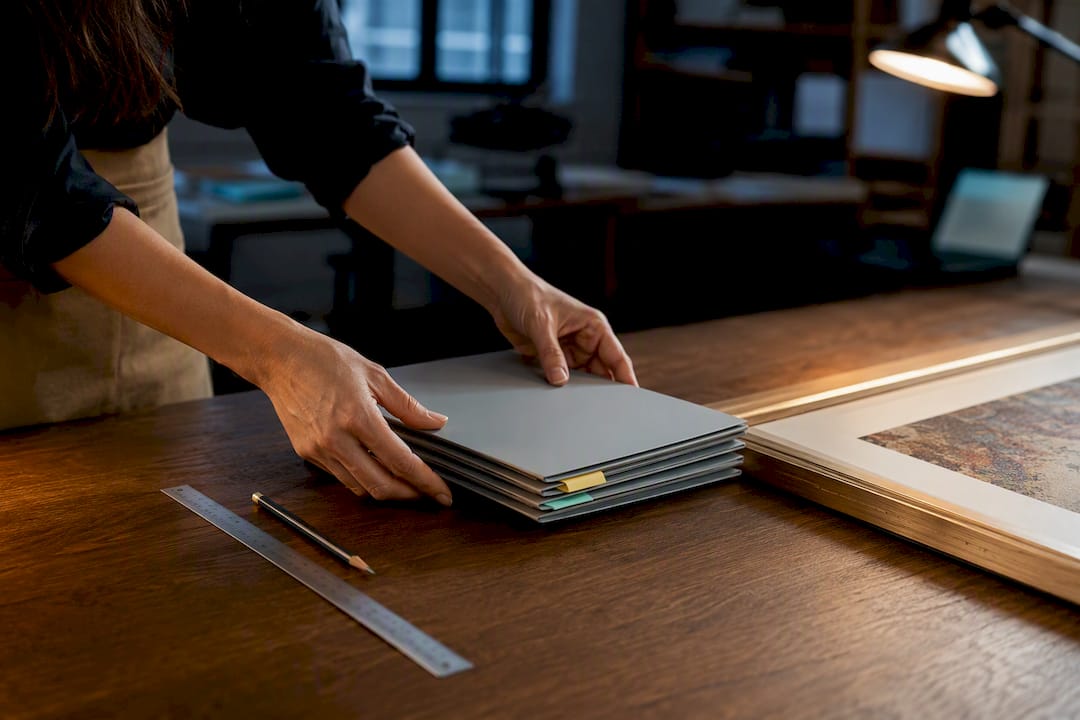

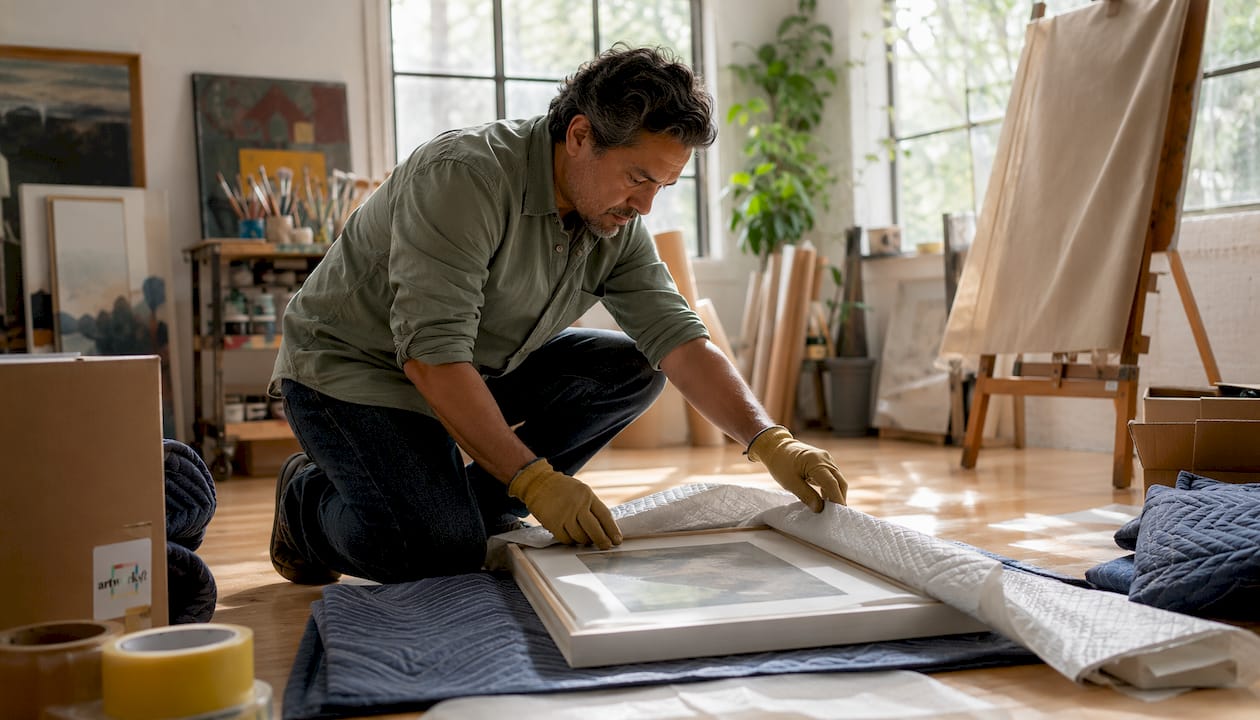
Art transportation is the professional movement of artworks using white-glove handling, climate-controlled vehicles, and documented chain-of-custody protocols from origin to destination. Before scheduling any move, take three immediate steps: (1) complete a written condition report with high-resolution photographs, (2) select the transport mode that matches your shipment’s value, size, and urgency, and (3) confirm agreed-value insurance coverage and all required paperwork with your provider.
- Document condition first. A signed, timestamped condition report with photos is the foundation of every insurance claim and provenance record.
- Match the mode to the shipment. Local moves, coast-to-coast shuttles, air freight, and sea freight each serve a different profile.
- Confirm insurance before pickup. Agreed-value coverage, named perils, and a current certificate must be in hand before any work leaves the wall.
Named industry bodies such as ICEFAT (International Convention of Exhibition and Fine Art Transporters) and U.S. Customs and Border Protection set the compliance standards that professional providers follow. Artworksoft centralizes the documentation that makes every one of these steps auditable.
Pro Tip: Request a copy of your provider’s insurance certificate and confirm it names your artwork specifically — not just a blanket policy number.
Table of Contents
- Which transport mode fits your art shipment?
- How do you document chain-of-custody and condition at every handover?
- What should a site risk assessment cover before pickup?
- Packing, crating, and handling best practices by artwork type
- What insurance and paperwork do you need before any art move?
- What drives art transportation timelines and costs?
- How do you choose and vet an art transportation provider?
- How does collection-management software reduce transport risk?
- Key Takeaways
- What experienced registrars know that most guides skip
- Artworksoft centralizes your transport documentation from day one
- Useful sources
Which transport mode fits your art shipment?
Fine art logistics providers tailor the transport mode to the shipment’s value, urgency, size, and destination. The table below maps common shipment profiles to the appropriate mode.
| Mode | Best For | Typical Lead Time |
|---|---|---|
| White-glove local courier | Single high-value work, short distance | Same day to 48 hours |
| Scheduled shuttle | Coast-to-coast, multi-stop, mid-value | Typical multi-day lead times |
| Dedicated trucking | Museum exhibitions, full-load, high-value | Standard multi-day transit windows |
| Air freight | Urgent international, time-sensitive loans | multi-day transit plus customs clearance time |
| Sea freight | High-volume, multi-crate, non-urgent international | long transit durations over multiple weeks |
- White-glove courier: vetted two-person teams, GPS-tracked vehicles, door-to-door service for a single painting or sculpture.
- Scheduled shuttle: consolidated shuttle networks run fixed routes (e.g., New York to Los Angeles) and reduce cost for mid-value works that share space with other vetted consignments.
- Dedicated trucking: the right choice for full museum exhibitions or when chain-of-custody cannot tolerate carrier handoffs.
- Air freight: preferred for international loans with tight exhibition deadlines; customs clearance adds 1–3 business days at each border.
- Sea freight: cost-effective for multi-crate shipments where a 4–12+ week transit window is acceptable.
Large or multi-stop shipments commonly combine carriers; a dedicated project manager keeps chain-of-custody intact across every leg.
Pro Tip: For coast-to-coast moves under five crates, a scheduled shuttle almost always costs less than dedicated trucking without sacrificing condition standards.

How do you document chain-of-custody and condition at every handover?
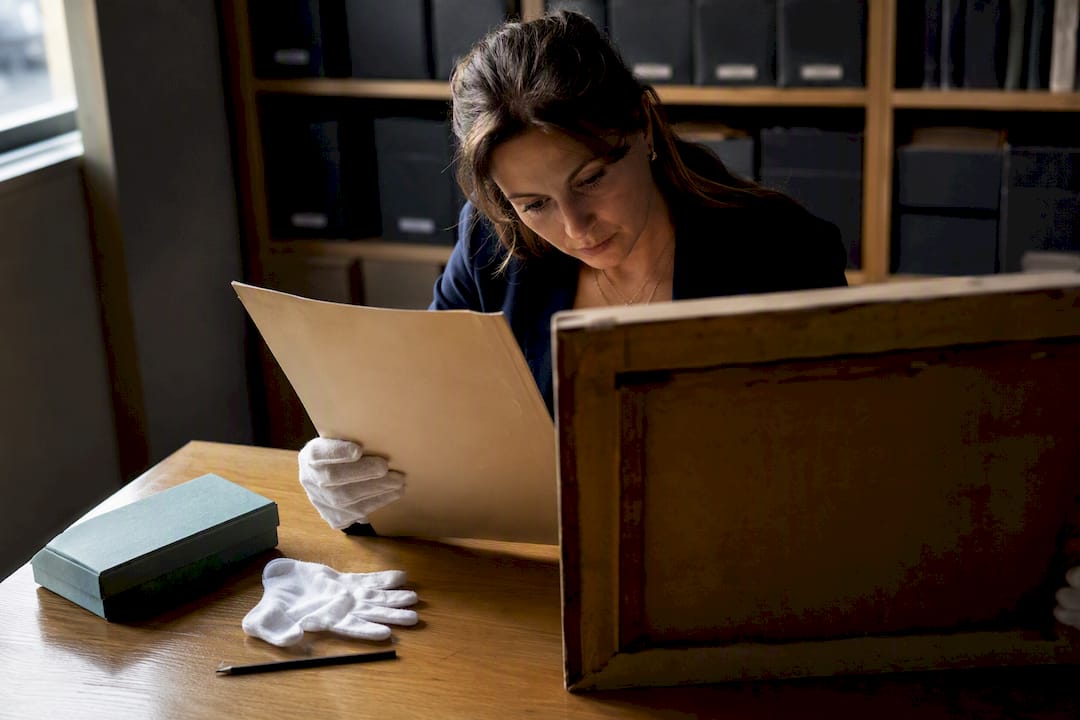
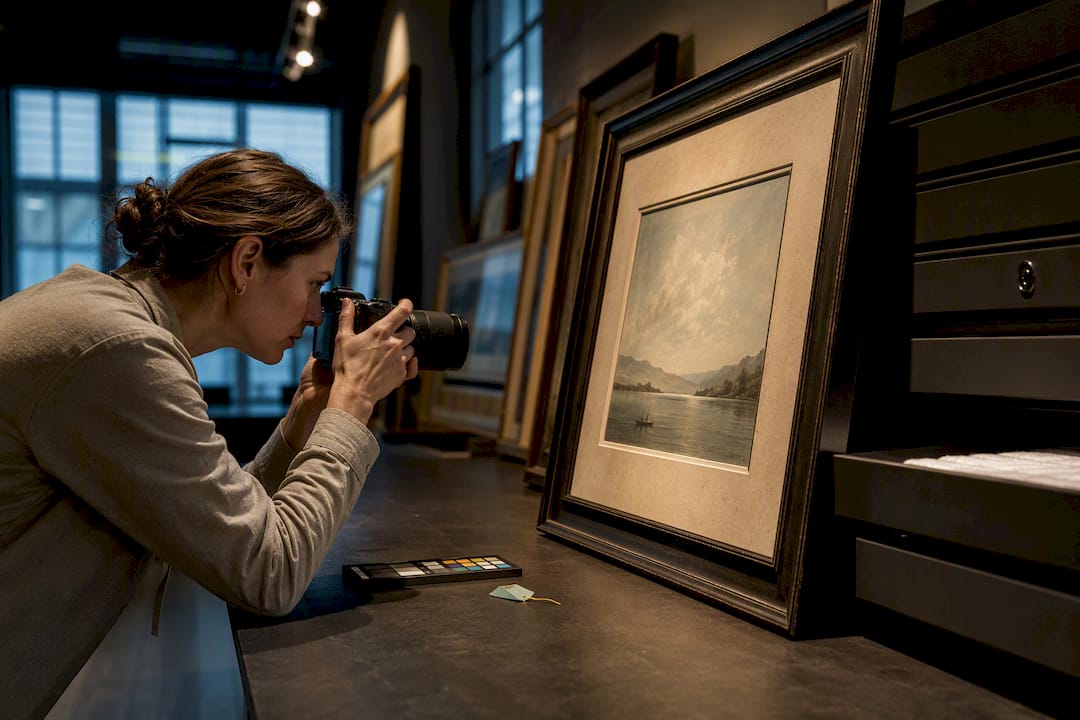
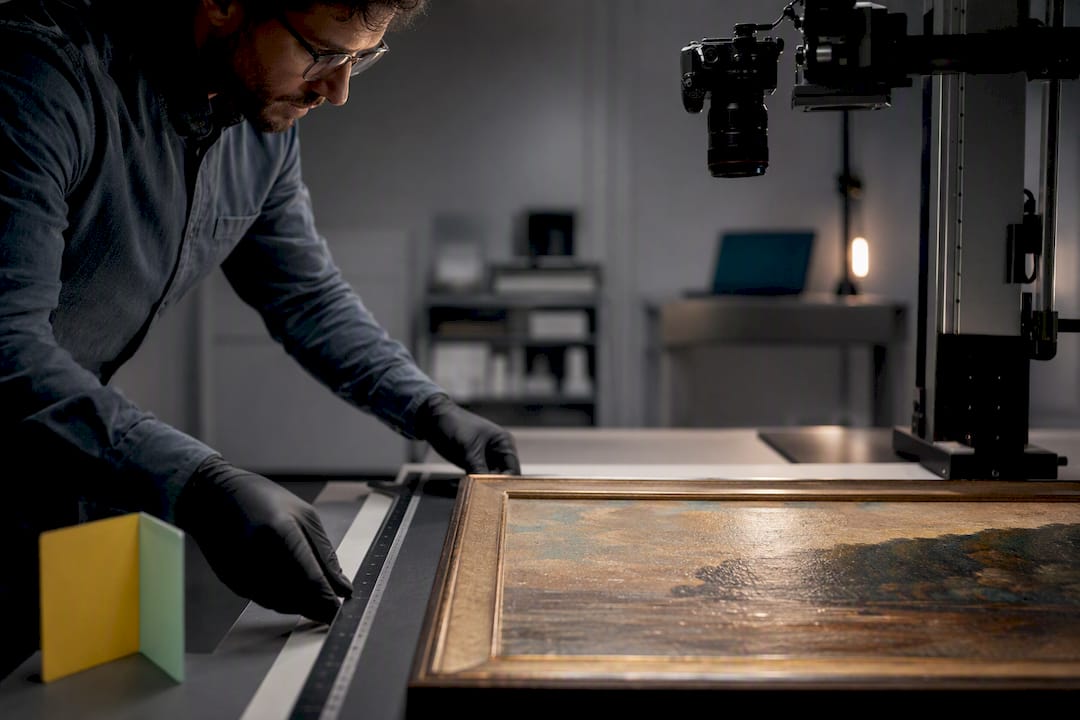
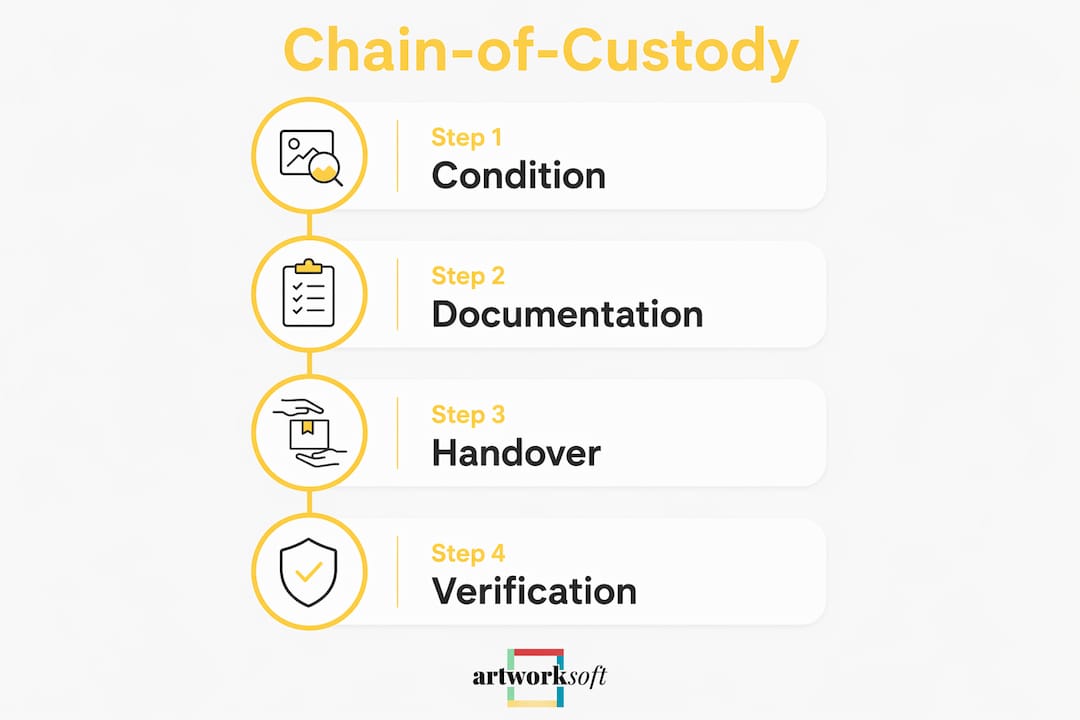
Chain-of-custody documentation is standard practice in fine art logistics: every handover must be documented, signed, and assessed for condition to mitigate risk and preserve provenance. Without pre- and post-move photographic condition reports, claim liability becomes opaque.
What a condition report must include:
- Artwork dimensions, medium, and weight
- Written description of existing condition (scratches, cracks, surface dirt, frame damage)
- High-resolution photographs from multiple angles, including detail shots of any existing damage
- Date, time, and location of the inspection
- Printed name and signature of both the releasing and receiving parties
Where to document handovers:
- Pickup from origin (studio, gallery, private residence)
- Transfer between carriers or storage facilities
- Arrival at destination or installation site
- Post-installation inspection
Insurers require photographic and written condition evidence at each transition; without it, claims become significantly harder to process. Storing signed reports in Artworksoft’s artwork profile management system creates a timestamped, auditable record that travels with the work’s provenance history.
Pro Tip: Use a smartphone with GPS metadata enabled when photographing condition — the embedded timestamp and location data satisfy most insurer documentation requirements without additional paperwork.
What should a site risk assessment cover before pickup?
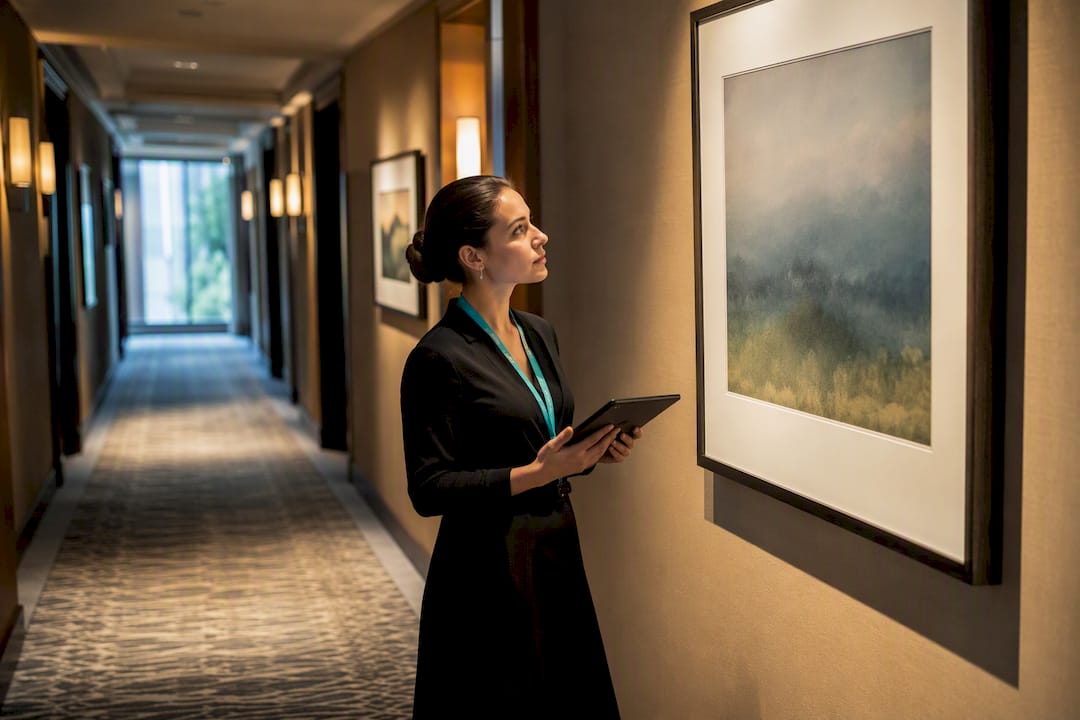
Transport specialists recommend site-specific risk assessments that consider hanging fixtures, local environmental conditions, and the artwork’s fragility before scheduling any move. A thorough assessment at both origin and destination prevents installation delays and unexpected crating costs.
Core site assessment checklist:
- Doorway and corridor clearances (width, height, turning radius)
- Elevator dimensions and weight capacity
- Stair configuration and handrail obstructions
- Existing hanging hardware (load rating, wall substrate)
- Temperature and relative humidity readings
- Lighting and UV exposure at the installation point
- Security systems and access control at the destination
| Assessment Item | What to Measure | Acceptable Standard |
|---|---|---|
| Doorway clearance | Width and height in inches | Minimum 6 inches wider than crated work |
| Elevator capacity | Weight limit in pounds | Must exceed crate + handlers |
| Wall substrate | Material and stud spacing | Rated for artwork weight |
| Humidity | Relative humidity % | 45–55% RH for most works on paper and canvas |
| Temperature | Degrees Fahrenheit | A stable, moderate temperature |
Pro Tip: Request the site assessment report from your transporter in writing before the move date — it becomes part of the installation record and can support an insurance claim if a fixture fails.
Packing, crating, and handling best practices by artwork type
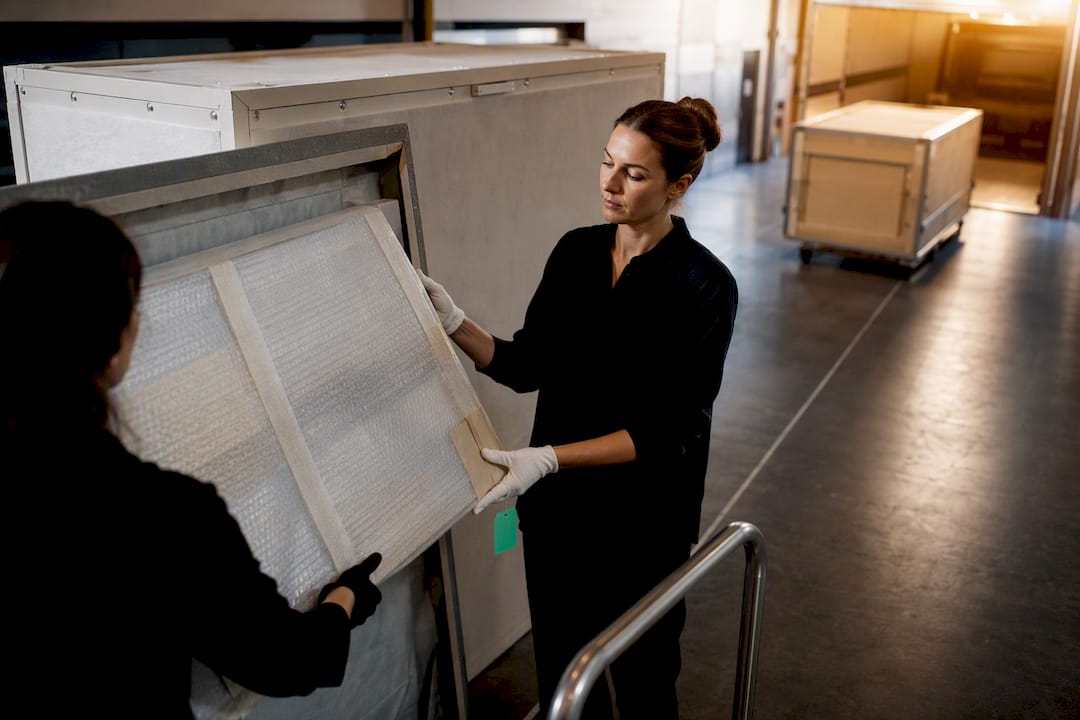
Museum-grade climate-controlled vehicles, custom crating, and in-house installers are standard features of professional fine art logistics providers. The right packing choice depends on the artwork’s material, fragility, and transit distance.
Step-by-step handling checklist for pickup and loading:
- Wear clean cotton or nitrile gloves; never handle unframed canvas or works on paper bare-handed.
- Wrap the work in acid-free glassine, then a layer of polyethylene foam.
- Place in a fitted commercial or custom crate lined with ethafoam or foam-in-place material.
- Secure the crate with ratchet straps rated for the crate’s weight; never stack crates without load-bearing spacers.
- Load into a climate-controlled, air-ride suspension vehicle with integrated alarm and GPS.
- Confirm two trained art handlers are present for any work over 50 pounds or larger than 48 inches.
Crating guidance by artwork type:
- Framed paintings: commercial crates with foam corners suffice for local moves; museum-grade custom crates for interstate or international.
- Sculptures: foam-in-place systems conform to irregular shapes and eliminate movement during transit.
- Textiles and works on paper: rolled or flat-packed in acid-free materials inside a sealed, humidity-buffered crate.
- Digital displays and screens: manufacturer-spec foam inserts inside a double-walled crate with shock indicators.
White-glove service includes vetted handlers and unmarked, alarmed vehicles; for high-value or high-profile shipments, staff background checks and vehicle discretion are as important as the packing materials themselves.
Pro Tip: Ask your provider whether their crate shop is in-house. Outsourced crating introduces an undocumented handoff that breaks chain-of-custody before the work even reaches the vehicle.
What insurance and paperwork do you need before any art move?
Agreed-value insurance means the insurer pays the documented value of the work in full if it is lost or damaged, with no depreciation applied. This differs from actual cash value policies, which can reduce payouts based on age or condition.
Documentation checklist:
- Current appraisal or valuation report (dated within 3 years for most insurers)
- Title and provenance documentation
- Signed condition report from origin inspection
- Insurance certificate naming the work, agreed value, and named perils
- Bill of lading or transport contract
For international moves, add:
- Export license (required for works over certain age/value thresholds under U.S. law)
- U.S. Customs and Border Protection (CBP) entry documentation for inbound shipments
- ATA Carnet for temporary exports to participating countries
- CITES permit for works containing protected materials (ivory, tortoiseshell, certain woods)
| Document | When Required | Issuing Authority |
|---|---|---|
| Export license | Works over applicable age/value threshold | U.S. Department of Commerce / State |
| CBP Entry | All commercial inbound shipments | U.S. Customs and Border Protection |
| ATA Carnet | Temporary export for exhibitions | U.S. Council for International Business |
| CITES permit | Protected biological materials | U.S. Fish & Wildlife Service |
Pro Tip: Verify that your insurance certificate lists “wall-to-wall” coverage — meaning protection begins the moment the work is removed from its hanging position, not when it reaches the vehicle.
What drives art transportation timelines and costs?
Timelines vary significantly by mode and destination. Local same-day to 48-hour service applies to white-glove courier moves within a metro area. Coast-to-coast shuttle service typically runs 3–7 days. International air freight adds 2–5 days in transit plus customs clearance time at each border. Sea freight for multi-crate international consignments runs 4–12+ weeks depending on routing.
Primary cost drivers:
- Custom crating materials and labor (often the largest single line item for fragile works)
- Distance and transport mode selected
- Declared value and corresponding insurance premium
- Handling complexity (oversized works, multi-floor installations, rigging)
- Short-term storage or climate-controlled holding between legs
- Customs brokerage fees and duties for international moves
| Cost Factor | Lower Cost Scenario | Higher Cost Scenario |
|---|---|---|
| Crating | Commercial off-the-shelf crate | Custom museum-grade crate |
| Distance | Local metro | International air |
| Value | lower-value shipments | high-value shipments |
| Handling | Standard two-handler pickup | Rigging, crane, or multi-floor |
| Storage | Direct point-to-point | Climate-controlled interim hold |
Consolidated shuttles reduce per-unit cost when a shipment does not fill a dedicated vehicle. Dedicated trucking or air freight is justified when timing, security, or chain-of-custody requirements cannot accommodate shared transport.
How do you choose and vet an art transportation provider?
Buyer checklist — ask every candidate these questions:
- What certifications or industry memberships does your company hold (ICEFAT, AAM)?
- Describe your condition-reporting process at pickup, transfer, and delivery.
- Are your handlers employees or subcontractors, and how are they vetted?
- What are your vehicle specifications (climate control, air-ride, alarm, GPS)?
- Do you handle customs brokerage in-house or through a third party?
- Can you provide references from galleries or insurers, and your documented claims history?
- How do you manage chain-of-custody across multi-leg or multi-carrier shipments?
Selection criteria:
- Demonstrated white-glove experience with works comparable in value and type to yours
- In-house crating capability (not outsourced)
- Named-peril insurance coverage with agreed-value options
- Dedicated project manager for complex or multi-stop moves
- Transparent claims history and verifiable references
Red flags to watch for:
- Evasive or vague answers about insurance coverage or deductibles
- No written condition-reporting process
- Unvetted subcontractors handling high-value works
- No site assessment offered before scheduling
- Inability to provide a certificate of insurance naming your work
Pro Tip: A provider who cannot describe their condition-report workflow in specific terms has likely never been through a contested insurance claim. That gap becomes your problem.
How does collection-management software reduce transport risk?
Integrating transport with inventory software means movement, valuation, and preservation records live in one place, making every move auditable from pickup to installation. Artworksoft’s movement and logistics features are built around exactly this workflow.
Practical workflow in Artworksoft:
- Create a movement task linked to the specific artwork record
- Attach the signed condition report and photographs directly to the task
- Link the insurance certificate and transporter contact to the same record
- Record handover signatures at each transition point
- Update the artwork’s location automatically upon delivery confirmation
Key software features that support transport:
- Movement history log with timestamps and location data
- Document attachments (condition reports, insurance certificates, customs forms)
- Role-based access so transporters, registrars, and owners each see only what they need
- Audit log for provenance and claims documentation
- Export function for pickup manifests and customs paperwork
Integrating transport events with collection records transforms one-off moves into auditable provenance and valuation evidence. Artworksoft’s art identification and traceability tools make that evidence retrievable in minutes, not hours, when an insurer or customs officer requests it.
| Feature | Transport Benefit |
|---|---|
| Movement history | Proves chain-of-custody at every handover |
| Document attachments | Keeps condition reports and certificates with the artwork record |
| Audit log | Supports insurance claims and provenance verification |
| Export / manifest | Generates pickup lists and customs paperwork from existing data |
Pro Tip: Generate your pickup manifest directly from Artworksoft before the transporter arrives — it eliminates transcription errors and gives the handler a signed reference document on site.
Key Takeaways
Successful art transportation requires documented chain-of-custody, the correct transport mode, agreed-value insurance, a site risk assessment, and centralized collection records before any work leaves its location.
| Point | Details |
|---|---|
| Condition report first | Complete a signed, photographed condition report before pickup — insurers require it. |
| Match mode to shipment | Local courier, shuttle, dedicated truck, air, or sea each fit a different value and urgency profile. |
| Agreed-value insurance | Confirm wall-to-wall, named-peril coverage with a certificate before the work moves. |
| Site risk assessment | Measure clearances, test fixtures, and check humidity at both origin and destination. |
| Artworksoft integration | Use Artworksoft’s movement and logistics tools to centralize condition reports, manifests, and chain-of-custody records in one auditable system. |
What experienced registrars know that most guides skip
The most common failure point in fine art shipping is not the vehicle or the crate. It is the gap between what an owner packs and what an insurer will cover. Owner-packed shipments frequently fall outside a policy’s named-peril coverage unless the packing was inspected and documented by a qualified handler before pickup. That single oversight has voided claims on works worth hundreds of thousands of dollars.
Timing conflicts at art fairs create a second category of avoidable risk. When multiple galleries share a shuttle to a fair, pickup windows compress. A work that is not crated and ready at the agreed time either misses the shuttle or gets rushed, and rushed packing is where condition damage originates. Staging the artwork in its crate 24 hours before pickup eliminates that pressure entirely.
Unmarked vehicles matter more than most collectors realize. A clearly branded art-transport vehicle parked outside a private residence signals the presence of high-value property to anyone watching. Providers who use unmarked, alarmed vehicles with GPS tracking reduce that exposure without any additional cost to the client.
Finally, the condition report at delivery is as important as the one at pickup. Many galleries inspect on arrival only when damage is visually obvious. A systematic post-delivery inspection, completed before the handlers leave the site, is the only way to establish when and where damage occurred.
Artworksoft centralizes your transport documentation from day one
Most of the risk in moving artwork is documentation risk, not physical risk. The crate protects the object; the condition report, the insurance certificate, and the movement record protect the owner. Artworksoft gives artists, collectors, and galleries a single system to manage all three, without the manual paperwork that slows down claims and audits.
From the moment a movement task is created, Artworksoft links condition reports, transporter details, handover signatures, and insurance certificates to the artwork’s permanent record. When a claim arises or a customs officer requests provenance, the full chain-of-custody is exportable in minutes. The platform also generates pickup manifests directly from existing artwork data, eliminating transcription errors at the point of handover.
Start a free Artworksoft account at artworksoft.com and create your first artwork profile with an attached condition report before your next scheduled move. For a closer look at how movement workflows connect to your full collection, visit the movement and logistics feature page.
Useful sources
The following sources were consulted in preparing this guide. Each covers a distinct area of fine art logistics practice relevant to U.S.-based artists, collectors, and galleries.
- Atelier 4 — Fine Art Logistics Services: Detailed overview of white-glove transportation, custom crating, climate-controlled storage, and installation services. Covers chain-of-custody workflows, vehicle specifications, and condition-reporting standards used by museums and private collectors.
- Arrow Express — Fine Art Shipping Services: Covers site-specific risk assessments, condition reporting requirements, and insurer expectations for photographic documentation at each transition point.
- Art Movers / ArtCouriers: Describes foam-in-place crating systems, custom crate options, and fragile-item insurance requirements for fine art and collectibles.
- Masterpiece International — Fine Arts Logistics: Explains how transport events integrate with collection-management records to create auditable provenance and valuation evidence.
- Cadogan Tate — Fine Art Logistics: Covers transport modes, condition-reporting best practices, and the documentation requirements for international fine art shipments.