The medium of an artwork directly determines its price by shaping production costs, scarcity, and collector perception. In art valuation, “medium” refers to the materials and methods an artist uses, whether oil on canvas, bronze casting, screen printing, or digital output. The role of medium in art pricing is not incidental. It sits at the intersection of material cost, market positioning, and buyer psychology. Artists who understand this connection price with confidence. Collectors who understand it buy with clarity.
How do different art mediums affect production costs and pricing?
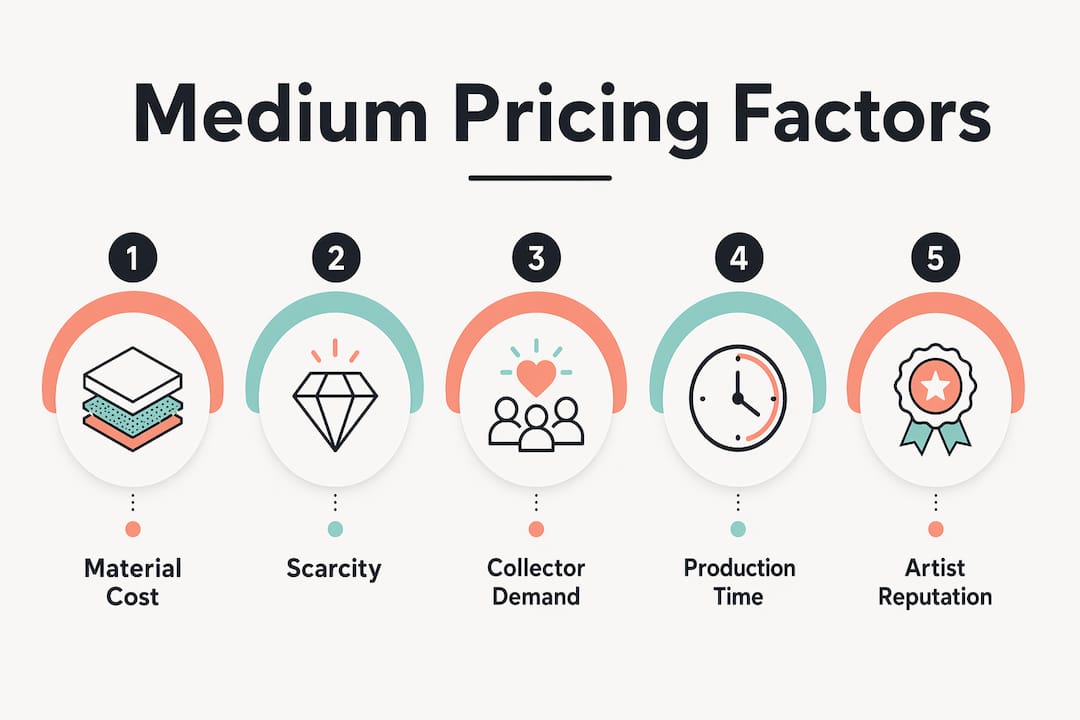
Production cost is the first place medium shapes price. Oil painting requires primed canvas, professional-grade pigments, varnish, and often weeks of drying time between layers. A large-format oil work can carry $200–$500 in raw materials before an artist adds a single hour of labor. Digital art, by contrast, carries near-zero material cost per piece, though it requires significant upfront investment in hardware and software licenses.

The standard baseline formula in the art market is the square-inch method: multiply height by width, then multiply by a per-inch dollar rate. Square-inch pricing sets emerging artists at $1–$3 per square inch and established artists at $10 or more. A 16×20 inch painting at $2 per square inch prices at $640 before any adjustments. That rate must reflect the medium’s actual material and labor cost to remain sustainable.
Labor intensity varies sharply by medium. A detailed oil portrait may require 40–80 hours of work. A monoprint requires physical plate preparation, inking, and pressing, each step adding time. Watercolor on paper dries fast but demands technical precision that commands its own premium. Medium complexity is a legitimate pricing input, not a subjective preference.
- Oil and acrylic on canvas or wood: High material cost, long production time, and strong market recognition support prices from $500 to $10,000 or more for originals.
- Watercolor and gouache on paper: Lower material cost but high technical skill; typically priced below oils at the same career stage.
- Printmaking (etching, lithography, screen print): Moderate material cost; editions create volume at lower per-unit prices, typically $40–$150.
- Digital art: Minimal per-piece cost; pricing depends almost entirely on edition size, platform, and artist reputation.
- Sculpture (bronze, ceramic, mixed): High material and fabrication cost; foundry fees alone can exceed $1,000 per cast, which floors the price accordingly.
Pro Tip: Factor in overhead costs beyond raw materials: studio rent, framing, shipping, and insurance all belong in your pricing calculation. Artists who ignore overhead consistently underprice their work.
What role does medium play in scarcity, market perception, and collector demand?
Medium shapes perceived value as much as actual cost. Collectors who buy for investment prioritize material presence, favoring oil paintings and sculpture as stores of wealth with documented annual returns. A unique oil painting cannot be replicated. A bronze edition of five carries controlled scarcity. Both command price premiums that a digital file, infinitely copyable, cannot automatically claim.
Prints and reproductions serve a different market function. Originals on canvas or wood command high prices from $500 to $10,000 or more, while prints function as volume drivers at $40–$150. This is not a hierarchy of artistic merit. It is market architecture. Prints expand an artist’s collector base and generate consistent revenue without diluting the scarcity of original work.
Tiered pricing by medium is not a compromise. It is a deliberate market structure that preserves scarcity, supports multiple collector classes, and reinforces an artist’s career confidence at every stage.
Emerging mediums face a harder road. Only 9% of gallery professionals accept AI-generated art as a legitimate medium, and 25% view it as destabilizing to authorship and value. That skepticism translates directly into pricing difficulty. When the market has not agreed on what a medium is worth, collectors hesitate, and prices stall.
- Traditional media (oil, bronze, marble): Highest collector confidence, strongest investment narrative, clearest pricing benchmarks.
- Limited edition prints: Valued when edition size, numbering, and provenance are documented and transparent.
- Photography: Accepted as fine art when printed in limited editions with archival materials and signed certification.
- Digital and AI-generated art: Faces active resistance from gallery infrastructure; pricing depends heavily on platform, edition controls, and artist reputation.
- Mixed media: Pricing complexity increases with material combinations; collectors often need more documentation to assess value.
The scarcity of a medium is not just physical. It is also perceptual. A collector who believes a medium is common will not pay a premium for it, regardless of the artist’s skill.
How do artists practically price artwork based on medium and size?
The square-inch formula gives artists a defensible starting point, but it is not the final answer. A success modifier of 1.0–2.0 must be applied to reflect the artist’s demand, exhibition history, and career trajectory. An artist with three solo shows and gallery representation applies a modifier of 1.5 or higher. An artist selling their first works applies 1.0 and builds from there.
The table below shows how medium and career stage interact to produce realistic price ranges for a standard 16×20 inch work.
| Medium | Emerging artist price | Established artist price |
|---|---|---|
| Oil on canvas | $640–$960 | $3,200–$6,400 |
| Watercolor on paper | $400–$640 | $2,000–$4,000 |
| Screen print (edition of 50) | $40–$80 per print | $100–$200 per print |
| Digital print (edition of 10) | $80–$150 per print | $300–$600 per print |
| Bronze sculpture (edition of 5) | $1,500–$3,000 | $8,000–$20,000 |
Pricing also shifts as artists mature. Demand, exhibition history, and scarcity increasingly overshadow raw material cost as an artist builds a market presence. A painter whose oils sold for $800 three years ago may legitimately price the same size work at $2,500 today based on gallery placement and collector waitlists, not because the canvas cost more.
One pricing mistake consistently damages emerging artists: listing work as “Price on Request.” Hiding prices reduces buyer confidence and stalls sales momentum. Transparent, fixed pricing signals professionalism and makes it easier for collectors to commit. Reserve “Price on Request” for commissioned works or major institutional sales where negotiation is standard practice.
Pro Tip: When pricing across multiple mediums, keep your per-square-inch rate consistent within each medium category. Inconsistent rates across similar works signal pricing confusion to serious collectors.
What challenges and evolving trends affect medium’s role in art valuation?
The art market is adapting to new media, but not quickly. The gallery system, which still sets pricing benchmarks for most collectors, moves slowly. AI-generated art sits in a contested space where authorship, originality, and reproducibility are all unresolved questions. Without consensus on what the medium represents, pricing becomes speculative rather than structured.
Mixed media works present a different challenge. When an artwork combines oil paint, photography, and digital printing, no single medium’s pricing logic applies cleanly. Artists working in hybrid formats often need to document artwork materials in detail so that collectors and appraisers can assess value accurately. Without that documentation, mixed media works tend to price below their actual complexity.
Several trends are reshaping how medium affects pricing:
- NFTs and blockchain verification: Digital editions with verifiable scarcity now command prices that unverified digital files cannot. The medium itself has not changed, but the ownership infrastructure has.
- Archival standards for photography: Fine art photography priced at gallery levels requires archival paper, pigment inks, and edition documentation. These material standards are now pricing prerequisites, not optional extras.
- Collector education: Younger collectors increasingly research medium and materials before buying. Artists who publish their process and material choices attract more informed buyers and face fewer price objections.
- Sustainability as a value signal: Collectors in certain markets now factor environmental impact of materials into purchasing decisions. Sustainable or reclaimed materials can add perceived value, particularly in design-adjacent art markets.
The lack of a common vocabulary for new media remains a real obstacle. When artists, galleries, and collectors use different terms for the same medium, pricing comparisons break down. Standardizing how you describe and document your medium is not just administrative. It directly affects how confidently buyers engage with your work.
Key Takeaways
The medium of an artwork is a primary pricing variable, not a secondary detail, because it determines material cost, scarcity, collector confidence, and market positioning simultaneously.
| Point | Details |
|---|---|
| Medium sets the price floor | Material and labor costs by medium establish the minimum viable price before any market adjustments. |
| Scarcity is medium-dependent | Originals and limited editions command premiums; unlimited digital files require edition controls to hold value. |
| Career stage multiplies medium pricing | Apply a success modifier of 1.0–2.0 to square-inch formulas to reflect demand and exhibition history. |
| New media faces market resistance | Only 9% of gallery professionals accept AI art as legitimate, which directly limits pricing power for that medium. |
| Transparent pricing builds collector trust | Fixed, visible prices outperform “Price on Request” for emerging artists across all mediums. |
Medium as a pricing signal, not just a cost calculation
I’ve watched artists underprice watercolors for years because the materials cost less than oil. That logic is backwards. The medium is not just a cost input. It is a signal to the market about what kind of artist you are and what kind of collection your work belongs in.
Pricing a watercolor at half the rate of a comparable oil, without any other justification, tells collectors that you believe watercolor is worth less. They will believe you. The medium you choose and how you price it communicates your positioning in the market hierarchy. Pricing communicates brand value, and low prices signal low value to collectors regardless of the work’s actual quality.
The artists I’ve seen build durable careers treat pricing as a consistent, transparent system. They set rates by medium, apply them uniformly, and raise them deliberately as their market presence grows. They do not discount originals to match print prices. They do not hide prices to avoid difficult conversations. Consistency across mediums is what makes a pricing structure credible.
The practical lesson: document your medium choices, explain your material standards, and price accordingly. A collector who understands that your oil paintings use museum-grade pigments on Belgian linen will not question a premium price. A collector who sees only “oil on canvas” with no further context has no reason to pay more than the market floor. The medium tells the story. Your pricing confirms it.
— Nealda
Artworksoft tools for managing art pricing by medium
Pricing artwork accurately across multiple mediums requires organized data, not guesswork. Artworksoft gives artists, collectors, and galleries a structured system to track inventory by medium, record material costs, and monitor sales history across their entire portfolio.
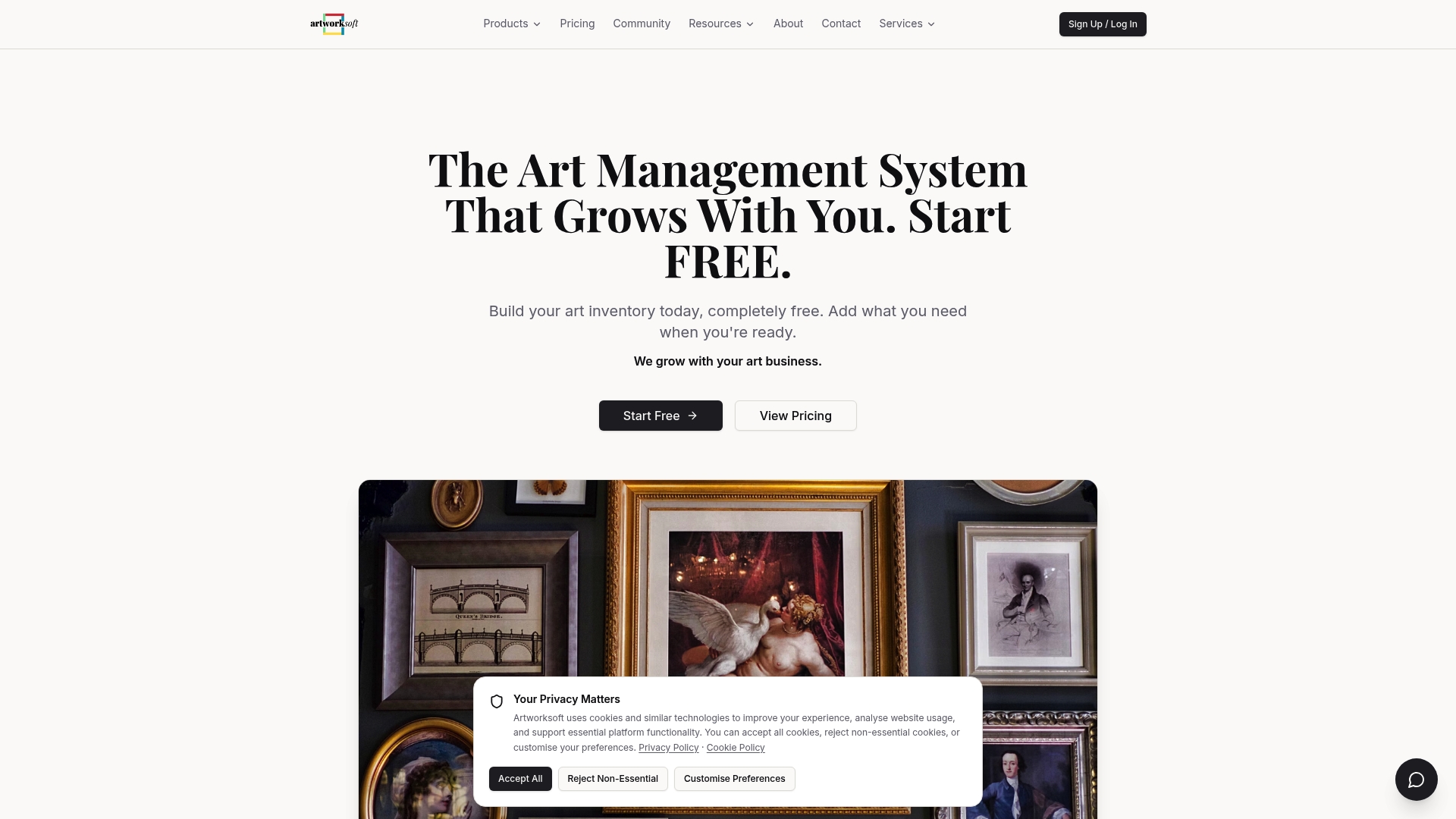
With Artworksoft’s art inventory management tools, you can log each work with its medium, dimensions, and production cost, then apply consistent pricing formulas directly within the platform. The sales and transactions module shows which mediums perform best at which price points, giving you real data to inform future pricing decisions. Artworksoft also supports professional documentation, including Certificates of Authenticity, which collectors require for new and emerging media. Start your free account and bring structure to every pricing decision you make.
FAQ
What is the role of medium in art pricing?
Medium determines an artwork’s production cost, scarcity, and market perception, all of which directly set its price. Traditional media like oil and bronze command higher prices than prints or digital files because of material cost and limited reproducibility.
Does medium affect art value more than artist reputation?
For emerging artists, medium and size drive most of the price calculation. As an artist’s career matures, demand, exhibition history, and scarcity increasingly outweigh raw material cost in determining final value.
How should artists price prints versus original works?
Originals on canvas or wood typically price from $500 to $10,000 or more, while prints function as volume drivers at $40–$150 per piece. The key is maintaining clear separation between original and edition pricing to protect the scarcity of originals.
Why do collectors prefer traditional mediums for investment?
Collectors prioritize oil paintings and sculpture as stores of wealth because they offer material presence, controlled scarcity, and documented market returns. Newer mediums require additional provenance documentation and edition controls to reach comparable investment confidence.
How does AI-generated art affect medium-based pricing?
AI-generated art faces significant market resistance, with only 9% of gallery professionals accepting it as a legitimate medium. That limited acceptance directly constrains pricing power and requires artists working in this medium to build stronger documentation and edition controls to establish value.