

What is fine art and why does collection management matter?
Fine art encompasses culturally and financially significant works created primarily for aesthetic and intellectual value rather than functional use. Paintings, sculptures, drawings, prints, and photography all fall within this category, though the boundaries expand as contemporary art continues to challenge traditional definitions. What separates fine art from decorative objects is the combination of authorship, cultural weight, and market demand that gives each piece both identity and monetary consequence.
Effective collection management protects that value. Without deliberate oversight, collections face physical deterioration, provenance gaps, underinsurance, and legal exposure. The American Alliance of Museums establishes collections stewardship standards that apply equally to institutional and private holdings, emphasizing documentation, environmental control, and ongoing condition monitoring as non-negotiable pillars.
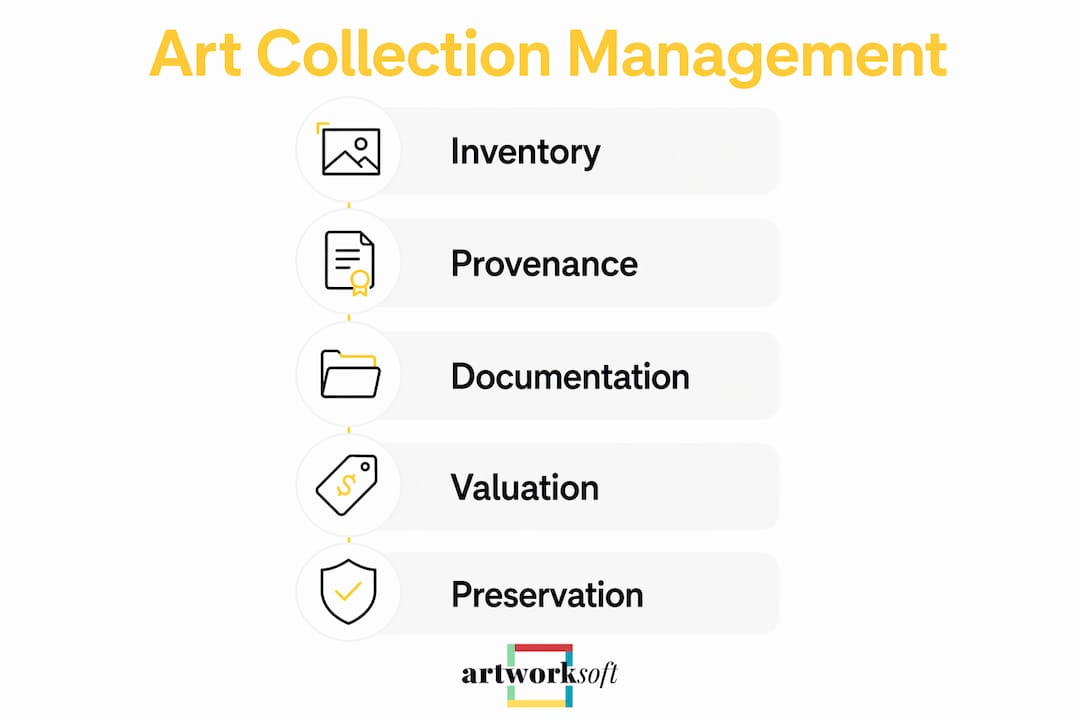
The core pillars of sound collection management include:
- Documentation: Condition reports, Certificates of Authenticity, and movement records
- Valuation: Regular appraisals tied to current market comparables
- Provenance: A verified, unbroken ownership history
- Preservation: Environmental controls and preventive conservation
- Security: Physical and digital safeguards against theft or damage
- Legal compliance: Title verification, import/export law, and tax obligations
Core principles for managing a fine art collection
Museum-grade environmental protocols set the baseline for any serious collection. Stable temperature and humidity levels, UV-filtering glass, and controlled light exposure all reduce the rate of physical deterioration. Watercolors and works on paper are especially sensitive; rotating displays and using UV-resistant glazing are practical steps that private collectors can implement without a dedicated conservation facility.
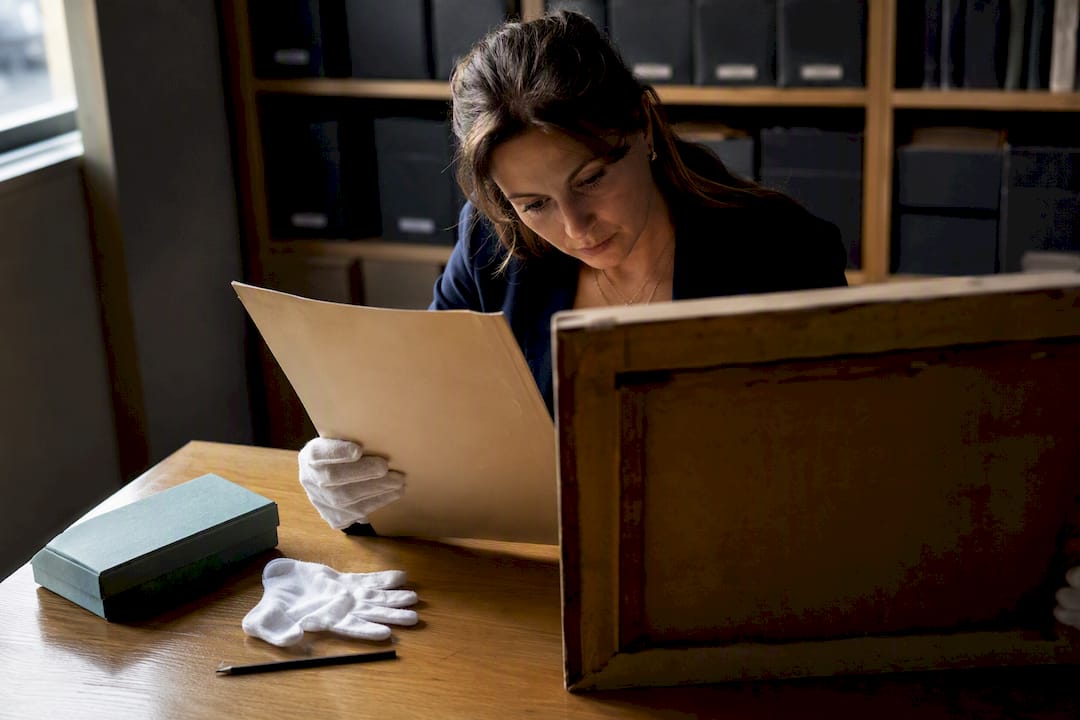
Routine condition assessments are equally critical. A professional condition report at acquisition creates a documented baseline. Periodic re-examination supports both insurance claims and eventual resale. Security strategies should address both physical access controls and digital record integrity, since theft and documentation fraud represent distinct but equally damaging risks.
- Maintain written policies for insurance, conservation, transport, and cataloging
- Conduct physical condition reviews on a documented schedule
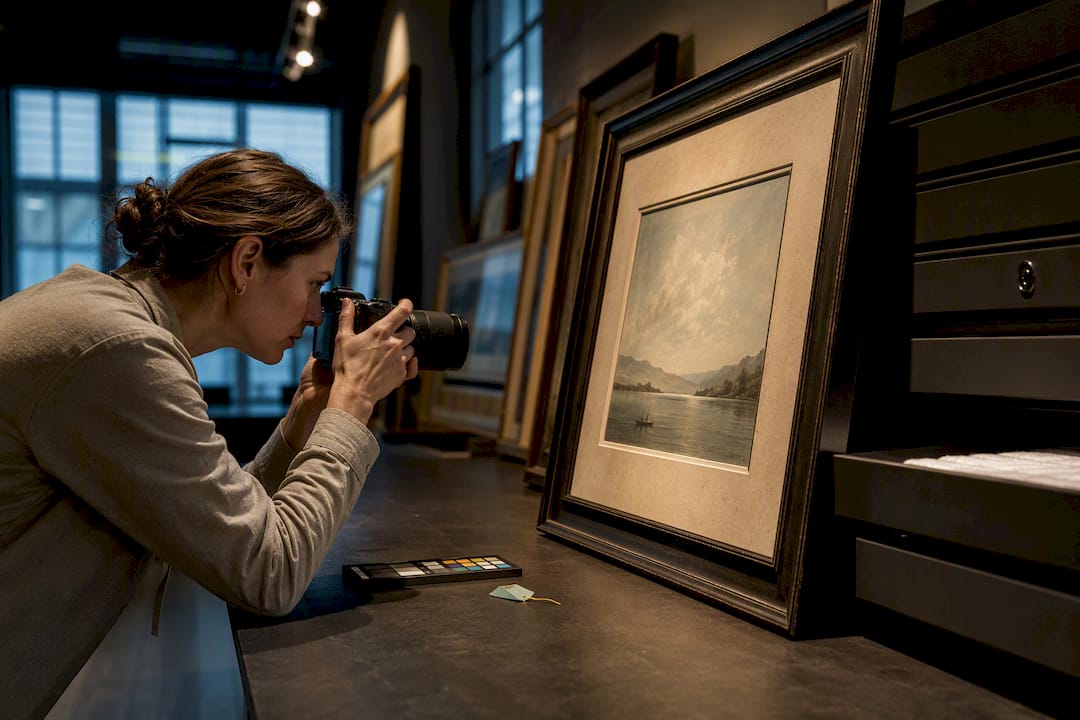
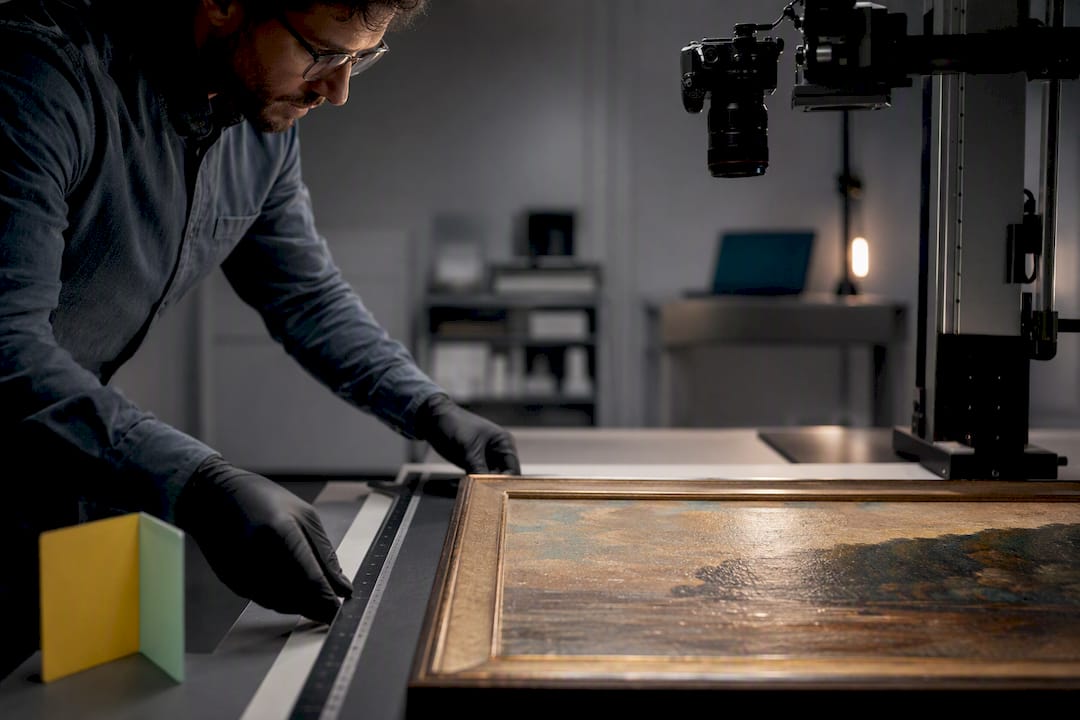
- Store condition photos with timestamped metadata tied to each artwork’s record
- Reconcile physical holdings with inventory records at least annually
Pro Tip: Annual inventory reconciliation against physical holdings catches discrepancies before they become insurance or legal problems. Treat it as a fixed calendar event, not an ad hoc project.
How provenance affects market value and insurance

Provenance with a transparent, unbroken chain of ownership yields higher market premiums by reducing buyer and insurer risk. It functions as a financial driver, not merely an academic record. Works with strong provenance histories, including prestigious exhibition records and institutional ownership, consistently attract stronger bids and more favorable insurance terms.
Artworks with quality provenance documentation achieve higher resale values and smoother insurance claims. Insurers require provenance records before issuing specialist art coverage; without them, works may be undervalued or excluded from claims entirely. The 2017 sale of Leonardo da Vinci’s Salvator Mundi for over $450 million illustrates how provenance research directly drives realized value.
Key provenance elements that affect valuation:
- Gallery invoices, sales receipts, and auction records
- Artist certificates or signed letters from the estate
- Exhibition catalogs and catalog raisonnés entries
- Condition reports produced during sales or loans
- Photographs of the work in previous owners’ homes or at art exhibitions
- Appraisals and independent expert assessments
Red flags include vague phrases like “private collection, Europe,” unverifiable certificates, and unexplained gaps in the ownership timeline. A gap creates doubt, and doubt depresses value.
Succession planning and estate management for art collections
Starting succession planning 5–7 years before any anticipated transfer event, whether gift, sale, or death, is the recommended lead time for navigating the legal and tax complexities that art ownership creates. Art is illiquid, often indivisible, and emotionally charged within families, making it among the most complex assets to transfer across generations.
Structural options for holding art each carry distinct implications. In the United States, art held personally is subject to estate inclusion at fair market value. Art contributed to a properly structured charitable remainder trust or private foundation may generate a partial income tax deduction, but must meet strict IRS appraisal requirements under Section 170(f)(11). A special purpose vehicle or family holding company introduces different reporting obligations and VAT considerations.
Integrating art collection management into regular financial and estate review calendars reduces value loss and administrative failures. Fine art collections often require specialist advisors to coordinate valuation, insurance, conservation, legal, and provenance matters reliably. The relevant professionals include an art adviser, a certified appraiser, a conservator, an art lawyer, and an insurance broker with a dedicated fine art practice.
Succession planning steps for art collections:
- Clarify ownership structure early: personal, trust, foundation, or holding entity
- Commission a full appraisal update as part of every triennial estate review
- Document the collection’s provenance file as part of the permanent estate record
- Specify insurance, transport, and conservation responsibilities in any loan or transfer agreement
- Engage an art lawyer to address title, export restrictions, and restitution obligations
Best practices in art documentation and software solutions in 2026
Professional documentation standards require condition reports at acquisition, Certificates of Authenticity, and movement tracking records for every transfer. A hybrid physical and digital chain of custody record is the strongest practice for documenting fine art transfers securely. Combined signed physical forms with timestamped digital files and a unified naming convention reinforce both provenance and condition clarity, and hold up under legal scrutiny in ways that paper alone cannot.
Cloud-based art management services centralize these records, connecting artwork profiles, location history, and transaction data in one place. Artworksoft applies a structured valuation formula that eliminates guesswork in pricing, giving collectors and galleries a consistent, transparent basis for every transaction. The platform generates Certificates of Authenticity, tracks artwork movements, and supports community visibility features that strengthen an artist’s professional presence.
| Documentation Type | Software-Enabled Benefit |
|---|---|
| Condition report | Timestamped photos linked directly to the artwork record |
| Certificate of Authenticity | Generated and stored within the platform, shareable digitally |
| Movement log | Every transfer recorded with location, date, and custodian details |
| Valuation record | Structured formula produces consistent, auditable pricing |
| Provenance file | Ownership history consolidated in a single, searchable profile |
Pro Tip: Adopt integrated artwork profile management software that connects documentation, valuation, and movement tracking in one system. Fragmented records across spreadsheets and paper files are the most common source of provenance gaps and insurance disputes.
Why regular valuation and insurance reviews protect your collection
Insurance values should be reviewed at least every 5 years, and more frequently for larger or higher-value collections. Art markets move in both directions; a collection appraised in 2018 carries meaningful insurance risk in segments of the contemporary art market where prices have shifted materially since then.
Agreed value policies, which pay a pre-agreed sum without depreciation disputes, are the appropriate standard for fine art. Actual cash value policies introduce subjectivity at precisely the moment when clarity is most needed. Families should audit insured values against current auction comparables at least every three years, and after any significant market movement in relevant categories.
Preservation and stewardship standards that protect long-term value
Effective collections stewardship balances access for display with preservation for longevity, requiring systematic documentation and ongoing monitoring. Preventive conservation, controlling humidity, light exposure, temperature, and handling, is far less expensive than remediation after damage. A professional condition report at acquisition and periodic re-examination creates a documented baseline that supports both insurance claims and eventual sale.
For collections with insured value above approximately $20 million, employing a dedicated collection manager becomes financially rational. The cost of a senior collection manager is modest relative to the insurance, conservation, and disposition errors that an unmanaged collection of that scale routinely produces. Smaller collections benefit from a well-coordinated external advisory team managed by a designated officer with a defined art-management mandate.
Legal considerations and compliance in fine art ownership
Title verification is the first legal obligation in any acquisition. Provenance due diligence now extends beyond authenticity to cultural property export restrictions under the 1970 UNESCO Convention, sanctions screening under OFAC, and anti-money laundering obligations that apply to art market participants. Buyers should insist on a documented provenance chain and gap analysis before purchase, not as a post-acquisition exercise.
Loan agreements require explicit terms covering insurance responsibility, transport costs, and display conditions. When a work travels to a museum or moves between residences, packing standards, courier arrangements, and facility condition reports each need contractual specification before the object moves. Museum-grade art workflow practices provide a useful benchmark for private collectors structuring these agreements.
Strategies for art investment and market trends analysis
Art investment analysis requires tracking auction results, gallery sales, and private transaction data across specific artists, movements, and periods. Contemporary art markets are segmented; price trends in one category, such as post-war American abstraction, may diverge sharply from those in emerging global art exhibitions or digital works. Collectors who treat their holdings as a managed asset class, rather than a passive accumulation, consistently make better acquisition and disposition decisions.
Portfolio analytics tools that map collection value against market comparables give collectors a clearer picture of concentration risk and opportunity. Artworksoft’s art collection net worth framework supports this kind of structured analysis, connecting individual artwork valuations to overall portfolio performance.
Tax implications related to fine art acquisitions and sales
In the United States, art held personally is subject to estate inclusion at fair market value, and capital gains on sales are taxed at the collectibles rate, which differs from standard long-term capital gains rates. Donations to qualifying institutions may generate income tax deductions, but IRS Section 170(f)(11) requires a qualified appraisal for any contribution valued above $5,000. Freeport storage arrangements, commonly used for high-value works, face increasing regulatory scrutiny under FATCA and CRS reporting obligations.
Tax planning for art collections works best when integrated into the broader estate plan from the point of acquisition. Waiting until a transfer event to address structure and valuation creates avoidable exposure. An art lawyer and a tax adviser with fine art experience should both be part of the advisory team for any collection of material value.
How to choose and evaluate art management software
The right art management platform connects inventory, documentation, valuation, and transaction records in a single system. Fragmented tools, such as separate spreadsheets for inventory and paper files for provenance, create the gaps that lead to insurance disputes and provenance challenges. Collectors and galleries evaluating platforms should prioritize condition tracking, movement logging, valuation support, and document generation as core capabilities.
Artworksoft addresses all of these requirements through an interface designed for artists, collectors, and galleries rather than enterprise IT departments. Its structured valuation formula produces consistent, auditable pricing. Its art documentation features generate Certificates of Authenticity and maintain movement records tied directly to each artwork’s profile. For professionals managing collections across multiple locations or preparing works for sale, that level of integration reduces administrative overhead and strengthens the evidentiary record behind every transaction.
Artworksoft gives artists, collectors, and galleries the tools to document, value, and protect their collections with professional-grade precision. Start your free art inventory and transform your collection into a fully documented, market-ready asset.
Key Takeaways
Effective fine art management requires documented provenance, regular valuation reviews, and integrated software to protect collection value and legal standing across every stage of ownership.
| Point | Details |
|---|---|
| Provenance drives value | An unbroken ownership chain yields higher market premiums and smoother insurance claims. |
| Valuation reviews are time-sensitive | Insurance values should be updated at least every 5 years to avoid underinsurance or overpayment. |
| Succession planning requires lead time | Begin estate and transfer planning 5–7 years before any anticipated ownership change. |
| Hybrid documentation is the strongest standard | Signed physical forms combined with timestamped digital files prevent provenance gaps and legal disputes. |
| Integrated software reduces risk | Platforms connecting inventory, valuation, and documentation eliminate the fragmented records that cause collection management failures. |