


An art sales pipeline is the structured framework galleries, artists, and art consultants use to track every potential sale from first inquiry through to completed transaction. Unlike a simple contact list, it maps each prospect to a specific stage, links them to actual inventory, and tells you exactly where to focus your attention on any given day.
The art market operates on relationship cycles that can stretch over months or years before a collector commits. Without a defined pipeline, those opportunities disappear into scattered emails and forgotten follow-ups. With one, every lead has a status, every artwork has a tracked offer, and every follow-up has a scheduled date.

What is an art sales pipeline and why does it matter?
A sales pipeline in the art context is a stage-by-stage system that moves a prospect from initial contact to a completed sale, with each stage reflecting a specific level of buyer commitment. The term comes from general sales methodology, but the art market version carries distinct characteristics: longer decision timelines, emotionally driven purchases, and the need to match specific works to specific collectors.
Art sales pipelines serve several core functions:
- Visibility: Every active opportunity is visible at a glance, with its current stage and associated artwork.
- Prioritization: Leads showing strong buying signals receive focused attention rather than equal treatment across all contacts.
- Inventory accuracy: Each offer is tied to a specific work, preventing double sales or missed opportunities when a piece is under consideration by multiple buyers.
- Forecasting: Stage-by-stage data allows galleries to project revenue and plan exhibition cycles more reliably.
- Relationship management: Art sales pipelines function primarily as relationship management tools, enabling tailored communication rather than generic outreach, as noted by Art Basel experts.
The key stages of an art sales pipeline
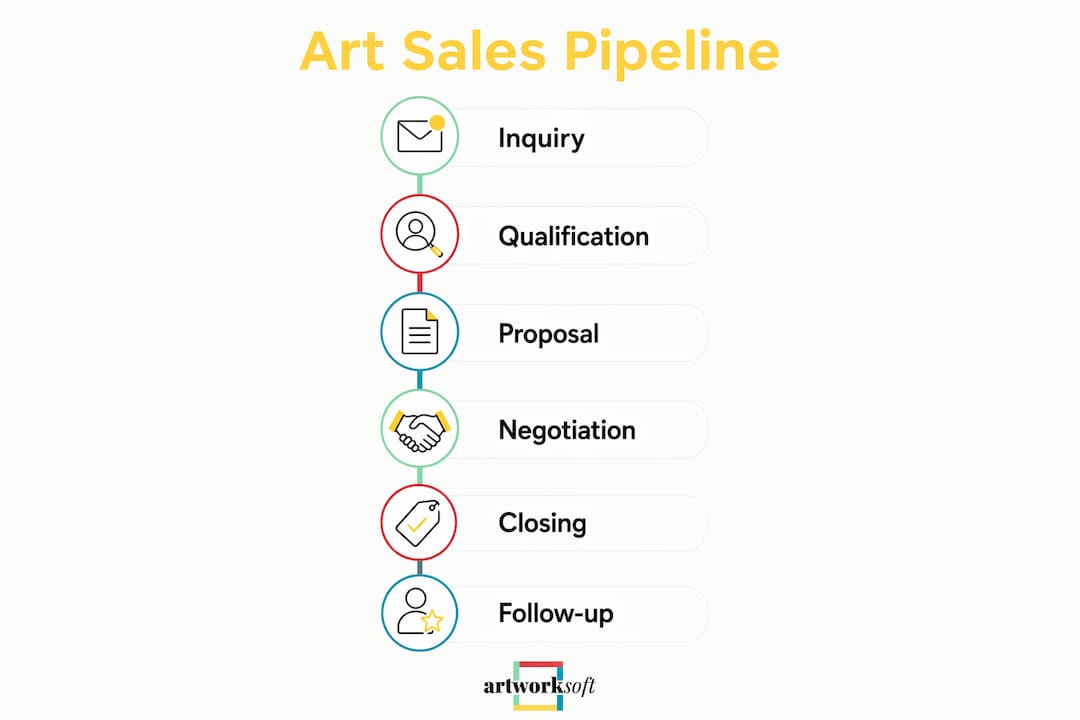
The standard art sales pipeline runs through five to six defined stages, each with distinct activities and exit criteria. The art market’s long sales cycles mean that a prospect may remain in any single stage for weeks or months before advancing.
- Inquiry: A collector, designer, or buyer expresses initial interest, whether through a gallery visit, an online inquiry, or a referral. The goal at this stage is to capture contact details and the specific work or category of interest.
- Qualification: Not every inquiry represents a genuine buying opportunity. Qualification assesses budget range, timeline, collecting history, and whether the prospect’s taste aligns with available inventory. Tracking buying signals and client status at this stage prevents wasted effort on low-probability leads.
- Proposal: A tailored presentation of one or more works, including pricing, provenance, condition, and installation details. Digital proposals that include dimensions, framing options, and high-resolution images significantly improve conversion at this stage.
- Negotiation: Price, payment schedule, delivery terms, and return policies are discussed and documented. Documenting these terms in writing is as critical as securing the buyer’s interest. Verbal agreements at this stage frequently collapse when details are revisited later.
- Closing: The sale is confirmed, invoiced, and the artwork is released. A Certificate of Authenticity and full provenance documentation should accompany every transaction.
- Follow-up: Post-sale contact maintains the collector relationship and creates the foundation for repeat purchases, referrals, and long-term collection advisory.
Why a structured pipeline benefits art businesses
Galleries and artists that formalize their sales process gain concrete operational advantages over those relying on memory and ad hoc communication.
- Reduced lead loss: Structured follow-up schedules prevent inquiries from going cold during the art market’s extended decision periods.
- Clearer sales forecasting: Stage-by-stage data gives gallery directors a realistic view of expected revenue across a quarter or exhibition cycle.
- Better client communication: Knowing exactly where a collector stands in the process allows for relevant, timely outreach rather than generic check-ins.
- Lower administrative risk: Linking offers directly to inventory status eliminates the operational error of committing the same work to two buyers simultaneously.
- Professional presentation: A gallery that responds to inquiries with structured proposals and documented terms signals credibility to serious collectors.
The shift from scattered notes to structured relationship management consistently improves lead conversion and client retention across art businesses of all sizes.
How to adapt and optimize a pipeline for galleries and artists
The right pipeline structure depends on the business model. A gallery operating on consignment, a studio artist selling direct, and a private art consultant each need a version calibrated to their specific workflow.

For consignment galleries: The pipeline should reflect the gallery’s role as intermediary. Stages need to account for artist approval on pricing adjustments, consignment agreement terms, and the gallery’s commission split. Primary market commission benchmarks typically range from 40% to 50%, with a 50/50 split as the common benchmark for contemporary works. Knowing this benchmark helps galleries set realistic net-return expectations during the proposal stage.
For direct artist sales: The pipeline is shorter but requires the artist to manage both the relationship and the administrative side. Qualification becomes especially important because artists often lack the collector network that filters inquiries naturally.
For private consultants: Consultants frequently manage dozens of works across multiple clients simultaneously, making inventory-to-offer linkage the most critical pipeline feature. A proposal sent without confirming current availability creates immediate credibility damage.
Optimization techniques that apply across all models:
- Assign a clear stage to every active lead and review the full pipeline weekly.
- Set a maximum number of days any lead can remain in a stage before triggering a follow-up action.
- Use qualification criteria consistently so that low-probability leads are identified early and deprioritized.
- Document every negotiation term in writing before moving a lead to the closing stage.
- Build a post-sale follow-up sequence into the pipeline rather than treating it as optional.
Pro Tip: Relationship-building and pipeline discipline are not in conflict. The pipeline tells you when to reach out; the relationship determines how. A collector who receives a relevant, well-timed message about a new work feels served, not sold to.
What tools support effective art sales pipeline management?
The right technology removes the operational friction that causes leads to fall through the cracks. For art businesses, the most effective tools combine several functions in a single system rather than requiring staff to move between disconnected platforms.
Key features to look for in art sales pipeline tools:
- Inventory integration: The system should link each sales lead directly to a specific artwork record, including availability status, condition, and valuation data.
- Client database: Contact records should capture collecting history, preferences, budget range, and communication logs in one place.
- Proposal generation: The ability to produce professional, branded proposals directly from inventory records eliminates manual formatting and reduces errors.
- Transaction documentation: Invoicing, payment tracking, and Certificate of Authenticity generation should connect to the sales record rather than exist as separate files.
- Follow-up scheduling: Automated reminders for stage-specific follow-ups prevent leads from going dormant during long decision cycles.
- Reporting: Sales performance data by stage, artist, medium, or time period supports both operational decisions and collector conversations.
Artworksoft’s platform connects artwork profile management directly to sales and transaction records, so galleries and artists can track an offer’s status against live inventory without switching between systems. The sales and transactions module handles stage tracking, follow-up documentation, and invoicing in one place, reducing the administrative load that typically consumes gallery staff time.
Expert insights on managing art sales pipelines with Artworksoft
Artworksoft’s approach to pipeline management is built around a single principle: every sales lead must be anchored to a specific artwork record with a current status. This prevents the most common operational failure in art sales, which is committing a work to a buyer without confirming it is still available.
Key practices Artworksoft recommends for pipeline discipline:
- Link every offer to inventory: When a collector expresses interest, the lead should reference the specific artwork record, not just a title or image. This connection updates automatically when the work’s status changes.
- Document negotiation terms immediately: Payment schedules, delivery arrangements, and return policies should be recorded in the system at the moment they are discussed, not reconstructed afterward. The ‘discretion gap’ in art negotiations, where terms are agreed verbally but not documented, is a leading cause of late-stage deal failures.
- Centralize client data: Keeping collector preferences, communication history, and purchase records in one system reduces the emotional exhaustion that comes from managing relationships across email threads, spreadsheets, and memory.
- Use documentation as a sales tool: A Certificate of Authenticity, a condition report, and a clear provenance record are not just administrative outputs. They build buyer confidence during the proposal and negotiation stages, particularly for higher-value works.
Gallery commission context: Primary market commission splits usually range from 40% to 50%, with a 50/50 split as the common benchmark for contemporary works. Artworksoft’s transaction records allow galleries to configure commission splits per consignment agreement, so net proceeds are calculated automatically at the point of sale.
How different art business models structure their pipelines
Real-world pipeline structures vary significantly depending on the business model, and understanding these differences helps art professionals build a version that fits their actual workflow.
Contemporary gallery model: A mid-size gallery representing 15–20 artists typically runs a pipeline with 30–50 active leads at any time. The proposal stage is the longest, often running four to eight weeks, because collectors want to see works in context before committing. The gallery’s collector relationship management practices determine how efficiently leads move from proposal to negotiation.
Studio artist selling direct: An artist selling from their studio or through art fairs operates a much shorter pipeline, often with fewer than ten active leads at once. The closing stage is faster because the artist controls pricing and terms directly. The follow-up stage, however, is often neglected, which means repeat sales and referrals are left unrealized.
Art consultant managing multiple clients: A consultant sourcing works for interior design projects or private collections may manage separate pipelines for each client simultaneously. The qualification stage is critical here because the consultant must match specific works to specific client briefs before investing time in proposals.
Online-focused artist: Artists selling primarily through digital channels face a different qualification challenge. Online inquiries are higher in volume but lower in average commitment. A clear qualification step that identifies serious buyers early prevents the pipeline from becoming cluttered with low-probability contacts.
Common pitfalls in managing an art sales pipeline
Several failure patterns appear consistently across art businesses that struggle with pipeline management.
Treating the pipeline as a contact list. A pipeline that tracks names and emails without stage assignments, inventory links, or follow-up dates provides no operational value. The core function is tracking where each opportunity stands, not storing contact information.
Skipping the qualification stage. Art professionals who move every inquiry directly to the proposal stage waste significant time on buyers who lack the budget, timeline, or genuine interest to close. A brief qualification conversation saves hours of proposal preparation.
Neglecting the negotiation documentation step. Verbal agreements on price, payment terms, and delivery are common in art sales because the relationship dynamic discourages formal language. This creates serious risk when a collector’s recollection of the terms differs from the gallery’s at the point of closing.
Allowing leads to stagnate. The art market’s long sales cycles make it easy to leave leads in the proposal or negotiation stage indefinitely. Without a maximum stage duration and a scheduled follow-up, active opportunities become dormant without anyone noticing.
Disconnecting inventory from sales records. When a work is sold or placed on hold in one system but the sales pipeline reflects it as available, double-selling becomes a real operational risk. Integrated systems that update inventory status automatically when an offer is recorded eliminate this problem entirely.
Key Takeaways
A well-structured art sales pipeline directly determines how consistently galleries and artists convert collector interest into completed sales.
| Point | Details |
|---|---|
| Pipeline vs. contact list | A pipeline tracks stage, inventory status, and follow-up dates for every lead, not just names and emails. |
| Six core stages | Inquiry, qualification, proposal, negotiation, closing, and follow-up each require specific actions and documented criteria. |
| Commission benchmarks | Primary market commission splits usually range from 40% to 50%, with a 50/50 split as the standard for contemporary works. |
| Negotiation documentation | Recording payment schedules, delivery terms, and return policies in writing prevents late-stage deal failures. |
| Integrated tools | Linking inventory, client data, and invoicing in one system reduces administrative errors and lost sales leads. |
Artworksoft supports your art sales pipeline from inquiry to closing
Artworksoft connects artwork inventory, client records, sales stages, and transaction documentation in a single platform built specifically for galleries, artists, and art consultants. Every lead is linked to a live inventory record. Every negotiation term is documented. Every sale generates a professional invoice and Certificate of Authenticity automatically.
Art professionals who want to move from scattered spreadsheets to a structured, reliable sales process can start free at Artworksoft and build their pipeline around a system designed for the way the art market actually works. For galleries managing consignment agreements and commission splits, the art gallery services module provides the operational structure to manage every stage from first inquiry to final payment.