Collector relationship management is the practice of building ongoing, personalized connections with art buyers to generate repeat patronage and long-term business stability. Art dealers and gallery professionals who understand how art businesses build collector relationships consistently outperform those who treat each sale as a standalone transaction. Durable collector relationships stem from shared values and community, not transactional exchanges alone. The most effective galleries treat collectors as partners in an ongoing creative process, not simply as buyers.
How art businesses build collector relationships that last
Collector relationship building is a structured, ongoing process. The industry term for the full cycle is “collector development,” covering everything from initial acquisition to long-term patronage. The Double Funnel strategy formalizes this by shifting focus from acquiring new buyers to deepening engagement with existing collectors. Quality communication and genuine, non-transactional interactions are the core of this model after the first purchase.
The most effective art businesses segment their collector base before reaching out. Segmented email marketing sends studio updates and process content to active collectors, while general audiences receive broader promotional material. This distinction matters because collectors who feel addressed as insiders respond at higher rates than those who receive mass communications. Tracking purchase history and stated preferences makes this segmentation possible and credible.
Personalized communication is the foundation of collector development. A handwritten thank-you note referencing the specific work purchased carries more weight than any automated follow-up. Sharing behind-the-scenes process content, such as studio photographs or work-in-progress updates, gives collectors a sense of access that deepens their connection to the artist and the gallery. These touches cost little but signal genuine attention.

Pro Tip: Maintain a simple collector log that records each purchase, the collector’s stated interests, and any personal details shared during gallery visits. This record makes every future communication feel personal rather than generic.
Key tactics for building collector connections include:
- Personalized thank-you notes referencing the specific artwork purchased
- Segmented email lists separating active collectors from general subscribers
- Studio and process updates shared exclusively with existing buyers
- Early access notifications for new works before public release
- Annual check-ins that reference the collector’s existing holdings
How does networking amplify collector connections?
Networking in the art world is not social charm. Institutional legibility through consistent professional presentation and standardized documentation stabilizes artist records and makes relationships durable and citable. Galleries that maintain consistent titles, high-quality images, and clear provenance records attract collectors who value professionalism as a signal of reliability.
Active participation in art organizations accelerates relationship building. 41% of artists who volunteered at local art organizations, museums, or festivals gained significant career opportunities through those connections. That figure reflects a direct return on community investment. Dealers and galleries that encourage their represented artists to participate in these activities extend the gallery’s own network.
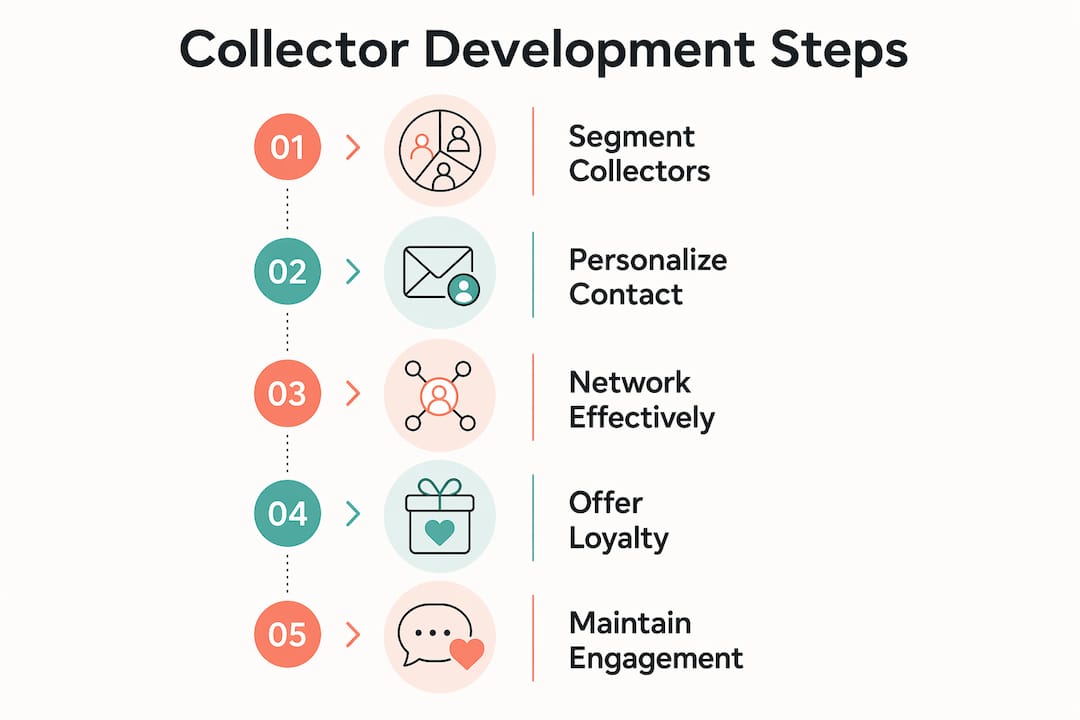
Targeted event attendance produces better results than broad social presence. Meeting five aligned collectors at a focused panel discussion generates more lasting connections than attending twenty general openings. The goal is depth of contact, not volume. Online platforms including Instagram and LinkedIn extend these connections between events, but they work best as reinforcement tools rather than primary relationship channels.
Consistent, small networking touches of about 15 minutes per month maintain and reboot important relationships more effectively than infrequent large efforts. This finding reframes how galleries should think about relationship maintenance. It is not about grand gestures at annual fairs. It is about regular, low-effort contact that keeps the relationship active.
A practical networking sequence for gallery professionals:
- Identify 20 priority collectors from your existing buyer list based on purchase frequency and engagement history.
- Schedule monthly micro-touches such as a relevant article share, a short personal note, or a process update.
- Attend two to three targeted events per quarter where those collectors are likely to be present.
- Follow up within 48 hours of any in-person meeting with a specific reference to the conversation.
- Document every interaction in a collector record so future outreach builds on prior context.
Pro Tip: Use LinkedIn to share gallery news and tag collectors who attended recent events. This creates a public record of the relationship that reinforces the collector’s identity as a serious patron.
What do collector loyalty programs look like in art business?
Loyalty programs in the art business reward repeat patronage with structured, tiered benefits. Industry-standard loyalty programs set an initial purchase threshold of $2,500 to trigger lifetime benefits including 20% off future acquisitions. That threshold is low enough to include serious buyers while excluding casual purchasers. The permanent discount signals genuine appreciation rather than a one-time promotion.
Tiered patronage models create a clear progression that motivates collectors to increase their engagement. A three-tier structure typically looks like this:
| Tier | Entry Threshold | Key Benefits |
|---|---|---|
| Emerging Patron | First purchase | Thank-you note, process updates, newsletter |
| Established Collector | $2,500 cumulative | 10% discount, early access to new works |
| Lifetime Patron | $2,500 single purchase | 20% lifetime discount, private studio visits, preview events |
The psychological impact of these programs is significant. Collectors who feel recognized as insiders are more likely to return and to refer other buyers. The financial benefit of a discount is secondary to the emotional value of being treated as a valued partner rather than a transaction.
Exclusivity is the critical variable. Insider privileges like early access and private studio visits must be genuinely exclusive to retain their value. Offers broadcast too widely lose their perceived value among collectors. A private preview that includes 200 people is not a private preview. Galleries that maintain strict thresholds for these benefits protect their perceived value and the loyalty they generate.
How does personalized communication turn buyers into lifelong patrons?
The most durable collector relationships are built through non-transactional follow-up. Younger collectors value access to the artistic process and contextual understanding over mere possession. This shift changes the communication calculus entirely. Galleries that share the story behind a work, the artist’s research process, or the evolution of a series give collectors something no secondary market can replicate.
Effective personalized communication practices include:
- Non-transactional follow-ups that reference the specific work a collector owns, not new works for sale
- Process sharing through studio visit invitations, work-in-progress photographs, or artist interviews
- Handwritten notes for significant purchases or anniversaries of major acquisitions
- Win-back outreach for collectors who have not purchased in 12 or more months, framed as genuine curiosity rather than a sales call
- Collector-specific updates when an artist they collect receives a significant exhibition or award
Win-back strategies deserve particular attention. A gallery that reaches out to a lapsed collector with a note saying “We thought of you when this new series arrived because it connects to the work you acquired in 2023” demonstrates memory and care. That approach converts far more effectively than a generic promotional email. The art business profile building practices that support this kind of outreach require consistent data collection from the first point of contact.
Automated messages have a place in collector communication, but they cannot replace personal outreach for high-value relationships. The rule is straightforward: automate the routine, personalize the significant. Newsletters and event reminders can be automated. Thank-you notes for major purchases and anniversary acknowledgments cannot.
Key Takeaways
Art businesses that build lasting collector relationships combine personalized communication, structured loyalty programs, and consistent networking to convert one-time buyers into lifelong patrons.
| Point | Details |
|---|---|
| Segment your collector base | Separate active collectors from general subscribers to deliver relevant, personalized communication. |
| Use the Double Funnel model | Shift focus from new buyer acquisition to deepening engagement with existing collectors after the first sale. |
| Set clear loyalty thresholds | A $2,500 purchase threshold for lifetime benefits is an industry-tested standard that rewards serious patrons. |
| Keep networking touches small and frequent | 15 minutes of monthly contact maintains relationships more effectively than infrequent large gestures. |
| Protect exclusivity rigorously | Insider privileges lose their value when offered too broadly; strict thresholds preserve their impact. |
The collector relationship model most galleries get wrong
The most common mistake I see in gallery relationship management is treating loyalty programs as marketing campaigns rather than relationship frameworks. A discount code sent to an email list is not a loyalty program. A structured, threshold-based system that recognizes a collector’s cumulative investment and rewards it with genuine access is a loyalty program.
The galleries that build the most durable collector bases share one trait: they treat the collector’s experience of the art world as something they can actively shape. They introduce collectors to artists whose work connects to pieces they already own. They invite collectors to studio visits before a body of work is finished, not after it is priced and hung. They send a note when an artist they represent wins a prize, referencing the specific work the collector holds.
The shift toward experience over possession among younger collectors is not a trend to manage. It is a structural change in what collecting means. Galleries that respond by offering access, context, and community will retain these collectors. Those that respond with better photography and faster shipping will not.
The other underrated factor is documentation. Consistent professional records that standardize titles, provenance, and images give collectors confidence in their holdings and in the gallery’s professionalism. That confidence is the foundation of repeat business. A collector who trusts your documentation trusts your recommendations.
— Nealda
Artworksoft and the tools behind collector engagement
Managing collector relationships at scale requires more than good intentions. It requires organized records, reliable sales tracking, and the ability to segment outreach by purchase history and stated preferences.
Artworksoft gives galleries and dealers the infrastructure to manage these relationships professionally. The platform tracks sales and transactions alongside collector preferences, making personalized follow-up a repeatable process rather than a manual effort. Galleries can generate professional documentation including Certificates of Authenticity, maintain artwork provenance records, and use artwork profile management tools to keep collector-facing records accurate and complete. For galleries ready to move from ad-hoc outreach to a structured collector development program, Artworksoft provides the foundation.
FAQ
What is collector relationship management in art business?
Collector relationship management is the practice of building ongoing, personalized connections with buyers to generate repeat patronage. It covers communication, loyalty programs, networking, and documentation across the full collector lifecycle.
How do art businesses build collector loyalty programs?
Industry-standard loyalty programs set a purchase threshold, such as $2,500, to trigger lifetime benefits including permanent discounts and exclusive access. The key is genuine exclusivity: offers available to everyone have no loyalty value.
How often should galleries contact their collectors?
Consistent monthly contact of about 15 minutes maintains relationships more effectively than infrequent large efforts. Small, regular touches outperform annual grand gestures in building long-term collector loyalty.
Why do younger collectors respond differently to gallery outreach?
Younger collectors prioritize access to the artistic process over ownership alone. Galleries that share studio visits, work-in-progress content, and contextual storytelling engage this segment more effectively than those focused solely on finished works for sale.
What role does documentation play in building collector trust?
Standardized professional records covering titles, provenance, and images give collectors confidence in their holdings and in the gallery’s reliability. That documented professionalism is a direct driver of repeat purchases and referrals.