

Intrinsic value in art is defined as the inherent worth an artwork possesses independently of its sale price, auction record, or market trend. It is rooted in three core qualities: aesthetic achievement, technical mastery, and the emotional or intellectual experience the work produces in a viewer. Unlike financial assets, art carries no cash flows, so intrinsic worth cannot be calculated through a discounted earnings model. For collectors, art students, and individual buyers, understanding this distinction is the foundation of both genuine appreciation and sound purchasing decisions.
What is intrinsic value in art, and how does it differ from market value?
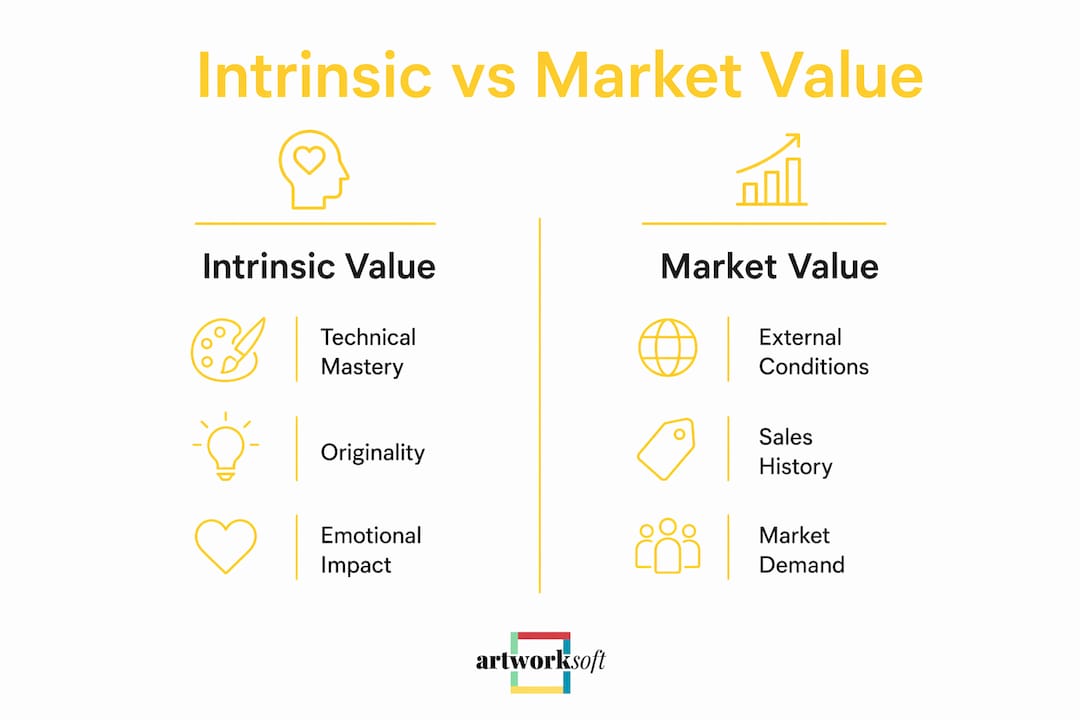
Intrinsic value and market value measure two entirely different things. Market value depends on external factors: provenance records, exhibition history, recent auction results for comparable works, and prevailing collector demand. Intrinsic value, by contrast, lives inside the work itself. It does not shift because a gallery closes or a trend fades.
Financial analysts note that art lacks intrinsic value in the strict cash flow sense used for stocks or bonds. That means art pricing relies on relative valuation, comparing a piece to recent sales of similar works rather than projecting future income. This is why two paintings by the same artist can sell for vastly different prices in the same year, while their intrinsic qualities remain unchanged.
A practical example clarifies the gap. A mid-career painter’s work may sell for $4,000 at a regional fair and $40,000 at a major art fair two years later, with no change to the canvas. The brushwork, composition, and emotional charge of the piece are identical. What changed is market context, not artistic worth.
| Dimension | Intrinsic value | Market value |
|---|---|---|
| Source | Artwork itself | External market conditions |
| Drivers | Technique, originality, emotional impact | Provenance, trends, auction comparables |
| Stability | Relatively stable over time | Fluctuates with demand |
| Measurement | Qualitative assessment | Relative pricing to recent sales |
Pro Tip: Keep a separate record for each artwork that logs both your personal qualitative assessment and its current market comparables. Mixing the two in one column creates confusion during appraisal negotiations.
What are the key elements that define intrinsic value in an artwork?
The key drivers of intrinsic value in 2025 and 2026 are technical skill, creativity, and emotional resonance, ranked in that order by practitioners. Each element contributes independently, and the strongest works score high across all three.
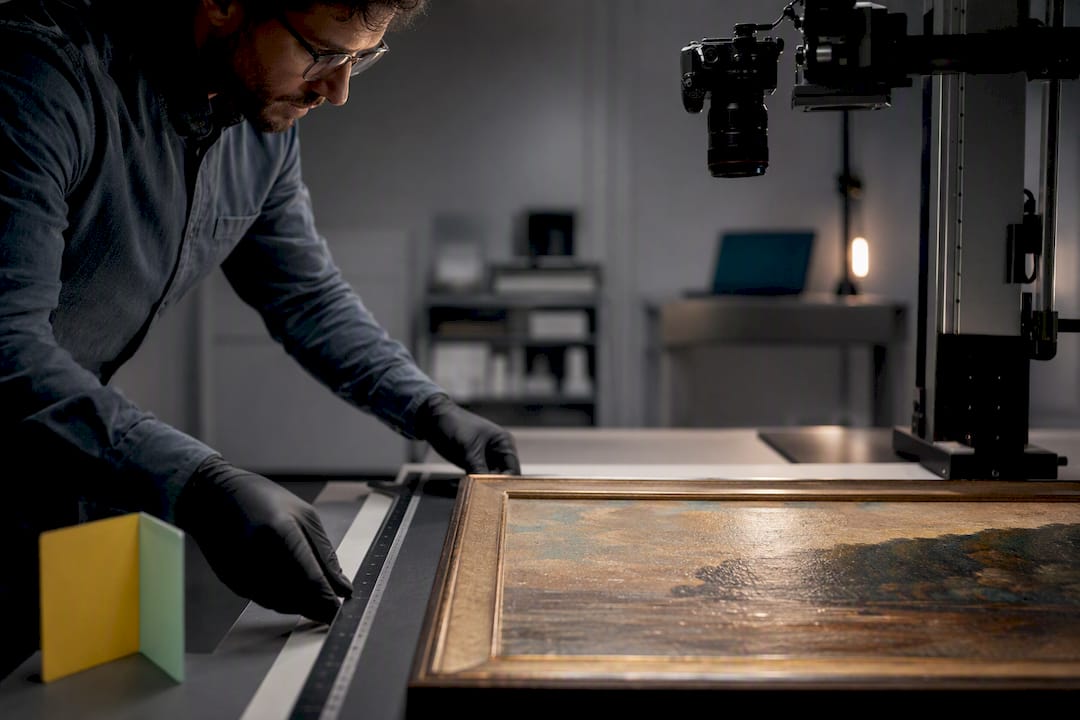
- Technical mastery. Skill and complexity of execution are the most consistently cited factors. A work that demonstrates control of medium, whether oil, bronze, or digital print, signals the artist’s command over their craft. Collectors can assess this through visible evidence: layering, line quality, surface texture, and structural coherence.
- Artistic originality. A work that introduces a new visual language or pushes an established form carries higher intrinsic worth than competent imitation. Originality is not novelty for its own sake. It is a measurable departure from convention that produces a new way of seeing.
- Emotional and intellectual depth. A painting that provokes sustained thought or a visceral reaction delivers an experience that endures. This is the quality that makes a collector return to a work repeatedly over years.
- Physical qualities. Scale, medium, and condition directly influence the experience of a work. A large-format canvas commands physical presence that a reproduction cannot replicate. Medium affects longevity: oil on linen outlasts acrylic on cardboard, which matters for preservation of intrinsic qualities over decades.
- Cultural and contextual factors. A work produced within a significant cultural moment carries additional layers of meaning. This is not market hype. It is the documented relationship between the artwork and its historical context, which deepens the intellectual experience for informed viewers.
Subjectivity is real but limited. Two informed viewers may disagree on emotional resonance, but they will rarely disagree on whether a work demonstrates technical mastery. The qualitative elements are not arbitrary. They are assessable through structured observation.
Pro Tip: When evaluating a new acquisition, write three sentences describing the technical execution before you consider price. This forces a separation between what you see and what you paid, which sharpens your eye over time.
How do collectors and institutions assess intrinsic value practically?
Formal assessment follows a documented process. Authenticity, provenance, and physical condition form the baseline. Without verified authorship and a clear ownership chain, even a technically brilliant work carries unresolvable uncertainty about its intrinsic claims.

The 2026 CCRI Framework 1.0 (Cultural Record Integrity Framework) recommends permanent records of exhibition history and ownership to preserve the value narrative of a work over time. This framework treats documentation not as administrative overhead but as an active component of intrinsic value. A work with a complete, verified record is more defensible in both appraisal and sale contexts.
Collectors and institutions typically follow four assessment steps:
- Verify authenticity. Obtain a Certificate of Authenticity, cross-reference with the artist’s catalog, and confirm through a qualified appraiser when the stakes are high.
- Document provenance. Record every owner, exhibition, and publication reference. Gaps in provenance weaken the intrinsic value narrative even when the artistic quality is undisputed.
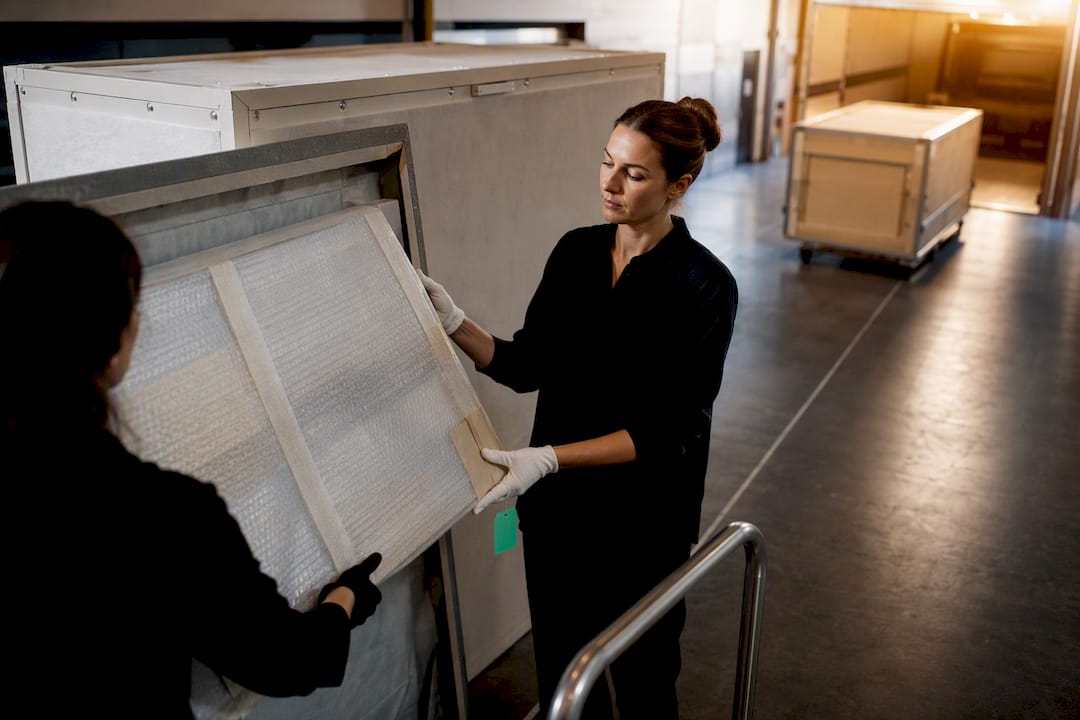
- Assess physical condition. Condition directly affects the viewer’s experience of the work. Cracked varnish, fading pigment, or structural damage diminish the aesthetic encounter. Artwork condition should be logged at acquisition and reviewed at regular intervals.
- Apply qualitative evaluation. Use structured criteria: technical execution, originality, emotional impact, and cultural context. Write these assessments in plain language and attach them to the artwork’s permanent record.
AI tools now assist in analyzing brushwork, color distribution, and compositional structure. These tools can quantify elements that were previously described only in subjective terms. Technology aids the process, but emotional resonance remains the final arbiter of intrinsic worth. No algorithm replaces the sustained human encounter with a work.
Artworksoft supports this process through art identification and traceability features that allow collectors to attach provenance records, condition notes, and exhibition histories directly to each artwork profile.
Why does understanding intrinsic value matter for appreciation and investment?
Treating art solely as a commodity leads to superficial appreciation and poor long-term decisions. Collectors who focus exclusively on financial return risk losing the human experience that makes art worth owning in the first place.
The practical risks are concrete:
- Overpaying on market hype. A work priced high because of a trending artist may carry limited intrinsic quality. When the trend passes, the market price corrects, and the collector is left with a piece that offers neither financial return nor genuine artistic satisfaction.
- Underselling works of genuine merit. Collectors who do not understand intrinsic value may sell a technically masterful work at a low price because it lacks current market visibility. Tracking both emotional value and auction results produces balanced negotiation.
- Shallow engagement with the collection. A collection built purely on investment logic rarely produces the sustained personal connection that makes collecting meaningful. Sustainable collecting prioritizes genuine emotional connection and appreciation of artistic quality over purely speculative investment.
- Missed legacy value. Works with strong intrinsic qualities tend to retain cultural significance across generations. A collector who understands this builds a collection with lasting relevance, not just current market appeal.
The practical approach is to assess both dimensions separately and then weigh them together. Use qualitative criteria for intrinsic evaluation and recent comparable sales for market context. Neither replaces the other. Understanding art collection net worth requires both lenses applied with discipline.
Key Takeaways
Intrinsic value in art is the artwork’s inherent worth, defined by technical mastery, originality, and emotional impact, and it must be assessed separately from market price to support both genuine appreciation and informed collecting.
| Point | Details |
|---|---|
| Intrinsic vs. market value | Intrinsic value is stable and internal; market value fluctuates with external conditions like trends and provenance. |
| Core quality drivers | Technical skill, originality, and emotional resonance are the primary components of intrinsic worth. |
| Documentation matters | Provenance records, condition logs, and exhibition histories protect and justify intrinsic value over time. |
| Avoid commodity thinking | Focusing only on financial return risks poor decisions and shallow engagement with the collection. |
| Assess both dimensions | Evaluate intrinsic quality and market comparables separately, then weigh them together for balanced decisions. |
The language gap that costs collectors the most
The most persistent problem I see among collectors is not a lack of taste. It is a language problem. Financial valuation and artistic valuation use entirely different vocabularies, and most people have been trained in only one.
When a collector asks “what is this worth?” they usually mean market price. When a curator or artist answers, they are often describing intrinsic qualities: the weight of the composition, the originality of the gesture, the cultural specificity of the reference. These two answers talk past each other, and the collector walks away confused or, worse, makes a decision based on the wrong metric.
Separating intrinsic from market value is not just philosophically tidy. It is practically necessary. Collectors who conflate the two tend to overpay for hyped works and undersell quiet masterpieces. I have watched this happen repeatedly at auction previews where technically superb works by unfashionable artists sell for a fraction of their intrinsic worth.
My recommendation is direct: build a written qualitative record for every work you own or consider buying. Describe the technical execution, the originality, and the emotional effect in plain sentences. Then look at the market data separately. The discipline of keeping these two assessments in separate columns will change how you see and how you decide.
— Nealda
How Artworksoft helps you protect what makes art worth owning
The intrinsic value of a work is only as defensible as the records behind it. Provenance gaps, missing condition reports, and undocumented exhibition histories all weaken the value narrative at the moment it matters most: during appraisal, sale, or estate transfer.

Artworksoft gives collectors and galleries the tools to build complete, permanent records for every artwork in their care. The platform supports art documentation including provenance chains, condition logs, and exhibition histories, all attached to a single artwork profile. Digital archiving keeps these records accessible and secure over time. Start building your collection’s permanent record with a free inventory account and see how structured documentation changes the way you manage and present your collection.
FAQ
What is the definition of intrinsic value in art?
Intrinsic value in art is the inherent worth of a work based on its aesthetic quality, technical mastery, and emotional or intellectual impact, independent of its sale price or market demand.
Can intrinsic value be measured objectively?
Intrinsic value cannot be precisely quantified, but it is assessable through structured qualitative criteria including technical execution, originality, and cultural context, supported by formal documentation.
How does intrinsic value affect what a collector should pay?
Collectors who assess intrinsic value separately from market price avoid overpaying for hyped works and can identify undervalued pieces with genuine artistic merit.
What role does provenance play in intrinsic value?
Provenance does not create intrinsic value, but documented ownership and exhibition history protect and communicate that value during appraisal, sale, and long-term stewardship.
Can art have intrinsic value even when the market price is low?
A work can carry strong intrinsic value regardless of its current market price. Technical mastery and emotional depth are properties of the artwork itself, not of its auction record.