Blockchain can create tamper-evident, timestamped records that track an artwork’s ownership and history, but it cannot by itself verify that a physical object is genuine. That verification still requires a secure link between the object and its digital record. Standards like ITU-T Recommendation F.740.12 (CRATS) and GS1’s EPCIS framework, paired with documentation tools such as Artworksoft, give collectors and galleries a realistic path to durable records.
TL;DR:
- Blockchain records the registration and ownership transfer but cannot confirm the authenticity of the physical artwork without secure digital-physical links.
- Physical identifiers like NFC tags or microscopic surface scans are essential to connect the physical object to its digital record reliably.
- Provenance frameworks like CRATS and GS1’s EPCIS support portable, interoperable metadata to prevent vendor lock-in and ensure ongoing traceability.
- Most blockchain solutions support off-chain storage for large files and smart contracts for automating resale royalties, but enforcement relies on platform compliance.
- High-quality documentation, including images and certificates, is critical before minting records, as metadata inaccuracies are permanently encoded on-chain.
Table of Contents
- How Blockchain Art Provenance Actually Works
- What Blockchain Provenance Can and Cannot Do
- Which Metadata Standards Keep Provenance Portable
- How to Add Blockchain Provenance to an Artwork’s Record
- What Are the Real Benefits of Blockchain Provenance?
- How to Evaluate a Blockchain Provenance Platform
- Artworksoft’s Role in Provenance-Ready Documentation
- The Standards Gap Nobody Wants to Talk About
- Start Documenting Provenance Before You Need It
- Sources
How Blockchain Art Provenance Actually Works
A blockchain record starts with a ledger, a distributed database that stores transactions in blocks, each stamped with a timestamp and a unique transaction hash. When an artwork is registered, that entry becomes permanent and verifiable by anyone with access to the chain. A token, often minted as an NFT, points to this record and typically represents ownership of the entry rather than the artwork itself.
Most implementations split data between on-chain and off-chain storage. The blockchain holds the hash and transaction history; the actual images, condition reports, and certificates live off-chain, often referenced through a URI or stored on a system like IPFS. This division matters because blockchains are not designed to hold large files economically.
Smart contracts add another layer of function. They can encode transfer rules, automatically split resale proceeds, or trigger royalty payments to an artist on secondary sales.
- Ledger: records the transaction and timestamp
- Token: references ownership, not necessarily the artwork itself
- Off-chain link: connects the record to images, certificates, and reports
- Smart contract: automates transfer terms and royalty splits
What Blockchain Provenance Can and Cannot Do
Immutability applies to the ledger, not to the accuracy of the first entry. If a forged painting gets registered as authentic, the blockchain will faithfully preserve that false claim forever. This is the single most misunderstood point in the entire category.
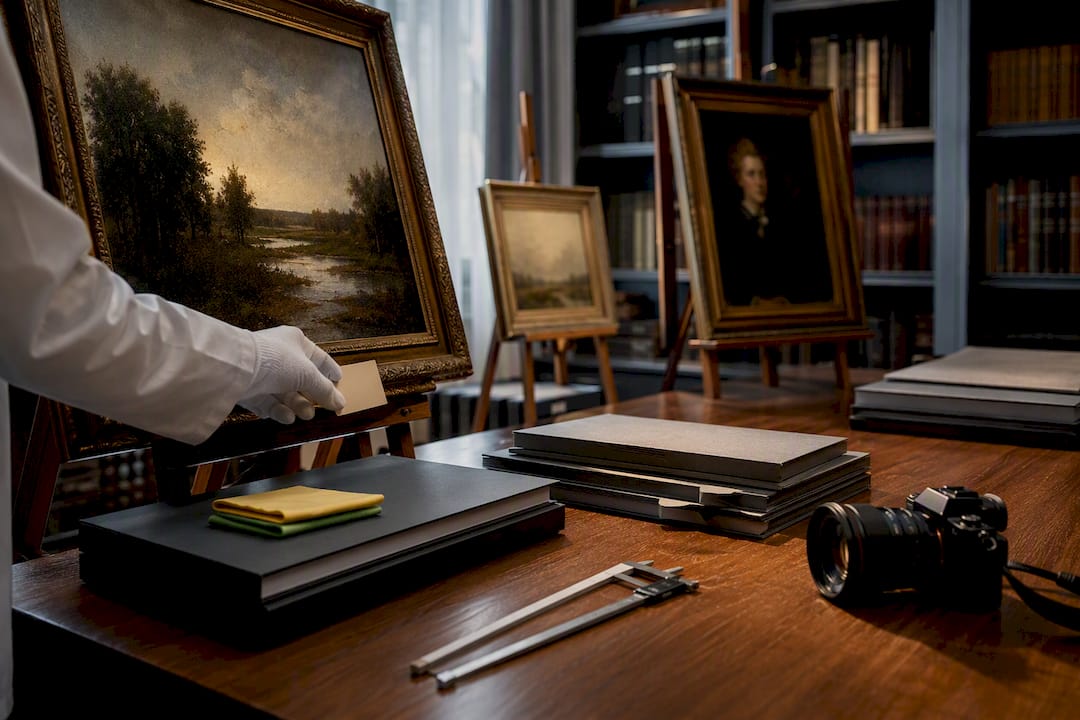
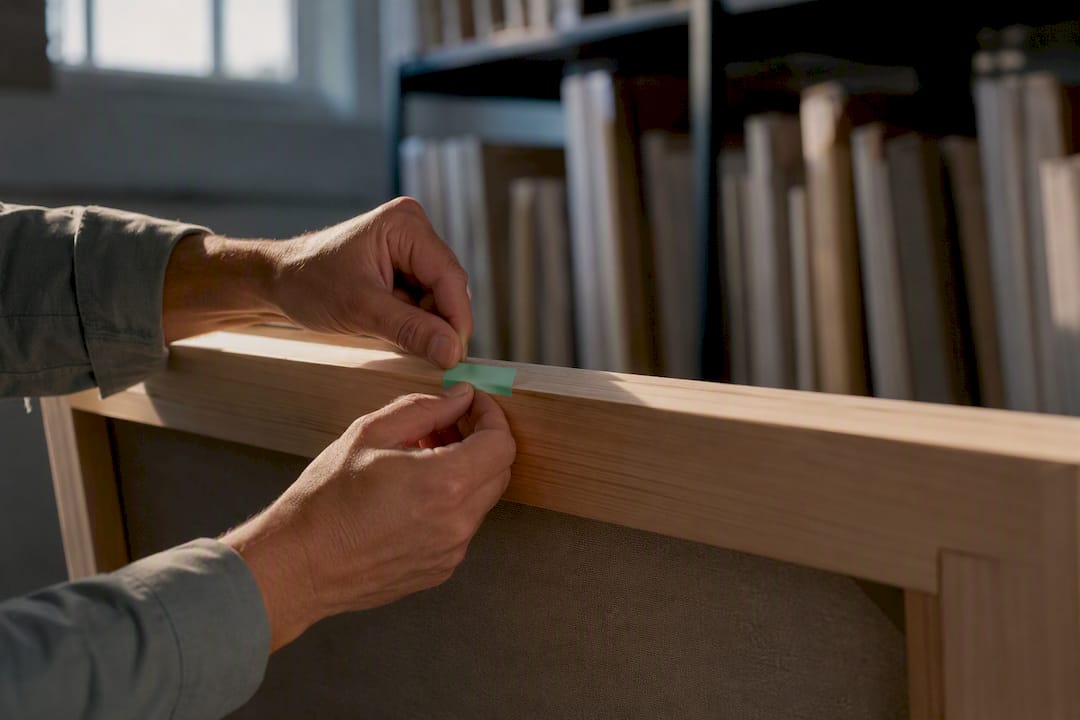
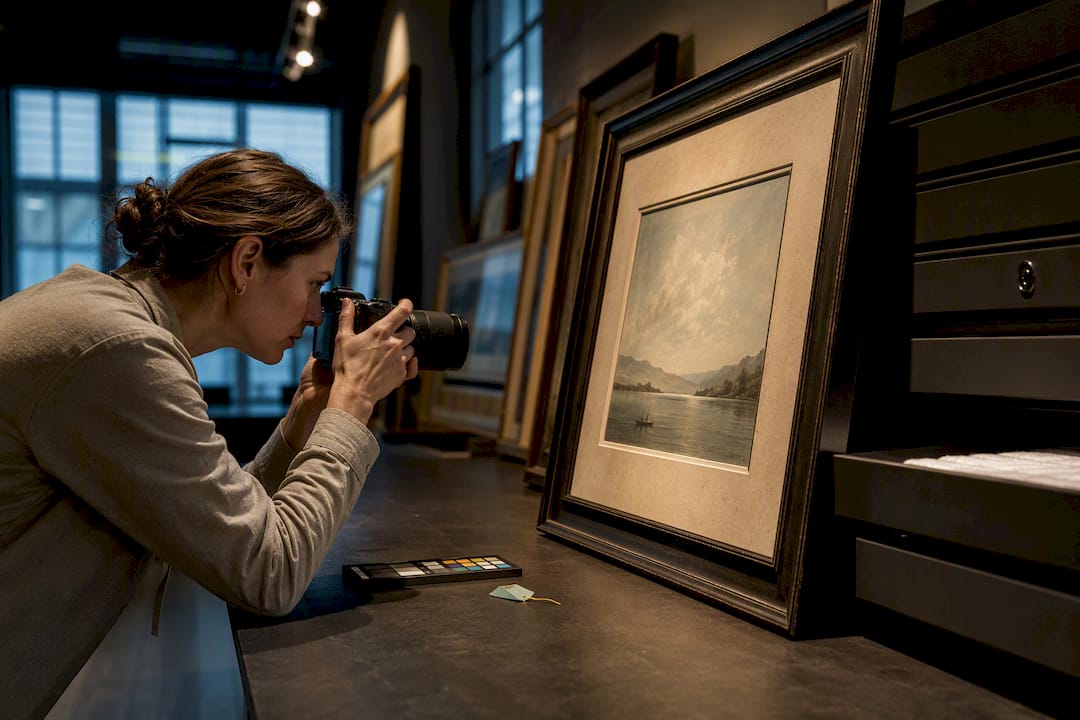
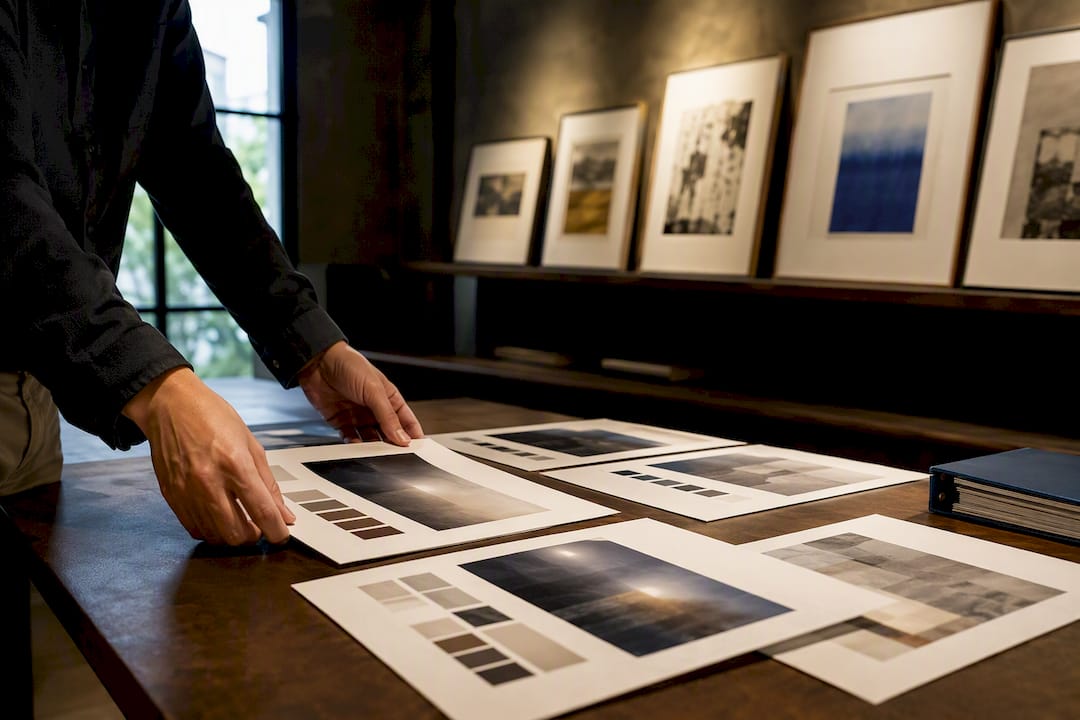
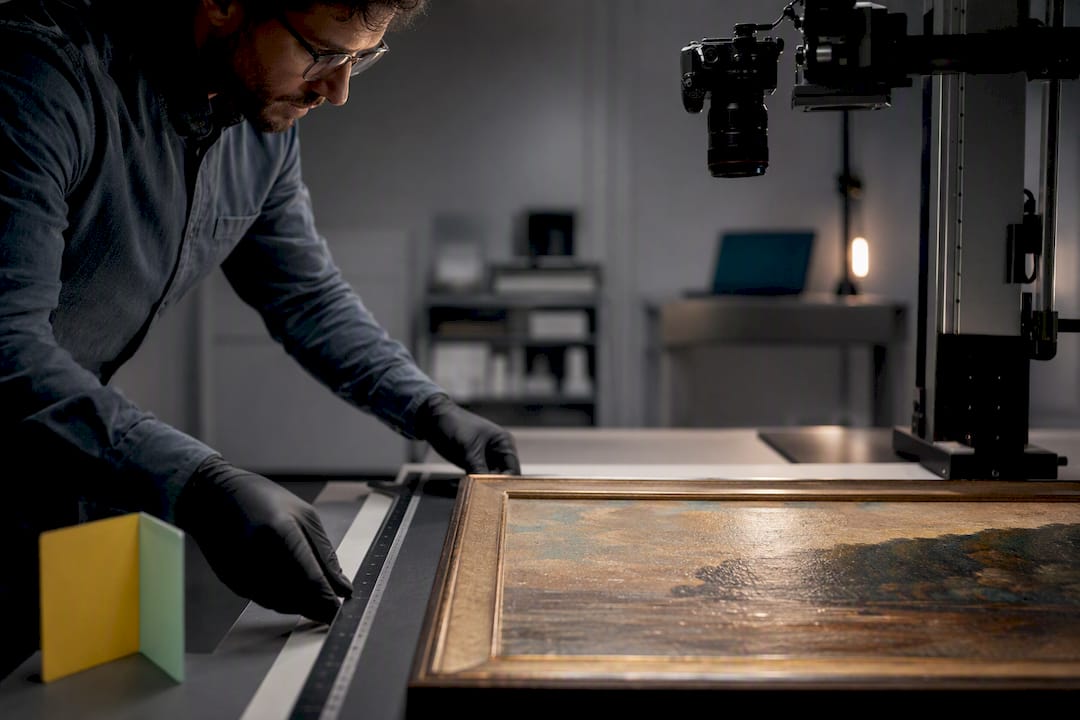
Bridging the physical object to its digital twin requires deliberate technique. Common methods include NFC tags embedded in the frame, microscopic scans that create a unique surface fingerprint, tamper-evident QR codes, and forensic imaging that documents brushstroke or material details invisible to the naked eye. The Art Newspaper has reported on platforms using microscopic HP scans and double-signed certificates specifically to close this gap.
A legal fact many collectors miss: owning an NFT tied to an artwork does not transfer copyright. Kelman Law’s analysis confirms that intellectual property rights only move with an explicit contract or license, separate from the token transaction itself.
- Blockchain proves: who registered the record and when
- Blockchain does not prove: that the underlying object matches the description
- Physical-digital link required for: authentication claims to hold up
- Legal transfer required for: any copyright or reproduction rights
Which Metadata Standards Keep Provenance Portable
Records that live inside one platform’s proprietary format lose value the moment that platform shuts down or gets acquired. CRATS addresses this directly through three components: URDI (universal digital identity), which gives each work a persistent identifier; MD (multidimensional description), which captures physical, historical, and material attributes; and FLR (full lifecycle record), which logs every provenance event from creation through resale.
GS1’s EPCIS 2.0 framework complements this by standardizing how supply-chain-style events get captured and shared, a model increasingly applied to art traceability.
For each provenance event, capture:
- Object identifier and physical description
- Date, location, and parties involved in the event
- Condition notes and supporting images
- Certificate or authentication reference
- Transaction hash or ledger reference, when applicable
Interoperable metadata prevents vendor lock-in and keeps a collection’s history usable no matter which system manages it next.
How to Add Blockchain Provenance to an Artwork’s Record
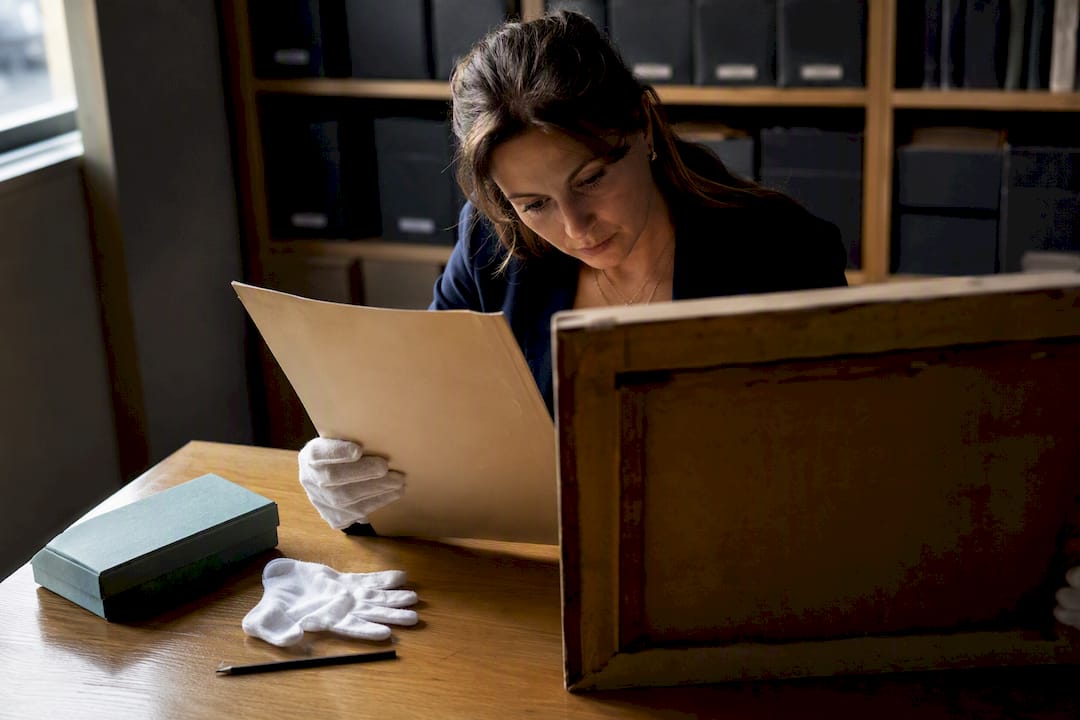
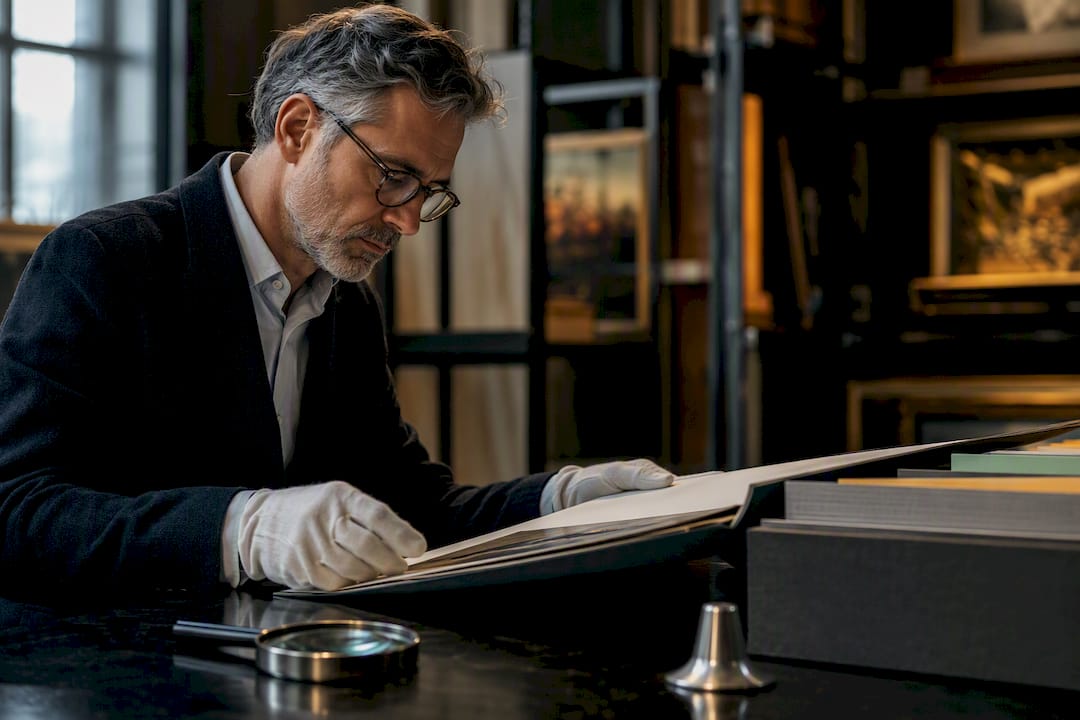
- Gather baseline documentation. Collect high-resolution photos, a condition report, and any existing certificates before touching a ledger.
- Choose a physical identifier. Decide between NFC, QR, or forensic scanning based on the artwork’s value and material.
- Create the digital identity. Assign a unique identifier and decide what stays on-chain versus off-chain.
- Record the provenance event. Mint or log the entry, then back up all off-chain files in at least two locations.
- Operationalize ongoing events. Log every transfer, loan, insurance appraisal, and exhibition as a new event tied to the same identifier.
Pro Tip: Photograph artwork under consistent, diffused lighting before minting anything. A proper inventory photo setup turns your baseline documentation into evidence, not just a snapshot.
What Are the Real Benefits of Blockchain Provenance?
Smart contracts can automate resale royalty payments to artists, but enforcement only works within platforms that honor the contract logic. Once an artwork moves off-chain into a private cash sale, that automation breaks down entirely.
Where provenance systems earn their keep is due diligence speed. A 2026 multi-scenario empirical assessment found institutional-partnership-based platforms scored significantly higher on transparency in auction scenarios compared to token-economics-based platforms. The same study found insurers showed strong willingness to adopt blockchain verification tools, while independent galleries showed lower rates of adoption, a gap that signals real friction in smaller-scale adoption.
- Faster due diligence for buyers and insurers
- Cleaner records for loan agreements and exhibitions
- Supporting evidence in restitution and title disputes
- Reduced disputes over ownership history at resale
How to Evaluate a Blockchain Provenance Platform
Before committing a collection’s history to any system, press vendors on five axes: metadata support (does it follow CRATS or GS1 schemas), export capability, physical-ID options, custody and access controls, and total cost including any institutional partnership requirements.
Ask directly: Can records export in a standard, human-readable format? What happens to my data if the platform shuts down? Can I see a sample metadata schema before committing?
- Red flag: proprietary formats with no stated export path
- Red flag: no support for physical-to-digital linking methods
- Red flag: vague answers about disaster recovery or data backup
- Green flag: documented support for open metadata standards
Galleries managing physical identifiers should also look at practical tools like QR-based visitor and asset systems, which double as both provenance anchors and visitor engagement tools.
Artworksoft’s Role in Provenance-Ready Documentation
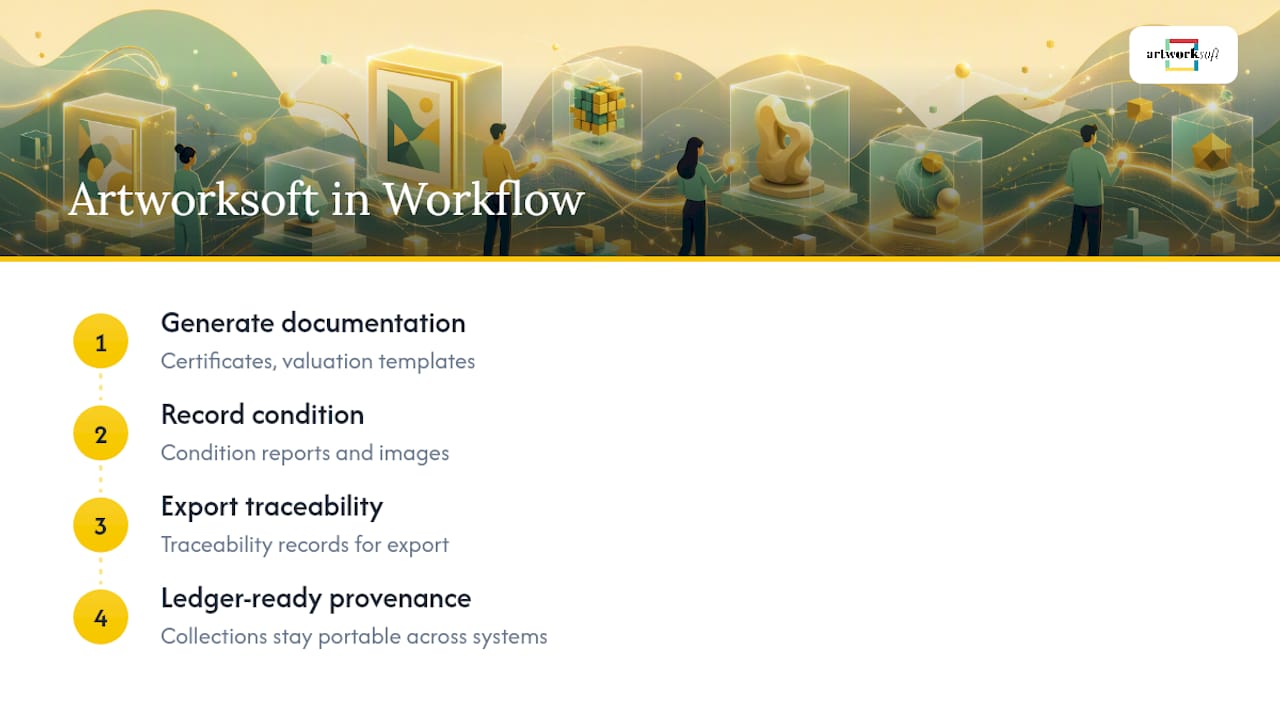
Blockchain records are only as strong as the documentation feeding them. Some documentation tools support this groundwork directly: generating Certificates of Authenticity, tracking artwork movement across locations, and applying structured valuation templates that eliminate guesswork in pricing.
Inside the implementation steps above, Artworksoft fits at the documentation and export stages, producing the condition reports, images, and traceability records a ledger entry needs to mean something. Collections built this way stay portable across whatever provenance system comes next.
The Standards Gap Nobody Wants to Talk About
Most conversations about blockchain art provenance focus on the ledger, as if putting a record on-chain settles the authenticity question. It doesn’t, and treating it as a solved problem is the biggest mistake collectors make right now.
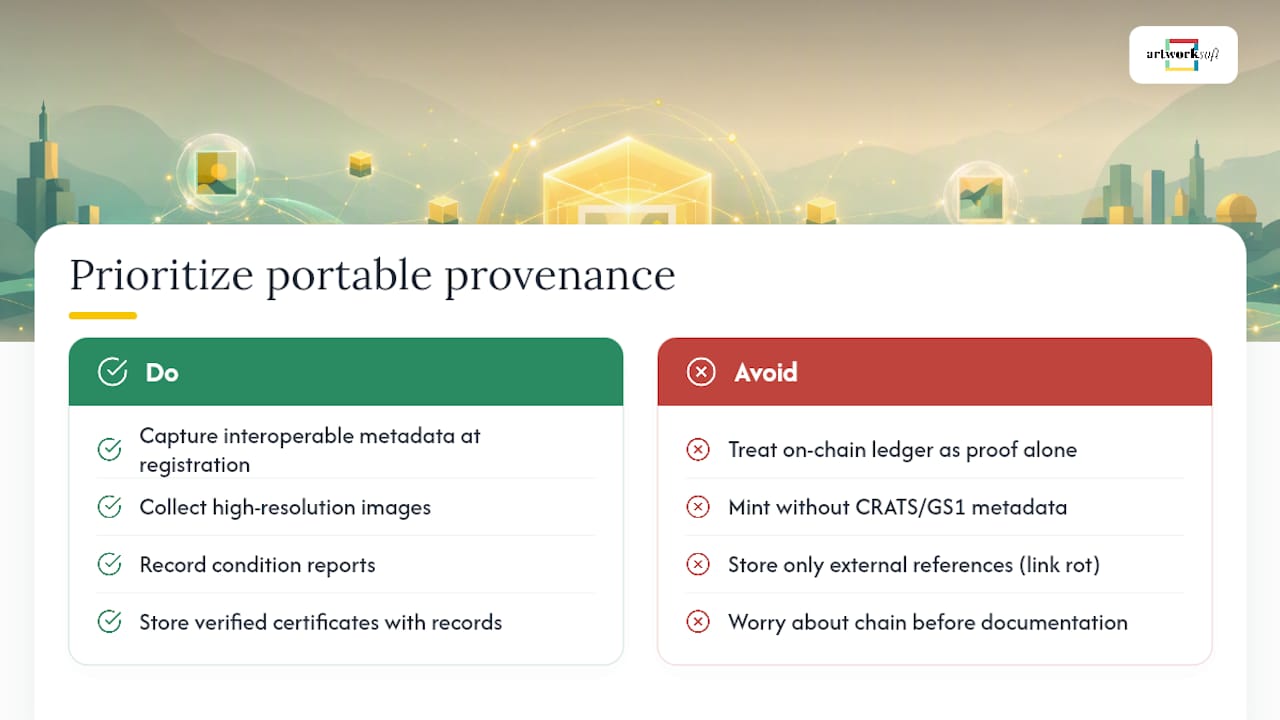
The harder, less glamorous work is standardization. A gallery that mints tokens without adopting CRATS-style metadata or GS1-compatible schemas is building a system that works today and becomes an orphaned dataset the moment its platform pivots or folds. That risk is real: NFTs frequently store references rather than the artwork file itself, which means link rot is not a hypothetical, it’s a design flaw baked into how many tokens work.
What should collectors and galleries prioritize first? Not the blockchain layer at all. Get the documentation right, high-resolution images, condition reports, verified certificates, before worrying about which chain to use. A perfect ledger entry built on sloppy baseline documentation just encodes bad data permanently. The chain is the easy part. The discipline of capturing accurate, interoperable metadata at the point of registration is where most implementations quietly fail.
— Nealda
Start Documenting Provenance Before You Need It
Certain platforms give collectors and galleries the documentation backbone that any blockchain provenance strategy depends on, without requiring a crypto wallet or a developer on staff.
Users can generate Certificates of Authenticity, track movement across locations and loans, and export structured records that stay readable no matter what platform the collection uses next. That portability matters more than which chain you eventually choose. If you’re building provenance records for a growing collection, start with a free Artworksoft account and turn your inventory into documentation that holds up under scrutiny, whether a buyer, insurer, or auction house comes asking.
Sources
For technical grounding, read ITU-T’s CRATS recommendation on metadata frameworks. For legal clarity on tokens versus copyright, see Kelman Law’s NFT analysis. For measured impact data, review the comparative empirical assessment on counterfeit reduction.
- ITU-T Recommendation F.740.12 (CRATS) — metadata framework for cultural relics and artworks tracing system
- Navigating NFTs and intellectual property law — Kelman Law
- Comparative Effectiveness of Blockchain Provenance Verification on Counterfeit Reduction in Art Transactions: A Multi-Scenario Empirical Assessment
- Digital art: It’s not just NFTs and crypto — Art Basel