

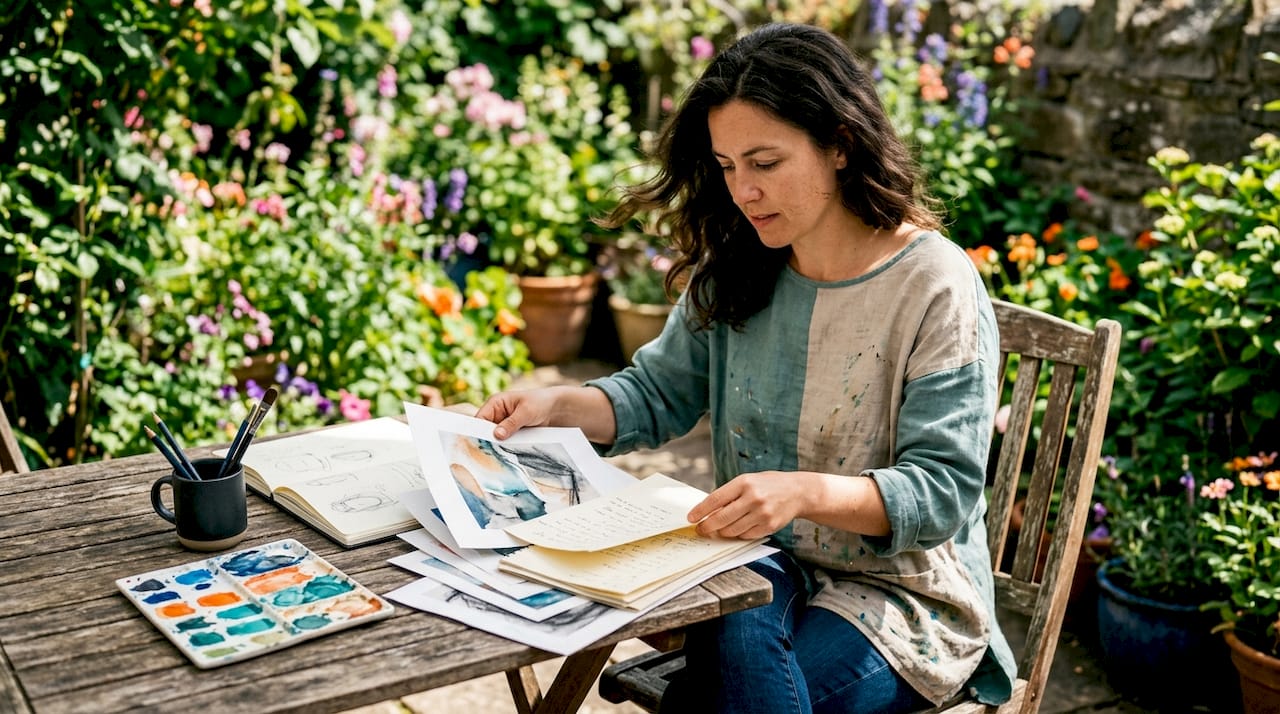
Art portfolio management is defined as the active, ongoing process of curating, documenting, organizing, and presenting an artist’s body of work to communicate their creative practice and professional value. This is not simply uploading images to a website. Portfolio development is both curation and documentation, requiring deliberate selection, consistent metadata, and structured presentation for specific audiences. Emerging artists who treat portfolio management as a professional discipline, rather than an afterthought, gain a measurable advantage when approaching galleries, collectors, and institutions. Platforms like Artworksoft now make art portfolio management defined practice accessible without requiring complex technical knowledge.
What are the key components of a professional art portfolio?
A professional art portfolio is a controlled submission object, not a public gallery. Portfolios serve as evidence sets enabling consistent evaluation by jurors and curators who process work quickly through compressed images. That distinction changes how you build and maintain every element inside it.
The core components of a professional portfolio fall into two categories: visual assets and supporting documentation.
Visual assets include:
- High-resolution, stable images with consistent lighting and neutral backgrounds
- Accurate dimensions, medium, and year for each work
- Deliberate sequencing that creates narrative coherence across the selection
- Captions that identify the work without requiring the viewer to ask questions
Supporting documentation includes:
- An artist statement that frames the body of work, not just individual pieces
- A current CV listing exhibitions, residencies, awards, and education
- Project plans or series descriptions for work in progress
- Provenance records and any sales or exhibition history
The distinction between portfolio types matters significantly. A submission portfolio for a juried exhibition requires tight curation and institutional formatting. A promotional portfolio for a gallery introduction can be broader and more conversational in tone.
| Portfolio Type | Primary Audience | Key Components | Tone |
|---|---|---|---|
| Submission portfolio | Jurors, grant committees | Stable images, captions, CV, statement | Formal, controlled |
| Promotional portfolio | Galleries, collectors | Selected works, artist bio, pricing | Accessible, narrative |
| Documentation portfolio | Institutions, archives | Full inventory, provenance, certificates | Comprehensive, factual |
| Digital portfolio site | General public | Curated gallery, contact, social links | Flexible, visual |

Stable images and deliberate sequencing create controlled viewing conditions that reduce ambiguity during institutional evaluation. Jurors do not linger. Clarity is the competitive advantage.
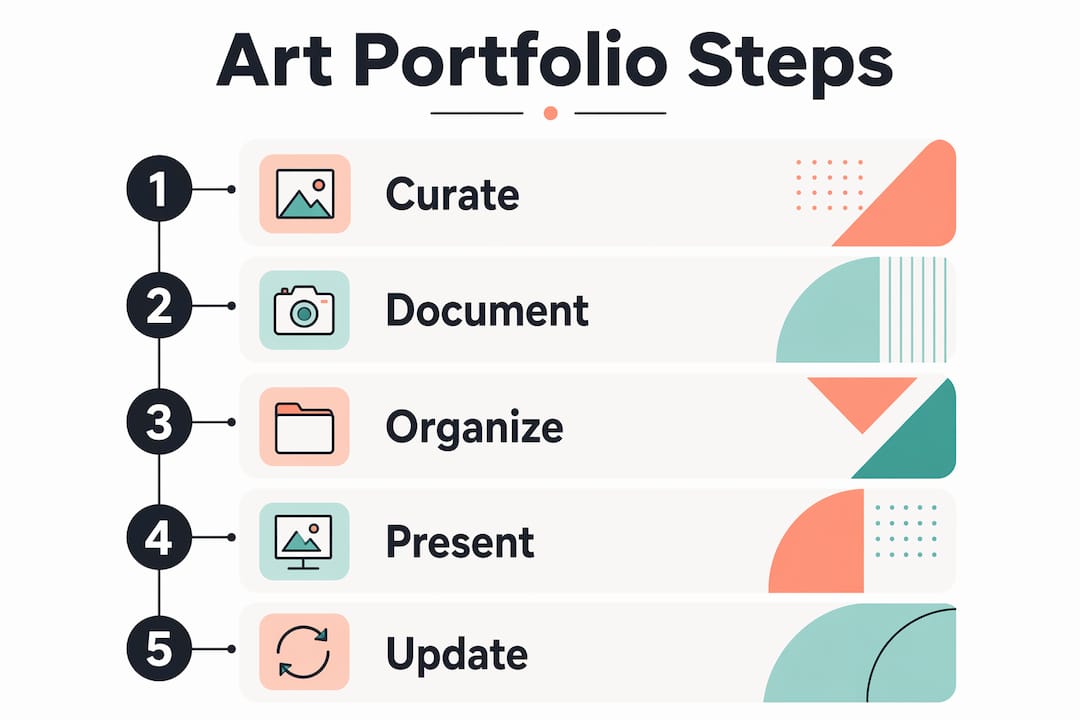
Pro Tip: Build a master image folder organized by series and year. Every image file should be named with the artwork title, medium, and year. This single habit eliminates hours of searching when a deadline appears.
How do emerging artists maintain and update their portfolios over time?
Routine portfolio maintenance prevents the last-minute scramble that derails otherwise strong applications. The artists who apply consistently and successfully are not necessarily the most talented. They are the most organized.
A sustainable maintenance system follows a predictable rhythm:
- Monthly: Add new works to your master inventory with full metadata. Update your image folder. Note any exhibitions, sales, or press mentions.
- Quarterly: Review your artist statement for accuracy. Confirm your CV reflects recent activity. Archive any works that no longer represent your current practice.
- Annually: Refresh your full portfolio selection. Reassess sequencing and narrative coherence. Update pricing and valuation records. Back up all files to a second location.
- Before each application: Pull the relevant subset from your master file. Tailor your statement to the specific opportunity. Confirm image specifications match the submission requirements.
- After each application: Note what you submitted, when, and to whom. Track outcomes. This record becomes a reference for future applications and a measure of career progress.
An organized application package including a CV, images, and statements reduces administrative burden and supports long-term career sustainability. The goal is to make applying feel like pulling from a prepared system, not building from scratch each time.
Portfolio management also connects directly to broader art career strategy. Tracking which works generate interest, which series attract specific types of collectors, and which presentations succeed with particular institutions creates a feedback loop. That feedback informs both creative decisions and professional positioning.
Pro Tip: Keep a single “ready to submit” folder that always contains your top 10 images, a current CV, and a general artist statement. Update it every month. When an opportunity appears, you spend your time tailoring, not assembling.
What digital platforms support art portfolio and asset management in 2026?
Digital tools have changed what art collection management looks like in practice. The best platforms in 2026 combine inventory management, documentation, valuation, and presentation in one system rather than requiring artists to patch together separate tools.
Artworksoft is a dedicated art management and inventory system integrating portfolio, sales, documentation, and valuation modules for artists and collectors. Its structured valuation formula removes guesswork from pricing, and its documentation features support Certificates of Authenticity and provenance tracking. Artworksoft’s artwork profile management module stores images, descriptions, dimensions, and transaction history for each piece in a single record.
MyPortfolio by MyArtBroker is a free online art collection management tool offering real-time market data and transparency for collectors and artists. It focuses primarily on market value tracking rather than inventory management or documentation workflows.
| Platform | Best For | Core Features | Pricing |
|---|---|---|---|
| Artworksoft | Artists and collectors | Inventory, valuation, documentation, sales, sharing | Free start available |
| MyPortfolio | Collectors tracking market value | Real-time market data, collection overview | Free |
The features that matter most for emerging artists differ from those that matter for established collectors. Emerging artists need documentation tools, inventory organization, and presentation sharing. Collectors focused on art portfolio value tracking need market data, provenance records, and asset reporting.
Artworksoft addresses both needs. Its art documentation module supports standardized metadata and provenance records. Its art valuation tools support asset reporting for collectors and artists who need to understand the financial dimension of their collection.
Key features to evaluate when selecting a platform:
- Inventory management with full metadata fields
- Image storage with version control
- Documentation generation, including Certificates of Authenticity
- Valuation and pricing support
- Controlled sharing for submissions and presentations
- Sales and transaction tracking
Digital portfolio management platforms also support offline presentations. Artworksoft’s sharing features allow artists to create controlled, professional portfolio views for specific recipients without exposing their full inventory.
How does art portfolio management support professional growth?
Effective portfolio management balances artistic narrative with practical asset tracking, functioning as both a creative strategy and a business discipline. Artists who manage their portfolios with this dual lens position themselves more effectively with galleries, collectors, and grant committees.
A well-managed portfolio does specific, measurable work for an artist’s career:
- Reduces friction in applications. Jurors and curators evaluate work quickly. A portfolio that is legible, coherent, and correctly formatted removes barriers to selection.
- Builds institutional credibility. Consistent documentation and provenance records signal professionalism to galleries and collectors who are considering long-term relationships.
- Supports pricing and negotiation. Portfolio management decisions that align works with artistic vision and external expectations maintain coherence and market relevance. That coherence supports confident pricing conversations.
- Tracks career trajectory. A maintained inventory shows which works sold, where they were exhibited, and how pricing has evolved. This data informs both creative and business decisions.
- Increases visibility. Platforms with community features, like Artworksoft, extend an artist’s professional presence beyond their immediate network.
Art asset management for collectors follows the same logic. Collectors who maintain organized records of provenance, condition, and valuation protect the financial value of their holdings and simplify transactions. The asset reporting tools in platforms like Artworksoft make this process systematic rather than reactive.
Portfolio management also shapes how artists are perceived over time. A body of work presented with consistent documentation and clear narrative signals that the artist takes their practice seriously. That signal matters to the institutions and collectors who make long-term commitments.
Key Takeaways
Art portfolio management is a professional discipline that combines curation, documentation, and systematic maintenance to support both artistic credibility and career advancement.
| Point | Details |
|---|---|
| Define your portfolio type | Submission, promotional, and documentation portfolios serve different audiences and require different components. |
| Build a maintenance routine | Monthly updates and annual refreshes prevent last-minute preparation and keep materials ready for opportunities. |
| Use digital tools | Platforms like Artworksoft centralize inventory, documentation, valuation, and sharing in one system. |
| Prioritize legibility | Stable images, accurate captions, and deliberate sequencing make portfolios easier for jurors to evaluate. |
| Connect portfolio to career strategy | Tracking sales, exhibitions, and application outcomes creates data that informs both creative and business decisions. |
What most emerging artists get wrong about portfolio management
The most common mistake I see is treating the portfolio as a finished product rather than a living system. Artists spend weeks building a portfolio for one specific application, then let it sit untouched for a year. When the next opportunity arrives, they are starting over.
The second mistake is confusing a website with a portfolio. A public website is a promotional interface. A portfolio is a controlled submission object with specific formatting, stable documentation, and deliberate sequencing. These are different tools with different purposes. Using one where the other is required signals a lack of professional preparation.
The third mistake is underestimating the administrative workload. Portfolio management is not glamorous work. It involves file naming, metadata entry, statement revisions, and CV updates. Artists who resist this work often find themselves unable to respond to opportunities quickly. The artists who build systems for it find that applying becomes a routine rather than a crisis.
The mindset shift that changes everything is simple: treat your portfolio the way a business treats its records. Document consistently, update regularly, and store everything in a system you can access and share at any time. The creative work is the art. The portfolio management is the infrastructure that gets the art seen.
— Nealda
Artworksoft: art inventory and portfolio management in one place
Managing a professional art portfolio requires more than a folder of images. It requires inventory records, documentation, valuation data, and controlled sharing, all accessible when an opportunity appears.
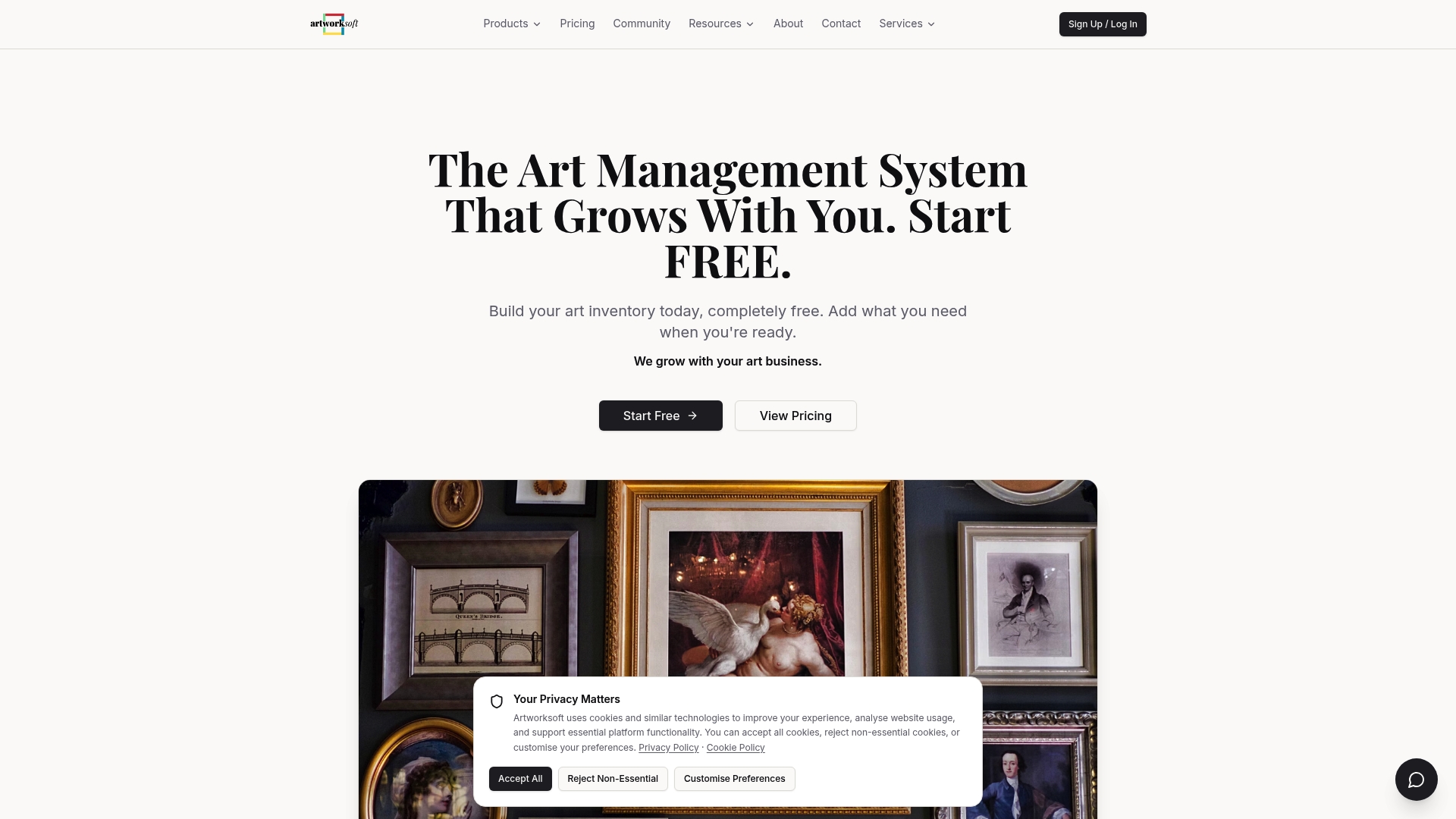
Artworksoft brings these functions together in one system built for artists and collectors. The platform covers art inventory management, artwork profiles, documentation including Certificates of Authenticity, valuation support, and sales tracking. Emerging artists can start for free and build a professional portfolio infrastructure without technical complexity. Artworksoft’s community features also increase visibility, connecting artists with collectors and galleries through a structured professional presence. For artists ready to manage their work with the same discipline they bring to creating it, Artworksoft provides the system to do it.
FAQ
What is art portfolio management?
Art portfolio management is the active process of curating, documenting, organizing, and presenting an artist’s body of work for specific professional purposes. It includes inventory maintenance, image management, documentation, and tailored presentation for galleries, collectors, and institutions.
How is a portfolio different from an artist’s website?
A portfolio is a controlled submission object formatted for institutional evaluation, while a website is a public-facing promotional interface. Portfolios require stable images, consistent captions, and deliberate sequencing. Websites prioritize visual appeal and broad accessibility.
How often should an artist update their portfolio?
Artists should update their master inventory monthly and conduct a full portfolio refresh annually. Routine maintenance prevents last-minute preparation and keeps materials ready for applications and opportunities as they arise.
What digital tools support art portfolio management in 2026?
Artworksoft is a dedicated platform covering inventory, documentation, valuation, and sales for artists and collectors. MyPortfolio by MyArtBroker focuses on real-time market value tracking for collectors managing art as a financial asset.
Why does portfolio management matter for career growth?
A well-managed portfolio reduces friction in applications, supports confident pricing, and builds institutional credibility over time. Artists who maintain organized records of provenance, exhibitions, and sales position themselves more effectively with galleries and collectors.











