

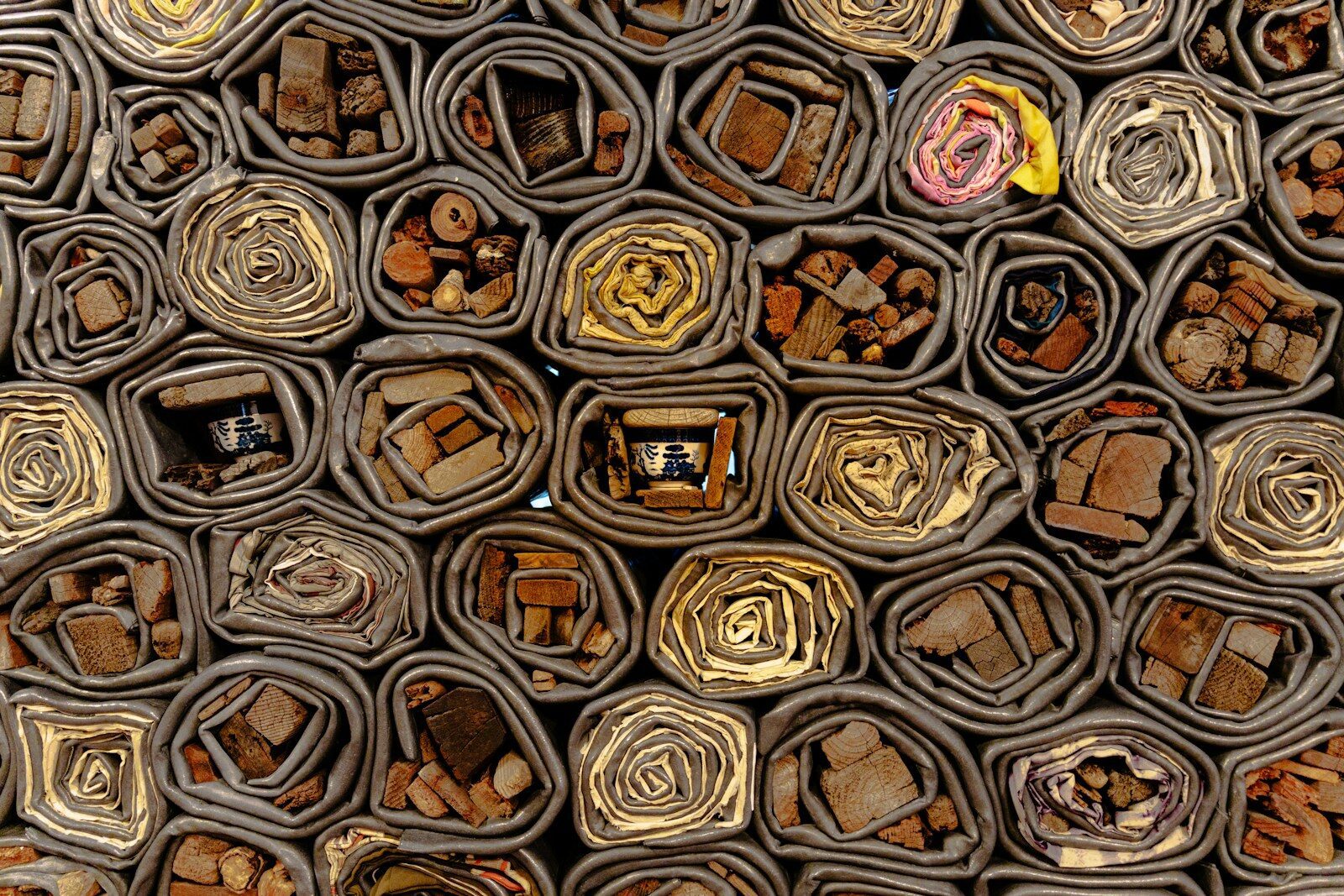
Sustainable art is artwork produced in harmony with ecological and social principles, including ecology, non-violence, and social justice, with deliberate attention to the environmental and human impact of every material and process across a work’s full lifecycle. The most direct first step is not a product swap but a practice shift: conduct a studio inventory, identify the single most toxic material in regular use, and replace it before addressing anything else. Three concrete actions get this started immediately.
- Audit your current supplies and flag items by toxicity level (solvents, cadmium-based pigments, aerosol fixatives).
- Eliminate or substitute the highest-risk item first, using the principle of progressive reduction rather than overnight overhaul.
- Identify one U.S.-based supplier of low-VOC or recycled-content materials and place a trial order.
This guide covers: sustainable materials and practical eco-swaps with pros and cons; studio systems and waste reduction; sourcing, upcycling, and responsible foraging; lifecycle thinking and ethical distribution; case studies from working artists and institutional exhibitions; costs and trade-offs; a 30/90/365 starter plan; research-backed product innovations; and U.S.-relevant suppliers and organizations.
What sustainable art means in practice
The definition extends well beyond material choice. Sustainable art encompasses the full arc from production through use to disposal or reuse, guided by three ethical pillars: ecological responsibility (minimizing resource extraction and pollution), social justice (fair labor in supply chains, equitable access to materials and venues), and non-violence toward both human and non-human life. These principles apply to decisions that most artists never formally examine: the energy source powering the studio, the country of origin of a canvas, the carbon cost of shipping a piece to an international fair.
Lifecycle framing is the practical tool that makes these principles operational. At the production stage, choices involve raw material origin, toxicity, and embodied energy. During use, conservation requirements and the energy demands of display matter. At end-of-life, the question is whether a work can be disassembled, donated, composted, or must be landfilled. Thinking in these three phases prevents the common error of optimizing one stage while ignoring the others — for example, switching to a plant-based paint while continuing to ship work by air freight internationally.
Documentation is part of the practice, not an administrative afterthought. Recording material decisions, supplier certifications, and disposal plans creates a provenance trail that collectors and venues can verify. It also makes the artist’s sustainability claims credible rather than aspirational.
How sustainable art developed: key movements and milestones
The lineage of environmentally conscious art is longer than most practitioners realize, and understanding it clarifies which approaches are well-tested versus still experimental.
- 1960s–1970s: Land Art. Artists including Robert Smithson and Agnes Denes worked directly with natural materials and landscapes. Smithson’s Spiral Jetty (1970) and Denes’s Wheatfield — A Confrontation (1982, Manhattan) established the idea that the land itself could be medium and subject simultaneously.
- 1970s–1990s: Eco-art and ecological art. Artists such as Joseph Beuys, with his 7000 Oaks project (1982–1987), and the collective Harrisons (Helen and Newton Harrison) developed practices explicitly tied to ecological systems thinking. The goal shifted from representing nature to actively intervening in environmental processes.
- 1990s–2000s: Institutional recognition. Curators began integrating sustainability as a curatorial framework, not just a thematic subject. The Smart Museum of Art at the University of Chicago mounted Beyond Green: Toward a Sustainable Art, a landmark exhibition that brought together international artists working at the intersection of sustainable design and contemporary practice. It demonstrated that lifecycle thinking and material ethics could operate at institutional scale.
- 2010s–present: Systems and social practice. The field expanded from object-centric work to include socially engaged projects, community reuse programs, and curatorial policies governing exhibition design, shipping, and venue selection. Yale Sustainability has documented artists functioning as public educators, using work to communicate environmental data in non-linguistic ways that reach audiences formal reporting cannot.
The trajectory is clear: practice moved from symbolic engagement with nature toward systemic, lifecycle-aware production and distribution.
Main approaches within sustainable art
Eco-conscious practice is not a single method. Five distinct approaches have emerged, each with different material signatures, logistical demands, and venue fits.
Land art and site-specific work uses natural materials found at or near the site: soil, stone, water, plant matter. The logistical advantage is minimal transport of materials; the complexity lies in land access, permits, and the ethical question of site disturbance. This approach suits public commissions and rural or semi-rural contexts. Artists must also consider Indigenous land protocols before foraging or altering a site.

Upcycled and reclaimed-material art transforms discarded industrial or consumer objects into finished works. The material cost is often low, and the conceptual framing around waste is built into the object itself. Preparation and safety checks are non-negotiable: reclaimed wood may contain lead paint or treated chemicals, and found metal may carry industrial residues. Galleries and collectors respond well to this approach when provenance of the source material is documented.
Low-footprint digital and new media work eliminates physical material waste almost entirely at the production stage, though the energy cost of servers, screens, and data storage is real and often underestimated. Selling or exhibiting work online professionally reduces shipping emissions and opens distribution to audiences without requiring physical transport.
Renewable-energy and technology-driven installations use solar panels, wind-powered kinetics, or other renewable inputs as both medium and message. These projects tend to be resource-intensive at fabrication but demonstrate operational sustainability during exhibition. Venue fit is typically large-scale public or institutional spaces.
Socially engaged and community reuse projects center collective participation: material swaps, community repair workshops, collaborative murals using reclaimed paint. The sustainability value is distributed across participants, and the social justice dimension is explicit. These projects often require no gallery infrastructure and can operate in community centers, schools, or public spaces.
Eco-friendly paints, supports, and solvents: practical swaps and trade-offs
Material choice is where most artists begin, and the options have expanded considerably. The table below compares common conventional materials against their sustainable alternatives across four practical dimensions.
| Material | Conventional Option | Sustainable Alternative | Toxicity | Durability / Lightfastness | Cost Range | Disposal Notes |
|---|---|---|---|---|---|---|
| Acrylic paint | Standard petroleum-based acrylic | Plant-based or recycled-binder acrylic (e.g., Origin by Pébéo, Natural Earth Paint) | Low–Moderate | Good; not rapidly biodegradable | Moderate–High | Dry before disposal; check local hazmat rules |
| Pigments | Cadmium, cobalt, lead-based | Natural earth pigments (ochre, umber, sienna), plant-based dyes | Low | Moderate–High (earth); variable (plant dyes) | Low–Moderate | Generally safe; verify plant dye fixatives |
| Canvas/support | Petroleum-based polyester canvas | Hemp, flax, or GOTS-certified organic cotton; reclaimed wood panels | Low | High (hemp, flax); variable (reclaimed wood) | Moderate | Compostable (natural fiber); wood reusable |
| Solvents | Mineral spirits, turpentine | Walnut oil, poppyseed oil, citrus-based cleaners | Low | N/A (mediums, not film-formers) | Low–Moderate | Settle sludge in jar; dispose per local regs |
| Adhesives | Synthetic PVA, epoxy | Wheat paste, rice starch paste, natural hide glue | Low | Moderate (wheat paste); High (hide glue) | Low | Biodegradable; check archival requirements |
| Fixatives | Aerosol spray fixatives | Pump-spray or brush-on alternatives; beeswax | Moderate (aerosol) | Good | Low–Moderate | Avoid aerosol VOCs in enclosed spaces |
A few trade-offs deserve direct attention. Natural Earth Paint’s plant-based fluid acrylics are non-toxic and made from plant-derived ingredients, but the company is explicit that these paints are durable rather than rapidly biodegradable. Artists who assume “bio-based” means “compostable” will mismanage disposal and conservation planning. The correct framing is: plant-based acrylics reduce toxicity and embodied carbon during production, but they still require the same conservation approach as conventional acrylics once cured.
For supports, the Cincinnati Art Museum’s eco-friendly art-making guide recommends hemp and flax surfaces as direct substitutes for standard linen and cotton canvas, noting that both fibers are grown with significantly lower pesticide inputs. Reclaimed wood panels add a provenance dimension that collectors often find compelling, provided the wood is tested for lead paint before use.
Pro Tip: When evaluating a “natural” or “eco” pigment, check the manufacturer’s lightfastness rating against the ASTM D4302 standard. Some plant-based dyes rate I or II (excellent to very good), while others fade within years under gallery lighting. Earth pigments — ochre, raw umber, burnt sienna — consistently rate I and are among the most archivally stable options available at any price point.
How to build a green studio practice step by step
Visual Artists Ireland’s Mindful Material Management framework is the most practical published system for studio-level change, and it works precisely because it is incremental rather than prescriptive. The sequence below adapts that framework for U.S.-based studio practice.
- Track and record — Keep a simple monthly log: materials purchased, materials eliminated, waste disposed, and any new certifications or supplier changes. This record serves double duty as studio documentation and as evidence for sustainability claims when exhibiting or selling work.
Pro Tip: The most common mistake in green studio transitions is attempting to replace everything at once. Prioritize the materials with the highest use frequency and the highest toxicity rating. A single swap — from petroleum-based solvent to citrus-based cleaner — used daily has more cumulative impact than replacing ten rarely used specialty products.
Where to source sustainable materials and how to use upcycling safely
Sourcing strategy determines whether a studio’s sustainability claims hold up under scrutiny. The following categories cover the main supply channels available to U.S.-based artists.
Material libraries operate on a lending or low-cost access model, providing artists with reclaimed and surplus materials including fabric, wood, hardware, and industrial offcuts. The Resource Exchange in Boston and SCRAP (School and Community Reuse Action Project) in San Francisco are two well-established examples. These organizations divert materials from landfill and make them available at minimal cost, which also lowers the financial barrier to experimentation.
Reclaimed-wood yards and salvage centers supply panels, frames, and structural materials. Habitat for Humanity ReStores operate nationally and carry reclaimed lumber, doors, and hardware at reduced prices. Before using reclaimed wood as a painting support, test for lead paint using a 3M LeadCheck swab or equivalent, and sand only with appropriate respiratory protection if the test is negative.
Eco-pigment and natural paint suppliers include Natural Earth Paint (Oregon-based, ships nationally) and Earth Pigments (Arizona-based), both of which supply natural earth pigments, plant-based binders, and non-toxic mediums with ingredient transparency.
Local foraging is viable for natural dyes, plant-based pigments, and organic binders, but it carries obligations. Foraging on public land in the U.S. requires compliance with local and federal regulations; on or near Indigenous lands, consultation with the relevant tribal authority is both an ethical and, in many jurisdictions, a legal requirement. Never harvest protected plant species, and limit quantities to what the site can sustain.
Upcycling preparation and safety require the same rigor as any studio process. Found textiles may contain flame retardants or synthetic dyes that off-gas when heated. Industrial metal may carry surface coatings with heavy metal content. The standard protocol is: identify the material’s likely origin, test for known hazards, clean thoroughly, and document the source for provenance records.
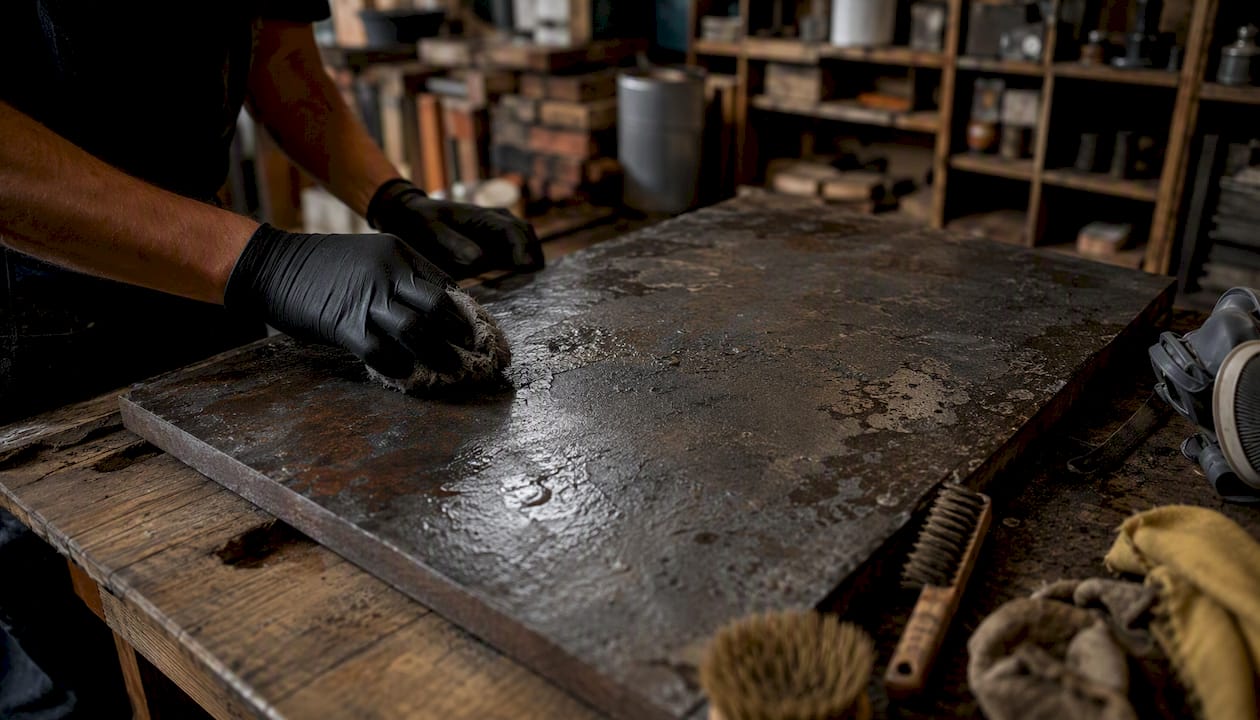
For hazardous studio waste disposal, the U.S. EPA’s HHW program provides drop-off locations in most metropolitan areas. Earth911.com maintains a searchable database of local disposal options for paints, solvents, and other studio chemicals.
Artists and exhibitions that model sustainable practice
The following case studies represent distinct approaches, each with transferable lessons.
Agnes Denes — Wheatfield — A Confrontation (1982). Denes planted two acres of wheat on a Manhattan landfill, using the site’s own soil and minimal external inputs. The work cost almost nothing in materials, generated significant public attention, and left no permanent physical footprint after harvest. The lesson: site-specific work with natural materials can achieve high visibility at low material cost.
Neri Oxman and the Mediated Matter Group (MIT Media Lab). Oxman’s research-based practice explored biologically grown and computationally designed structures using natural polymers and living organisms. While the fabrication technology is not accessible to most studio artists, the underlying principle — designing for biological reintegration rather than permanent material accumulation — is directly applicable to material selection decisions at any scale.
The Beyond Green: Toward a Sustainable Art exhibition (Smart Museum, University of Chicago). This institutional exhibition brought together artists from multiple countries working with reclaimed, recycled, and low-impact materials. Its curatorial framework demonstrated that sustainability could be a coherent organizing principle for a major exhibition rather than a secondary theme. For curators, it remains a reference point for how to structure a show around lifecycle and material ethics without reducing the work to didactic messaging.
Monali Ghosh. Ghosh’s practice integrates sustainability at every decision point: material sourcing, canvas reworking, and venue selection based on proximity and shared values. Her approach is notable for its refusal to treat sustainability as a separate layer applied to an otherwise conventional practice. It is embedded in the studio workflow from the first mark.
Yale Sustainability’s artist profiles document multiple artists using their work as public education tools, presenting environmental data through visual and material means that reach audiences who would not engage with a scientific report. This positions art as a civic instrument, not merely an aesthetic one.
Costs and trade-offs of sustainable materials
Sustainable materials are not uniformly more expensive than conventional alternatives, but the cost structure is different and worth understanding before committing to a project budget.
Natural earth pigments are often less expensive than synthetic cadmium or cobalt alternatives, particularly when purchased in bulk from suppliers like Earth Pigments. Hemp and flax canvas are typically priced comparably to mid-grade linen. The cost premium, where it exists, tends to cluster around certified organic or fair-trade products and around specialty items like plant-based varnishes or compostable packaging.
The real trade-off is often time, not money. Wheat paste adhesives require preparation and have shorter working times than synthetic PVA. Citrus-based solvents clean more slowly than mineral spirits. Natural dyes require mordanting processes that add steps to the workflow. Artists who factor this time cost into project planning avoid the frustration of discovering mid-project that a sustainable swap has changed their process in ways they did not anticipate.
Durability concerns are legitimate but manageable. Some plant-based binders have shorter track records than petroleum-based acrylics, which have been tested in conservation settings for decades. The mitigation strategy is straightforward: use conservation-friendly framing (UV-filtering glazing, acid-free matting), document the materials used so future conservators have accurate information, and communicate honestly with collectors about the work’s conservation requirements. Artwork condition and its effect on valuation is a documented factor in the secondary market, and transparency about materials supports rather than undermines long-term value.
Pro Tip: When presenting a work made with less-established sustainable materials to a collector, include a one-page material specification sheet with the sale. List each material, its manufacturer, the relevant certifications, and the recommended conservation conditions. Collectors who receive this documentation are significantly more likely to maintain the work correctly, which protects both the artwork and the artist’s reputation.
Your 30/90/365 starter plan for sustainable practice
A phased approach prevents the paralysis that comes from trying to address everything at once. The plan below is structured for artists and curators at any stage of practice.
30-day actions
- Complete the studio inventory described in the green studio section above.
- Identify and remove or substitute the single most toxic material in regular use.
- Open an account with one eco-material supplier and place a trial order for a low-risk swap (e.g., citrus-based cleaner, PCW paper).
- Set up a solvent sludge jar and label waste bins.
- Research the nearest HHW drop-off facility for future hazardous waste disposal.
90-day actions
- Replace petroleum-based canvas with hemp or flax for new work.
- Transition sketch and study paper to 100% PCW content.
- Establish a monthly material log (purchases, eliminations, waste disposed).
- Review shipping materials and identify one reusable crate or biodegradable packing option for the next shipment.
- Attend or connect with one material library, art co-op, or community reuse organization.
365-day actions
- Conduct a full studio energy audit and switch to LED lighting if not already done.
- Develop a standard sustainability note template for artwork records and collector documentation.
- Review exhibition and venue choices against a proximity and shared-values checklist.
- Set a target percentage of supplies from certified sustainable sources and track progress quarterly.
- Share material logs and sustainability documentation with at least one collector or venue as a transparency practice.
The metrics table below provides a simple tracking framework.
| Metric | Baseline (Month 1) | Target (Month 12) | How to Measure |
|---|---|---|---|
| Toxic materials in use | Count from inventory | Reduce by 50% | Monthly inventory review |
| PCW paper (% of total paper) | Estimate current % | 80%+ PCW | Purchase records |
| Reused/reclaimed materials | Count of items | Increase by 3–5 items | Studio log |
| Hazardous waste disposed correctly | unknown | 100% via HHW | Disposal receipts |
| Sustainability notes on artwork records | — | 100% of new works | Inventory system check |
What research shows about material impact reductions
Product-level innovation in art materials has accelerated, and the documented impact reductions are significant enough to inform purchasing decisions.
Pébéo’s Origin acrylic line uses 100% recycled binders, which the manufacturer states reduces the carbon footprint of the paint by up to approximately 80% compared to traditional non-recycled versions. The same product line switched packaging to FSC-certified PE paper-based tubes, cutting plastic consumption by approximately 59%. These figures come from the manufacturer’s own product documentation and should be treated as vendor claims pending independent life-cycle assessment (LCA) verification, but they represent the most specific published data currently available for a commercially available artist acrylic.
The broader pattern across the industry is that packaging changes and binder reformulation are the two levers producing the largest measurable reductions. Switching from petroleum-derived binders to recycled or bio-based alternatives addresses the highest-carbon component of paint manufacturing. Eliminating single-use plastic tubes removes a waste stream that is rarely recyclable through standard municipal programs.
What to ask any supplier claiming sustainability credentials: Request the product’s LCA or environmental product declaration (EPD), the post-consumer waste percentage of any recycled content, relevant third-party certifications (FSC, GOTS, Cradle to Cradle), and ingredient transparency documentation. A supplier that cannot provide at least two of these four data points is making marketing claims, not verified environmental ones.
Pro Tip: “Natural,” “eco-friendly,” and “non-toxic” are unregulated terms in the U.S. art materials market. The only reliable verification is a third-party certification (ACMI AP Seal for non-toxicity, FSC for wood and paper, GOTS for textiles) or a published LCA. When a supplier uses these terms without documentation, request the SDS as a minimum baseline.
U.S. suppliers, material libraries, and organizations
The following categories cover the primary resource types available to U.S.-based artists and curators, with representative examples in each category.
Eco-pigment and natural paint suppliers:
- Natural Earth Paint (Oregon) — plant-based fluid acrylics, natural earth pigments, non-toxic mediums; ships nationally.
- Earth Pigments (Arizona) — natural earth and mineral pigments, dry pigments for custom mixing; bulk pricing available.
- Gamblin Artists Colors (Oregon) — offers Gamsol (odorless mineral spirits, lower toxicity than turpentine) and conservation-grade mediums with published SDS documentation.
Material libraries and reuse organizations:
- SCRAP (School and Community Reuse Action Project) — San Francisco; surplus and reclaimed materials for artists and educators.
- The Resource Exchange — Boston; industrial surplus, fabric, hardware, and paper.
- Habitat for Humanity ReStores — national network; reclaimed lumber, hardware, and building materials at reduced cost.
National organizations and advocacy groups:
- Artists for a Green Environment — advocacy and resource network for eco-conscious studio practice.
- Cradle to Cradle Products Innovation Institute — certifies materials and products against circular economy standards; useful for verifying supplier claims.
- U.S. EPA Safer Choice program — certifies cleaning and studio products with verified lower-toxicity formulations.
Further reading and exhibition resources:
- Beyond Green: Toward a Sustainable Art exhibition catalogue (Smart Museum, University of Chicago) — the most thorough institutional treatment of sustainable curatorial practice available in print.
- Visual Artists Ireland’s sustainable art practices guide — practical studio systems, solvent handling, and shipping recommendations; directly applicable despite its Irish origin.
- Cincinnati Art Museum’s eco-friendly art-making blog post — accessible, U.S.-focused material swaps and sourcing suggestions.
Hazardous waste disposal:
- Earth911.com — searchable database of HHW drop-off locations by ZIP code; covers paints, solvents, and studio chemicals.
- Local municipal HHW programs — most U.S. counties operate at least one annual or permanent HHW collection event; check your county’s environmental services website.
Key Takeaways
Sustainable art practice is most durable when it is built incrementally, documented consistently, and grounded in lifecycle thinking rather than single-material swaps.
| Point | Details |
|---|---|
| Start with toxicity, not aesthetics | Remove the highest-risk material first; progressive reduction outperforms wholesale replacement. |
| Lifecycle framing covers production, use, and end-of-life | Optimizing only materials while ignoring shipping or exhibition energy misses a significant share of a work’s total footprint. |
| Product innovation is measurable | Recycled-binder acrylics can reduce paint carbon footprint by up to ~80%; packaging shifts cut plastic use by ~59% (manufacturer data, Pébéo Origin). |
| Documentation builds collector trust | Sustainability notes on artwork records and Certificates of Authenticity give collectors verifiable information and support long-term conservation. |
| Artworksoft supports sustainability documentation | Artworksoft’s inventory and provenance tools let artists and curators record material choices, certifications, and conservation notes directly on each artwork’s profile. |
Why the documentation gap is the real sustainability problem
The conventional framing of sustainable art focuses almost entirely on materials: which paint is less toxic, which canvas is more renewable. That framing is useful but incomplete, and it tends to produce a kind of performative substitution — swapping one product for another without changing the underlying logic of how a practice operates.
The more consequential shift is toward documentation and transparency. An artist who uses natural earth pigments but cannot tell a collector which pigments, from which supplier, with what lightfastness rating, has not actually reduced uncertainty in the market. The collector still cannot make an informed conservation or acquisition decision. The work’s sustainability claims are, in practice, unverifiable.
What changes the equation is treating sustainability decisions the same way a serious practice treats provenance: as a record that travels with the work. Material specifications, supplier certifications, conservation requirements, and end-of-life options should be attached to every artwork record, not kept in the artist’s memory or a separate notebook that may not survive the work itself. Community engagement — material swaps, shared supplier lists, collective documentation standards — accelerates this shift because it creates peer accountability and shared infrastructure that individual practice cannot generate alone.
How Artworksoft helps you document sustainable choices
Artists and curators who have committed to environmentally responsible practice often find that the documentation side of that commitment is the hardest part to maintain consistently. Material notes get recorded in sketchbooks, certifications are filed separately from artwork records, and sustainability claims made to collectors at the point of sale are not preserved in any retrievable form.

Artworksoft’s art inventory system is built to close that gap. Each artwork profile supports detailed material notes, provenance records, and conservation specifications, all attached directly to the work and accessible to collectors and venues through shareable documentation. The platform’s Certificate of Authenticity generation lets artists include material specifications and sustainability notes in professional, formatted documents that travel with the work through every transaction. For curators managing collections across multiple venues, movement and logistics tracking provides a record of shipping decisions, packaging choices, and location history that supports lifecycle accountability.
Start with a free account at Artworksoft and build sustainability documentation into your artwork records from the first entry.
This article is published by Artworksoft for informational purposes. It reflects general guidance on sustainable art practices and does not constitute legal, environmental, or conservation advice. Readers should verify material certifications, disposal regulations, and supplier claims with the relevant authorities or qualified professionals.
Useful sources and further reading
The eight sources below were selected for their practical specificity and direct applicability to U.S.-based studio and curatorial practice.
Sustainable art — Wikipedia. The most concise available definition of sustainable art, covering core principles (ecology, non-violence, social justice) and the main forms the practice takes. Use it as a definitional baseline before moving to more specialized sources.
Sustainable Art Practices: Some Thoughts for Visual Artists — Visual Artists Ireland. The most practical studio-systems guide in the research pool. Covers Mindful Material Management, solvent handling, shipping recommendations, and stepwise studio change. Directly applicable to U.S. practice despite its Irish origin.
Monali Ghosh Puts Sustainability at the Center of Her Canvas — Mochi Magazine. A detailed artist profile illustrating how lifecycle thinking operates at the individual practice level, from material sourcing through venue selection. Useful for artists who want a concrete model of integrated sustainable practice.
Origin Acrylics — Pébéo. Product documentation for a commercially available acrylic line using recycled binders and FSC-certified packaging. The most specific published data currently available for measurable carbon and plastic reductions in artist-grade paint. Treat figures as manufacturer claims pending independent LCA.
Beyond Green: Toward a Sustainable Art — Smart Museum, University of Chicago. Exhibition page and catalogue reference for the landmark institutional show that established sustainable design as a coherent curatorial framework. Essential reading for curators developing exhibition policies around lifecycle and material ethics.
How Artists Are Incorporating Sustainability Into Their Work — Yale Sustainability. Documents artists functioning as public educators and civic actors through material-conscious practice. Useful for understanding the social justice and public engagement dimensions of sustainable art beyond studio-level decisions.
Fluid Acrylic Paint, Natural, Plant-Based and Non-Toxic — Natural Earth Paint. Product page for a U.S.-based plant-based acrylic alternative. Notable for its explicit clarification that bio-based does not mean biodegradable, a conservation point that most marketing materials obscure.
Eco-Friendly Art Making — Cincinnati Art Museum Blog. Accessible, U.S.-focused overview of practical material swaps: hemp and flax surfaces, tempera alternatives, vegetable oil solvents, and secondhand sourcing. A useful starting point for artists new to eco-friendly practice who want concrete, low-barrier first steps.
When evaluating any source beyond this list, prioritize those that cite third-party certifications, published LCAs, or institutional peer review over those that rely on manufacturer self-reporting or unverified marketing language. For disposal regulations and hazardous material handling, always consult your local municipal authority or the U.S. EPA directly, as rules vary by state and county.











