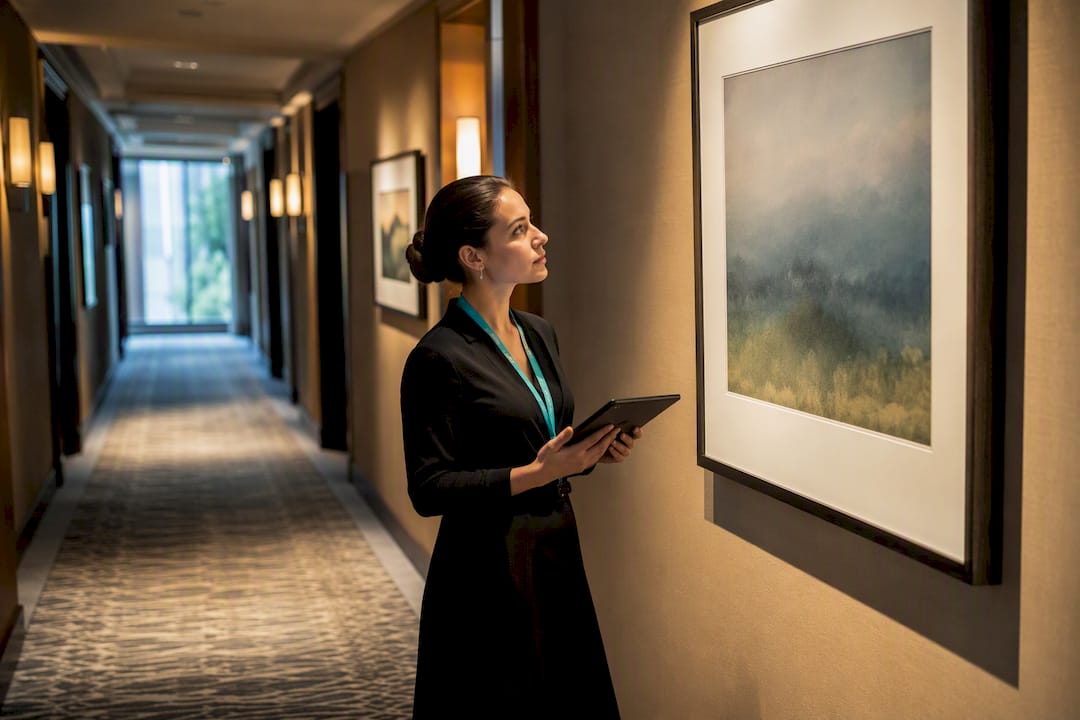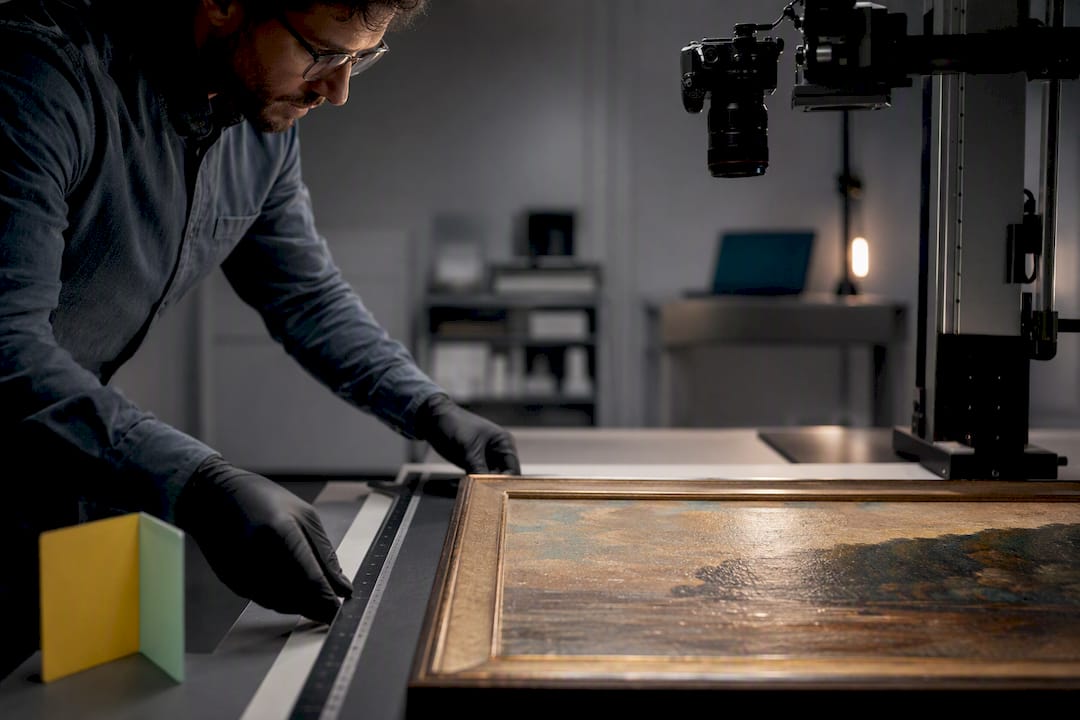

An online art showroom is defined as a virtual platform where artists and galleries display, manage, and sell artwork to a global audience without the constraints of a physical space. The industry term “virtual gallery” is also widely used, and both phrases describe the same core concept. Unlike a static portfolio website, a modern virtual gallery integrates e-commerce, metadata listing, exhibition scheduling, and buyer management into one system. Platforms built for this purpose give artists and gallery owners the tools to present work professionally, reach international collectors, and close sales securely. Artworksoft is one example of a system designed specifically to connect artwork, locations, and transactions in a single, organized environment.
What features define a modern online art showroom?
A professional virtual gallery is built on four core capabilities: high-resolution image presentation, structured metadata, exhibition management, and integrated sales tools. Each feature serves a distinct function in the buyer’s decision process.

High-resolution imagery and metadata are the foundation of any credible virtual art display. Buyers cannot touch or stand beside a work, so image quality and detail fill that gap. Thematic exhibitions with scheduling functionality allow galleries to group works by period, medium, or concept and publish them on a set timeline, which mirrors the experience of a physical opening.
Key features found in leading platforms include:
- High-resolution artwork images with zoom capability and multiple viewing angles
- Structured metadata fields covering dimensions, medium, year, edition size, and price
- Thematic exhibition scheduling that allows timed releases and curated groupings
- Secure enquiry and e-commerce modules with lead capture forms and payment gateways
- CRM and email marketing integration to manage collector relationships and follow-up campaigns
- Augmented reality (AR) and virtual reality (VR) support for immersive room visualization
Leading platforms incorporate thematic exhibition scheduling and high-resolution metadata listing as standard features because they directly improve visitor engagement and professional presentation. A buyer who can see a painting’s exact dimensions, view it in a simulated room, and inquire securely within the same interface is far more likely to complete a purchase.
Pro Tip: List every artwork with at least five metadata fields before publishing. Incomplete listings reduce buyer confidence and lower search visibility.
Backend tools matter as much as the front-end display. Inventory tracking, sales reporting, and CRM integration turn a showroom into a managed business operation rather than a static catalog. Many platforms now offer no-code tools that allow galleries to launch within hours, integrating CRM and marketing tools without separate subscriptions. That speed of setup removes a significant barrier for independent artists and small galleries.
What are the main benefits of adopting an online art showroom?
The primary benefit of a virtual gallery is cost reduction. Physical gallery space requires rent, insurance, installation labor, and event staffing. An online showroom eliminates most of those fixed costs while maintaining a professional presentation standard.
The five most significant benefits, in order of impact, are:
- Reduced overhead costs. Online showrooms reduce overhead drastically by eliminating physical venue needs, freeing budget for marketing and artist development.
- Global reach. A virtual art display is accessible to collectors in any country, at any time, without geographic restriction.
- 24/7 availability. Digital art platforms operate around the clock, facilitating global access to artwork and increasing artist visibility in ways physical galleries cannot match.
- Enhanced buyer confidence. Major platforms offer buyer-friendly policies such as satisfaction guarantees, free shipping, and transparent payment processes, which increase sales conversion rates.
- Immersive experience options. AR and VR tools let buyers visualize artwork in their own spaces before purchasing, reducing purchase hesitation.
The 24/7 accessibility point deserves emphasis. A physical gallery in New York operates on a fixed schedule and serves a local audience by default. A virtual gallery serves a collector in Singapore at 2:00 AM with the same quality of experience. That time and geography independence is the structural advantage that no physical space can replicate.
Collectors also benefit from advisory services and secure payment infrastructure that many platforms now include as standard. Collectors benefit from advisory services, secure payments, and return policies, which build the trust needed for high-value remote transactions.
How do you set up and manage a professional online art showroom?
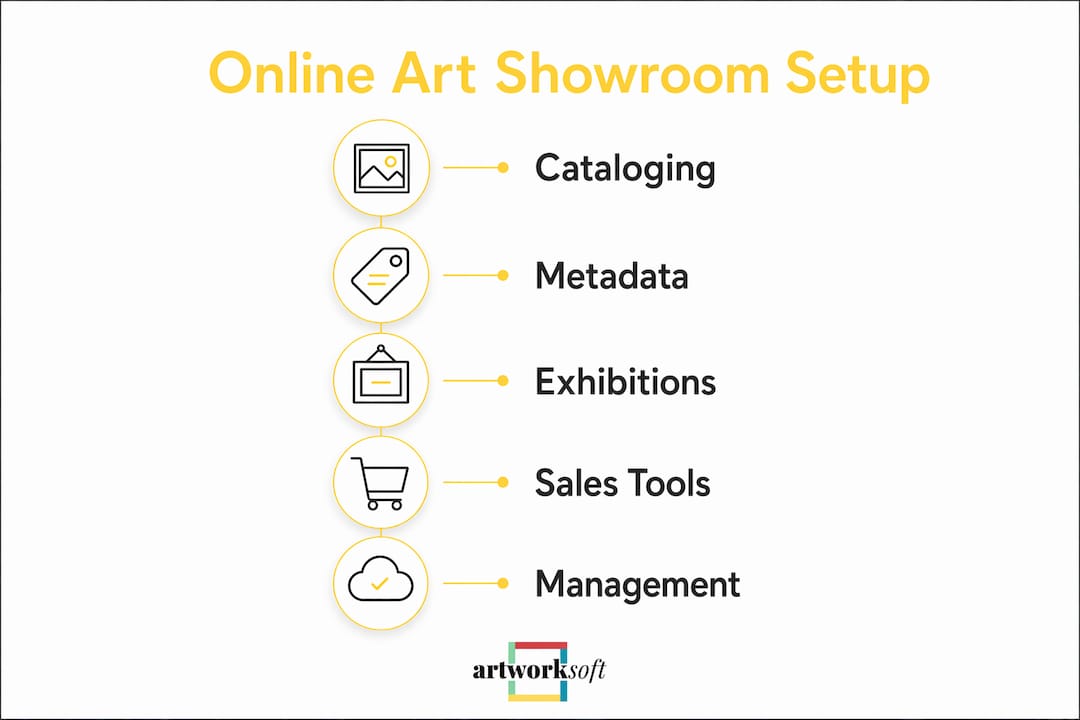
Setting up a professional online art showroom follows a clear sequence. Skipping steps, particularly metadata entry and branding configuration, produces a showroom that looks incomplete and reduces buyer trust.
- Catalog your artwork. Document each piece with high-resolution photographs, dimensions, medium, year of creation, edition details, and asking price. Tools like Artworksoft support structured artwork profile management to keep this data organized from the start.
- Choose a platform with no-code setup. No special software is required to create galleries on most modern platforms. Browser-based tools with drag-and-drop interfaces lower the technical barrier for artists without development experience.
- Configure white-label branding. Many generic marketplace platforms impose third-party branding, which dilutes gallery identity. Selecting a platform that supports custom domains and consistent branding throughout the purchase process protects professional identity.
- Build and schedule exhibitions. Group works thematically and set publication dates. Scheduled releases create anticipation and give collectors a reason to return.
- Activate sales and inventory tools. Connect payment gateways, configure pricing, and link inventory tracking so every sale automatically updates stock levels and generates transaction records.
| Setup stage | Primary tool type | Key output |
|---|---|---|
| Artwork cataloging | Inventory management system | Structured metadata records |
| Platform setup | No-code website builder | Live showroom URL |
| Branding configuration | White-label domain tools | Custom-branded buyer experience |
| Exhibition scheduling | Exhibition management module | Timed, themed collections |
| Sales activation | E-commerce and CRM integration | Secure transactions and lead data |
Pro Tip: Set up a custom domain before publishing any artwork. Changing the domain after launch breaks existing links and disrupts any search visibility you have already built.
Ongoing management requires the same discipline as the initial setup. Inventory records must stay current, sold works must be removed or marked promptly, and collector inquiries need a defined response workflow. Artworksoft addresses this by connecting artwork records, location tracking, and transaction history in one interface, so no detail falls through the gaps.
What emerging technologies are shaping online art showrooms?
AR and VR are the most significant technology shifts affecting virtual galleries right now. AR tools let buyers point a phone at a wall and see how a specific painting would look in that space at actual scale. VR tools create fully navigable gallery environments that replicate the physical experience of walking through an exhibition.
Key technology trends defining the 2026 virtual gallery environment include:
- AR room visualization for “try before you buy” placement previews
- VR exhibition spaces that replicate physical gallery navigation
- Mobile-first design ensuring full functionality on smartphones and tablets
- SEO-optimized artwork listings that surface individual works in search results
- Social media integration enabling direct sharing from gallery pages to collector networks
- Live guided tours conducted via video link, combining personal curation with digital reach
“Balancing tech advancements with user-friendly design is key to maintaining wide audience accessibility. AR and VR features that require technical setup or specialized hardware exclude a significant portion of potential buyers.”
Integrating AR and VR technologies boosts engagement through immersive browsing, but usability must remain intuitive for non-technical buyers. A gallery that requires a headset or a software download to view works will lose casual collectors before they reach the inquiry stage.
Mobile-friendly design is not optional. A significant share of art browsing happens on mobile devices, and a showroom that renders poorly on a phone loses those visitors immediately. SEO optimization for individual artwork pages also matters. A well-tagged listing for a specific artist or medium can surface in search results independently, bringing in buyers who were not already aware of the gallery.
Key Takeaways
An online art showroom is the most cost-effective and geographically unrestricted format for selling artwork professionally in 2026, provided it combines structured metadata, white-label branding, and integrated sales tools.
| Point | Details |
|---|---|
| Definition is specific | An online art showroom is a virtual platform combining display, e-commerce, and inventory management, not just a portfolio site. |
| Features drive sales | High-resolution imagery, structured metadata, and secure payment tools directly increase buyer confidence and conversion. |
| Cost advantage is structural | Eliminating physical venue costs frees budget for marketing, artist development, and technology investment. |
| Branding requires control | White-label platforms protect gallery identity; generic marketplaces dilute it with third-party branding. |
| Technology must stay usable | AR and VR features add value only when buyers can access them without technical frustration. |
The feature most galleries overlook
Most galleries launching online focus entirely on the front-end display. They spend hours on image quality and layout, then publish with no inventory system, no CRM connection, and no consistent branding. The result looks professional for about 30 seconds, until a buyer asks a question and gets a slow, disorganized response.
The galleries I have seen succeed online treat the backend with the same seriousness as the front-end. They track every inquiry, update inventory in real time, and maintain a consistent brand identity from the first page view through to the post-sale Certificate of Authenticity. That consistency is what converts a browser into a repeat collector.
White-label branding is the specific area where I see the most costly mistakes. Galleries that rely on a generic marketplace for their primary presence hand their collector relationships to that platform. When the platform changes its fee structure or algorithm, the gallery has no independent audience to fall back on. A custom domain with consistent branding, backed by a proper inventory and sales system, is the only durable foundation.
AR and VR features are worth adopting, but only after the fundamentals are solid. A gallery with poor metadata and no CRM does not need augmented reality. It needs a working catalog and a follow-up process. Technology should amplify a functioning operation, not substitute for one.
— Nealda
How Artworksoft supports online art showroom management
Artists and galleries that want a single system for inventory, sales, and professional documentation will find Artworksoft built for exactly that purpose.
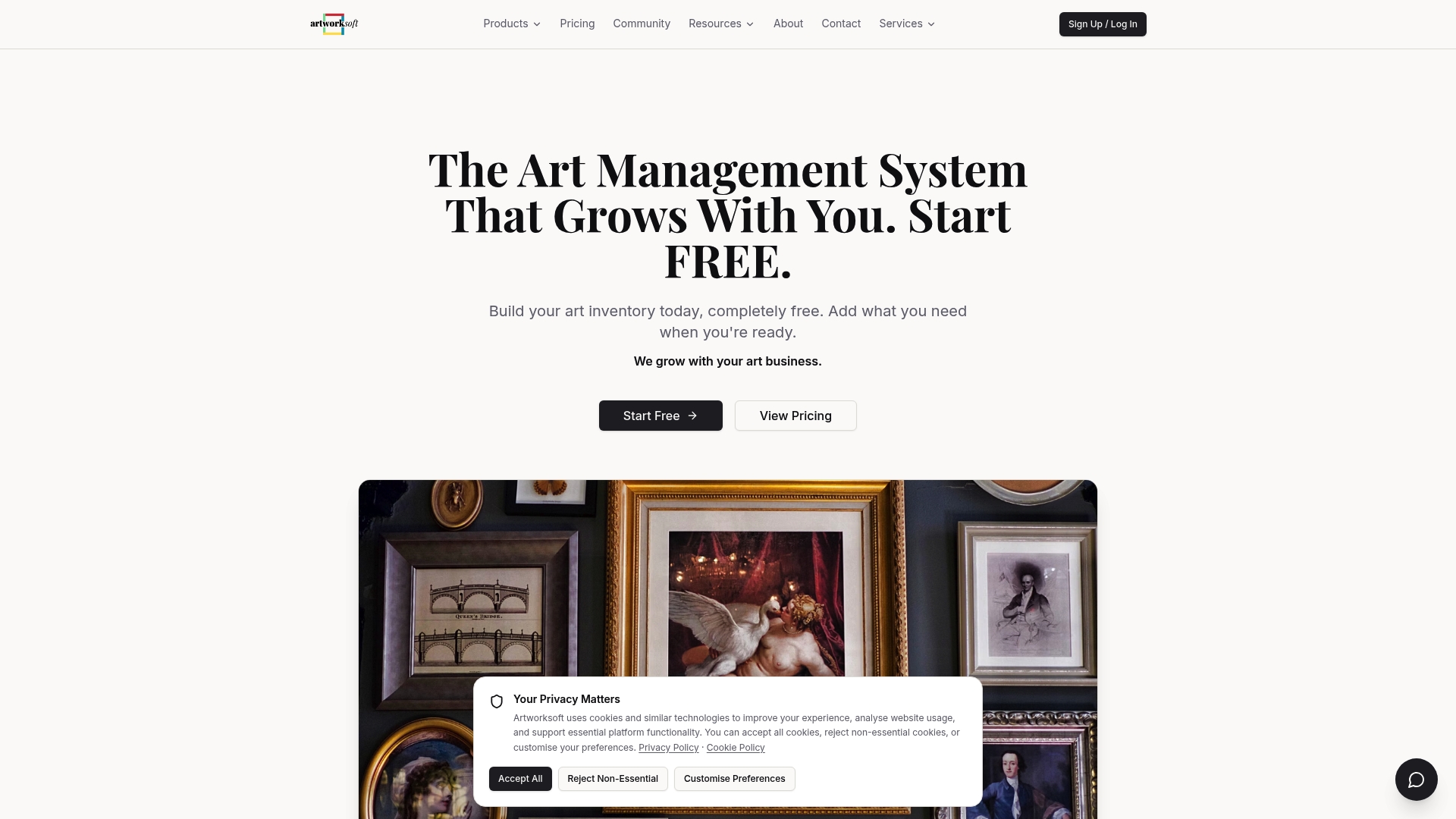
Artworksoft connects artwork records, location tracking, and transaction history in one interface. The platform supports structured art inventory management with valuation tools, Certificate of Authenticity generation, and sales tracking. Galleries can maintain a professional, branded presence without relying on third-party marketplaces that dilute their identity. For artists and collectors ready to build a well-documented, professionally managed online showroom, Artworksoft offers a free starting point with the tools to grow from first listing to full gallery operation.
FAQ
What is an online art showroom?
An online art showroom is a virtual platform where artists and galleries display, manage, and sell artwork to a global audience. It combines high-resolution image presentation, structured metadata, exhibition scheduling, and secure e-commerce in one system.
How is a virtual gallery different from a portfolio website?
A portfolio website displays work passively, while a virtual gallery includes active sales tools, inventory management, CRM integration, and buyer communication features. The distinction is the presence of a complete transaction and management infrastructure.
What does white-label branding mean for an online art showroom?
White-label branding means the gallery operates under its own domain and visual identity rather than a third-party platform’s branding. Maintaining consistent branding throughout the buyer experience improves trust and long-term collector relationships.
Do I need technical skills to set up an online art showroom?
No special software or coding knowledge is required. Most modern platforms are browser-based with no-code drag-and-drop tools, allowing galleries to launch a professional showroom within hours.
How do AR and VR improve online art sales?
AR lets buyers visualize artwork in their own space at actual scale before purchasing, which reduces hesitation on high-value pieces. VR creates navigable exhibition environments that replicate the physical gallery experience for remote collectors.