An art collection valuation report is a formal document that establishes the worth of artworks for insurance replacement, charitable donation, estate planning, sale, or loan collateral. The report carries weight only when it follows the Uniform Standards of Professional Appraisal Practice and comes from a qualified appraiser working to a stated intended use. Collectors who prepare documentation and photos in advance can turn a slow, expensive process into a fast, defensible one.
TL;DR:
- Qualified appraisals should follow USPAP standards, be signed by credentialed experts, and include detailed descriptions, provenance, condition, market analysis, and methodology.
- Collection summaries and market analyses are less formal and not suitable for legal or tax documentation, while insurance appraisals focus on current retail replacement costs.
- Properly organized records including provenance, photos, and condition notes significantly reduce appraisal costs and turnaround times.
- Fees vary based on scope, with per-item appraisals costing more and performance-based fees discouraged; timelines depend on the complexity and intended use.
- Choosing an appraiser requires verifying USPAP compliance, relevant credentials, sample reports, references, and clear scope agreements to ensure report defensibility.
Table of Contents
- What an art collection valuation report covers and the different report types
- Who can produce a defensible appraisal
- What a proper valuation report must include
- How to prepare your collection and paperwork before you hire an appraiser
- Cost, timeline, and common uses: what to expect
- How to choose an appraiser
- Using Artworksoft to prepare a valuation-ready collection report
- Legal considerations and implications of valuation reports
- Common challenges and pitfalls in art valuation and how to address them
- How market trends and artist reputation impact valuation
- Why collectors should invest in defensible, documented valuation reports
- Get your collection ready for its next valuation
- FAQ
- Sources
What an art collection valuation report covers and the different report types
Not every valuation is built the same way, and matching the report type to the intended use matters more than most collectors realize. A single-item qualified appraisal meets the IRS definition required for tax filings: it covers one object in depth, with the appraiser’s full methodology and credentials attached. A collection net-worth report aggregates many pieces into a single overview, useful for estate planning or a quick sense of portfolio value, but it rarely satisfies IRS documentation standards on its own.
Insurance replacement reports differ from both. They estimate what it would cost to replace a damaged or stolen piece with a comparable work in the current retail market, which often runs higher than fair market value. A market analysis is less formal still: it tracks trends and comparable sales without rendering a binding opinion of value, useful for research but not for tax or legal purposes.
The distinction that trips up most collectors is intended-use mismatch. An insurance replacement figure cannot substitute for the qualified appraisal the IRS requires for donation deductions, and a casual market estimate will not hold up in an estate dispute.
- Single-item qualified appraisals suit tax filings, IRS donation documentation, and legal proceedings.
- Collection summaries work for estate planning overviews, loan applications, and general portfolio tracking.
- Insurance replacement reports fit active policies and claims, using current retail comparables.
- Market analyses support research and pricing strategy, not formal filings.
For large collections, a prioritized approach often makes sense: commission full qualified appraisals for high-value or legally significant pieces, and use a structured collection summary for the remainder.
Who can produce a defensible appraisal
A report is only as strong as the person who signs it. USPAP, the Uniform Standards of Professional Appraisal Practice, sets the benchmark that financial institutions, courts, and tax authorities look for. According to the Appraisers Association of America, USPAP compliance requires documented methodology, independence from the outcome of the valuation, and ethical conduct that holds up under scrutiny. An appraiser who cannot confirm USPAP compliance in writing is a risk worth avoiding.
Credentials signal that an appraiser has been tested against these standards rather than simply claiming expertise. Useful affiliations include:
- American Society of Appraisers (ASA) designation, which requires exams, experience review, and adherence to USPAP.
- Appraisers Association of America membership, which maintains ethics standards and specialty rosters for fine art.
- Participation in professional committees or continuing education programs tied to either organization.
The USPAP standard is the single credential that matters most across insurance, tax, and legal contexts, because the Appraisers Association of America notes it is the basis major institutions use to accept or reject a report.
For high-value items, the IRS Art Appraisal Services office reviews submitted valuations and can issue a Statement of Value for a fee, a step some collectors take before filing to preempt disputes. AAS also publishes photographic and formatting guidance that shapes how a compliant report should look, even for collectors who never request a formal review.
What a proper valuation report must include
A complete report reads less like an opinion and more like a case file. Appraisers who skip sections or substitute a bare number for documented reasoning produce reports that insurers, tax offices, and courts can challenge.
- Cover elements: a letter of transmittal, the effective date of valuation, a clear statement of intended use, and the appraiser’s signature and certification.
- Object identification: detailed descriptions, measurements, medium, inscriptions, and any distinguishing marks.
- Provenance and history: ownership chain, exhibition record, and publication history where available.
- Condition documentation: a written condition statement paired with high-resolution photographs, formatted to the standards IRS Publication 5497 outlines for submitted appraisals.
- Market evidence: comparable sales with dates, venues, and an explanation of why each comparable is relevant.
- Valuation approach: the methodology used, whether sales comparison, cost, or income based, and how the appraiser reconciled multiple approaches into a final figure.
- Adjustments and rationale: a written explanation for any upward or downward adjustment from comparables, not just a revised number.
Collectors can compare a prepared report against our own report format guidance to check for missing sections before accepting a final deliverable, and our comparable sales overview explains what strong market evidence looks like in practice.
Pro Tip: Ask for a sample report before hiring an appraiser; a report with unexplained adjustments or no listed comparables is a sign of weak methodology, not efficiency.
How to prepare your collection and paperwork before you hire an appraiser
Appraisers bill for research time, and most of that time goes toward reconstructing information collectors already have scattered across emails, invoices, and old folders. Consolidating records before the first phone call shortens the engagement and lowers the fee.
- Gather provenance records, original invoices, sales receipts, exhibition catalogs, and any prior attribution letters for each piece.
- Photograph every work under consistent lighting, including close-ups of signatures, edges, and any damage or restoration.
- Write baseline condition notes using a standard template so every entry captures the same fields.
- Group pieces by estimated value and by intended use, separating donation candidates from insurance or estate items.
- Package everything into a format appraisers can use directly: PDFs for documents, labeled image folders, and a single inventory spreadsheet rather than loose files.
A structured approach to this stage often determines whether an appraisal engagement takes days or weeks. Our practical checklist for organizing collection records walks through condition reporting and documentation fields in more detail, and our guide on how condition affects valuation explains why photo quality and written notes carry real weight in the final figure. Collectors moving pieces for in-person inspection should also confirm insured transport and condition reporting before the artwork leaves storage, a step covered in Move Craft Moving Solutions’s guidance on agreed-value coverage for fine art shipments.
Cost, timeline, and common uses: what to expect
Appraisal fees vary by scope, specialty, and whether the engagement covers one object or an entire collection. Per-item qualified appraisals typically carry higher per-piece costs because each one requires full documentation and signed certification. Collection-level summaries can cost less per item when appraisers can work from organized records rather than reconstructing history from scratch. Fees charged as a percentage of appraised value are a practice most professional standards organizations discourage, since it creates an incentive to inflate the number.
Timelines follow the same logic: a single qualified appraisal for a high-value piece can take days to a few weeks depending on research complexity, while a full collection review stretches longer, particularly when provenance gaps require outside research.
IRS rules set firm thresholds collectors cannot work around. The instructions for Form 8283 require a written qualified appraisal attached to the tax return for donated art valued at $20,000 or more, with separate Form 8283 filing requirements for any item over $5,000. For charitable donations, the appraisal must be signed and dated no earlier than 60 days before the gift and must be completed before the return is filed.
- Insurance appraisals move faster since they do not carry IRS dating restrictions.
- Donation appraisals require the tightest timeline discipline because of the 60-day and filing-deadline rules.
- Estate appraisals often need broader collection coverage, which extends total turnaround time.
High-value donated items can trigger IRS review through Art Appraisal Services, which may request a Statement of Value before accepting the claimed deduction.
How to choose an appraiser
Selecting the right appraiser is the single decision that determines whether a report holds up when it matters. A short, direct evaluation process catches most problems before an engagement begins.
- Confirm USPAP compliance in writing and ask how recently the appraiser completed required continuing education.
- Check for ASA or Appraisers Association of America credentials relevant to the collection’s specialty, whether that is postwar painting, decorative arts, or photography.
- Request a sample report to review structure, comparables, and how adjustments are explained.
- Ask for references from past clients who used the appraisal for the same intended use, whether insurance, donation, or estate filing.
- Clarify scope, deliverable format, timeline, and total fee in a written engagement letter before work begins.
Pro Tip: Ask the appraiser directly how they select comparables and how recently those comparable sales occurred; a vague answer here usually predicts a vague report.
Watch for warning signs during this process. An appraiser who quotes a fee as a percentage of the final value has a built-in incentive to inflate the number, a practice professional standards bodies caution against. Opaque methodology, missing comparables, or an unwillingness to share a redacted sample report are reasons to keep looking.
Using Artworksoft to prepare a valuation-ready collection report
Collectors who keep inventory, provenance, and condition data scattered across spreadsheets and folders lose time every time an appraiser requests documentation. Our platform organizes that information in one place so the preparation work described above happens continuously rather than in a scramble before an appraisal deadline.
- A structured valuation formula tracks pricing logic for each piece without relying on guesswork.
- PDF export tools generate Certificates of Authenticity, invoices, and collection reports in formats appraisers and institutions can use directly.
- Image attachments keep high-resolution photos tied to each object record, including condition-specific shots.
- Movement and location tracking maintains a chain of custody that supports provenance claims.
A typical workflow runs from inventory entry, to attaching provenance documents and photos, to exporting an appraisal-ready packet that gets shared directly with a qualified appraiser. This does not replace a USPAP-compliant appraisal, but it removes the documentation bottleneck that slows most engagements down, a point we cover further in our AI valuation research guidance.
Legal considerations and implications of valuation reports
A valuation report is a legal document the moment it supports a tax filing, an estate settlement, or an insurance claim. Courts and tax authorities can and do challenge reports that lack documented methodology, and a collector who relies on an unsupported figure bears the consequence, not the appraiser.
For donated art, the instructions for Form 8283 make clear that missing or noncompliant appraisals put the entire deduction at risk, regardless of how reasonable the claimed value might be. The appraisal must meet the qualified appraisal definition, come from a qualified appraiser, and fall within the required dating window relative to the donation.
Estate valuations carry similar exposure. Heirs and estate representatives can face disputes among beneficiaries or challenges from tax authorities when a valuation lacks reconciled comparables or a clear statement of methodology. Insurance valuations present a different risk: an outdated or poorly documented replacement estimate can leave a collector underinsured at the moment a claim is filed, when the gap becomes expensive rather than theoretical.
Collectors should treat the valuation report as evidence meant to survive scrutiny, not as a formality. Retaining the full report, the appraiser’s credentials, and the underlying comparables protects against disputes that can surface years after the report was issued.
Common challenges and pitfalls in art valuation and how to address them
The most frequent problem collectors run into is a documentation gap: missing provenance, inconsistent condition records, or photos taken years apart under different lighting. Appraisers either spend extra billable hours filling these gaps or issue a report with caveats that weaken its standing.
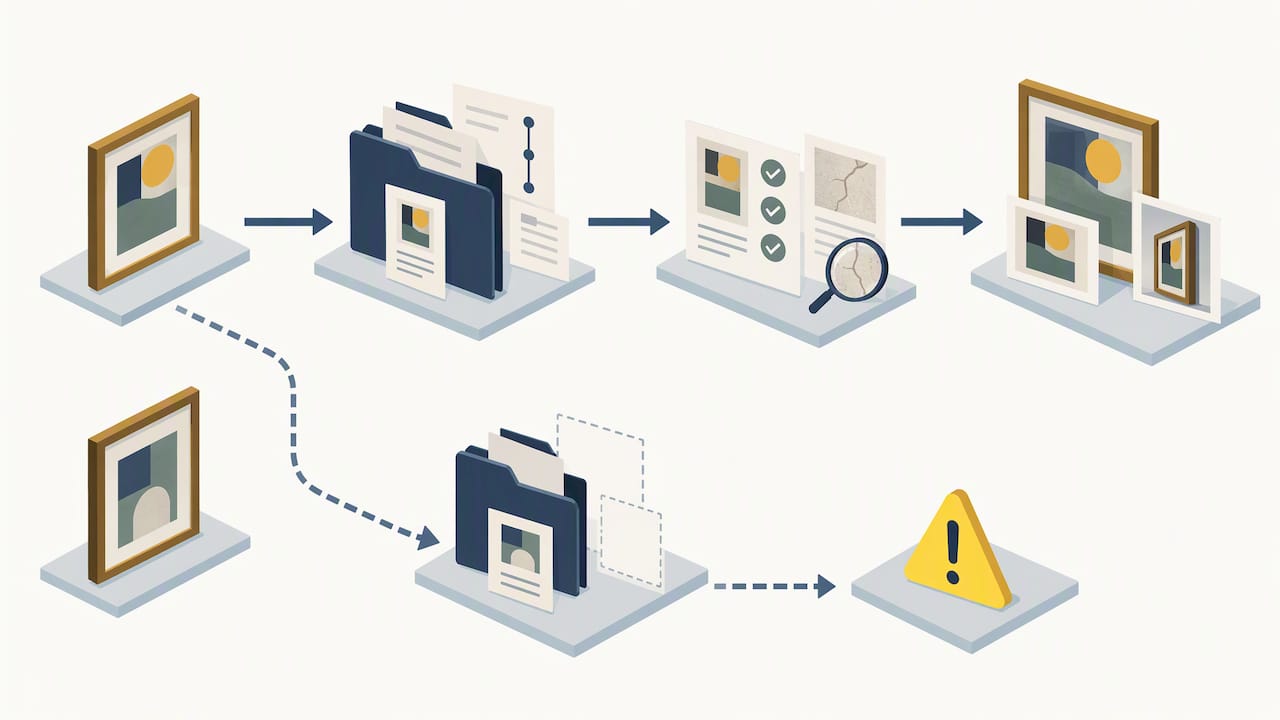
Attribution disputes present a harder challenge. When authorship is uncertain, an appraiser may need to qualify the valuation or recommend further authentication research before issuing a final figure, which can stall the entire engagement. Addressing this early, before an appraiser is hired, by consulting authentication research on how attribution affects price saves time later.
Inconsistent comparables create another common pitfall. A report built on comparables from a different market tier, an unrelated medium, or sales a decade old will not hold up to challenge. Collectors should ask appraisers directly how recent and how relevant their comparable sales are, a question covered in more depth in the appraiser-selection checklist above.
Finally, collectors sometimes conflate valuation types, using an insurance replacement figure on a tax filing or a casual market estimate in an estate proceeding. Matching report type to intended use, as outlined earlier, prevents this from becoming a costly mistake.
How market trends and artist reputation impact valuation
An artwork’s value moves with two forces that interact constantly: the broader market and the artist’s standing within it. Shifts in collector demand for a particular period, medium, or movement can move prices for an entire category of work, independent of any single artist’s reputation. A valuation report that ignores current market direction and relies solely on older comparable sales risks understating or overstating a piece’s worth.
Artist reputation adds a second layer. Gallery representation, museum acquisitions, major exhibitions, and auction results all feed into how appraisers weigh comparables for a given name. A living artist whose market is still forming presents a different valuation challenge than an established estate with decades of auction history to draw on.
This is why comparable selection matters so much in a defensible report. An appraiser who can point to recent, relevant sales at comparable venues produces a figure that reflects where the market actually sits today, not where it sat when the piece was last appraised. Collectors reviewing a draft report should ask whether the comparables reflect current conditions or outdated benchmarks, since a market can shift meaningfully within a few years for a given artist or category.
Why collectors should invest in defensible, documented valuation reports
A valuation report only protects a collector when it can survive a challenge, whether that challenge comes from an insurer after a loss, a tax examiner after a donation, or an heir contesting an estate distribution. Collectors who treat documentation as an ongoing habit, rather than a scramble before a deadline, consistently get faster, cheaper, and more defensible reports.
The clearest lesson from how these reports get challenged is that undocumented confidence does not hold up. A number without comparables, adjustments, and provenance behind it is an opinion, not an appraisal. Building that paper trail before you need it is the most practical form of protection a collector has.
— Nealda
Get your collection ready for its next valuation
Preparing documentation before an appraiser engagement is the single biggest lever collectors have over cost and turnaround time, and our platform is built around that preparation work. Our Free Plan lets you start organizing inventory, photos, and provenance records at no cost, while the Provenance Plan, from $5 per month, adds the documentation depth larger collections need.

For collectors who prefer a guided path, our Onboarding & Collection Management Service sets up your collection records and documentation structure for you, so your next appraisal engagement starts with organized records instead of scattered files. Start free today and see how organized documentation speeds up your next valuation report.
FAQ
What is the 70/30 rule in art?
There is no universally recognized rule tied to formal art appraisal standards or IRS guidance. Collectors sometimes use the phrase informally to describe pricing or commission splits in gallery sales, but it has no fixed meaning in valuation methodology, so any specific figure should be confirmed directly with the party using it.
How do I find out the value of my artwork?
The reliable path is a written appraisal from a qualified appraiser who follows USPAP standards, since insurers, tax authorities, and courts generally require this level of documentation. For a general sense of market direction before committing to a formal appraisal, reviewing recent comparable sales for similar artists or categories offers a useful starting point.
Is there an app to appraise art for free?
Tools exist that offer AI-assisted valuation estimates for research purposes, including features within our own platform, but these estimates are not a substitute for a signed qualified appraisal. The IRS requires a qualified appraisal from a qualified appraiser for donation deductions and similar filings, which no automated tool currently provides.
What is the average cost of an art appraisal?
Appraisal costs vary widely based on scope, specialty, and whether the engagement covers a single item or a full collection, with per-item qualified appraisals typically costing more than collection-level summaries. Fees charged as a flat rate or hourly rate are standard practice, while percentage-of-value fees are discouraged by professional appraisal organizations because they create a conflict of interest.
What must a qualified appraisal include for IRS donation purposes?
A qualified appraisal for IRS purposes must come from a qualified appraiser, be signed and dated no earlier than 60 days before the donation, and be completed before the tax return is filed. The Form 8283 instructions set separate documentation requirements for items over $5,000 and require the signed appraisal itself to be attached for items valued at $20,000 or more.