
Authentication is the single most powerful determinant of artwork price outside of the artist’s reputation itself. A confirmed attribution can multiply a work’s value many times over, while a disputed or revoked one can render it commercially worthless overnight. For collectors and investors operating in 2026, understanding how authentication affects artwork price is not optional. It is the foundation of every sound acquisition and exit decision.
- Authenticated works command measurable price premiums because buyer confidence rises when legitimacy is confirmed.
- Provenance documentation, including ownership history, exhibition records, and catalogue raisonné inclusion, directly elevates both sale probability and hammer price.
- Expert opinion from recognized appraisers, artist foundations, and scholarly committees signals trust in an otherwise opaque, illiquid market.
- Unauthenticated or disputed works face reduced liquidity, lower bids, and narrower access to premier auction venues.
- Authentication opens the door to higher-tier sales channels, institutional buyers, and stronger resale positioning.
How authentication affects artwork price: the core mechanics
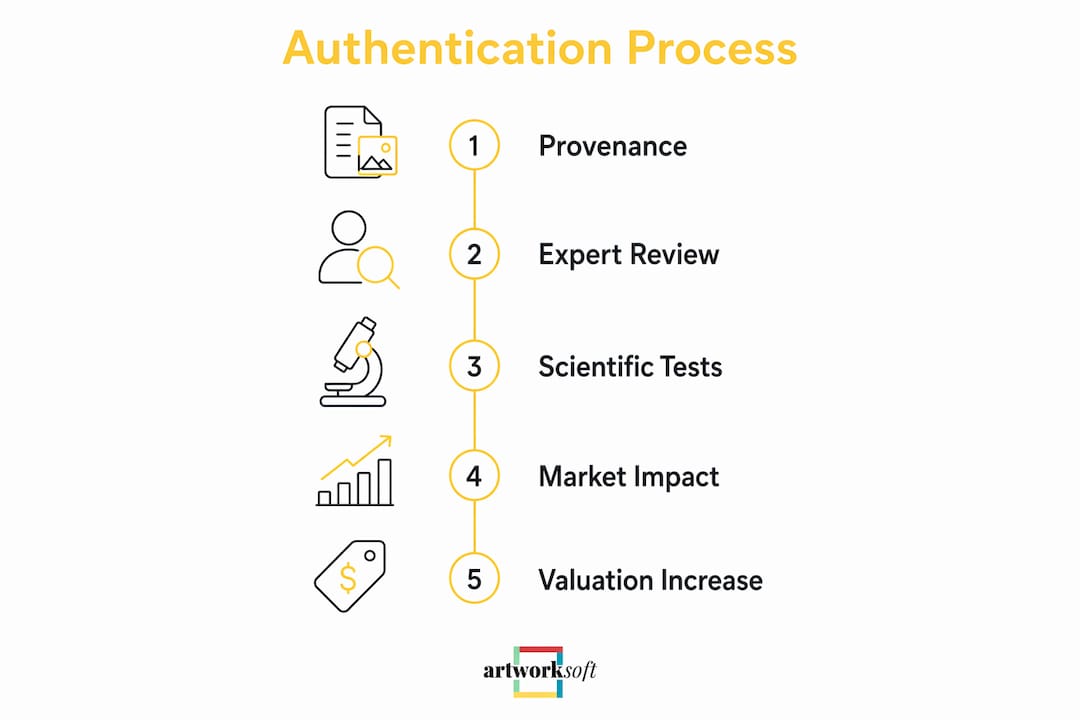
Authentication is a weight-of-evidence process, not a binary verdict. It draws on provenance documentation, connoisseurship, scientific analysis, and scholarly consensus to confirm that a work is what it claims to be. Each layer of evidence adds to the market’s confidence, and that confidence translates directly into price.
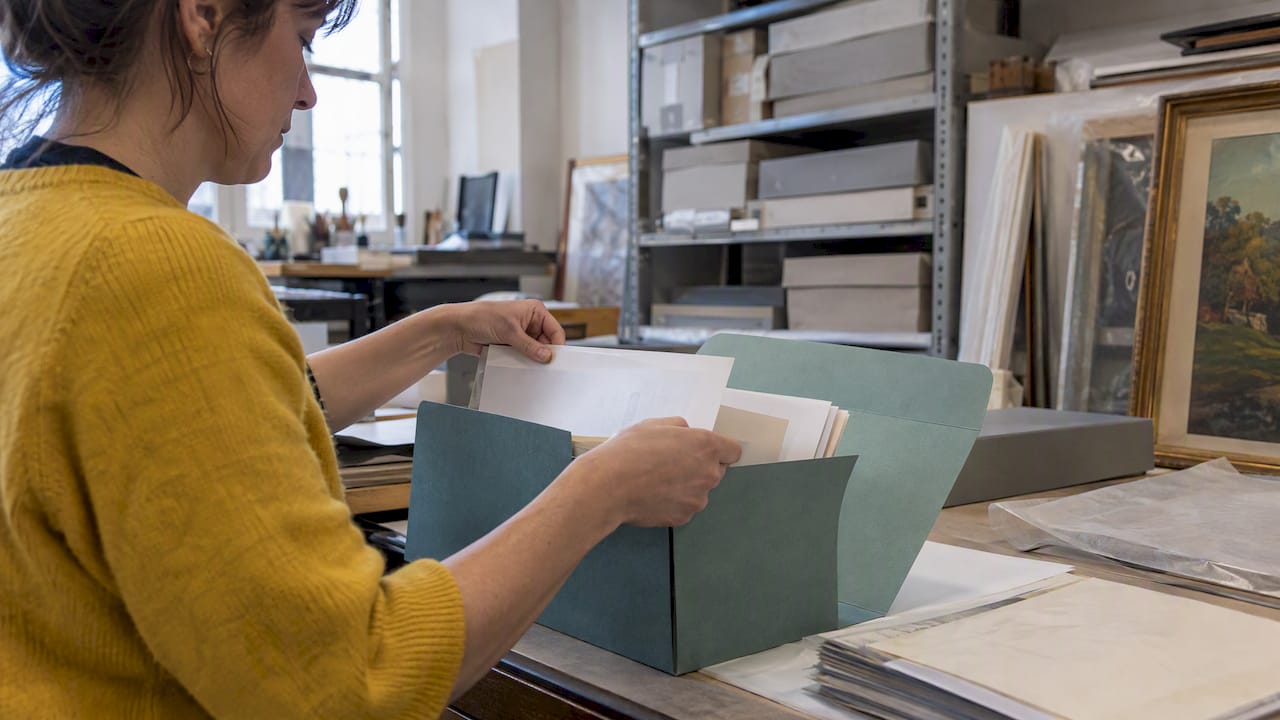
Provenance operates like a chain of title. Ownership history, descent records, past auction appearances, exhibition credits, and catalogue raisonné inclusion all function as links in that chain. When the chain is complete and credible, buyers pay more. When it has gaps, they discount accordingly or walk away.
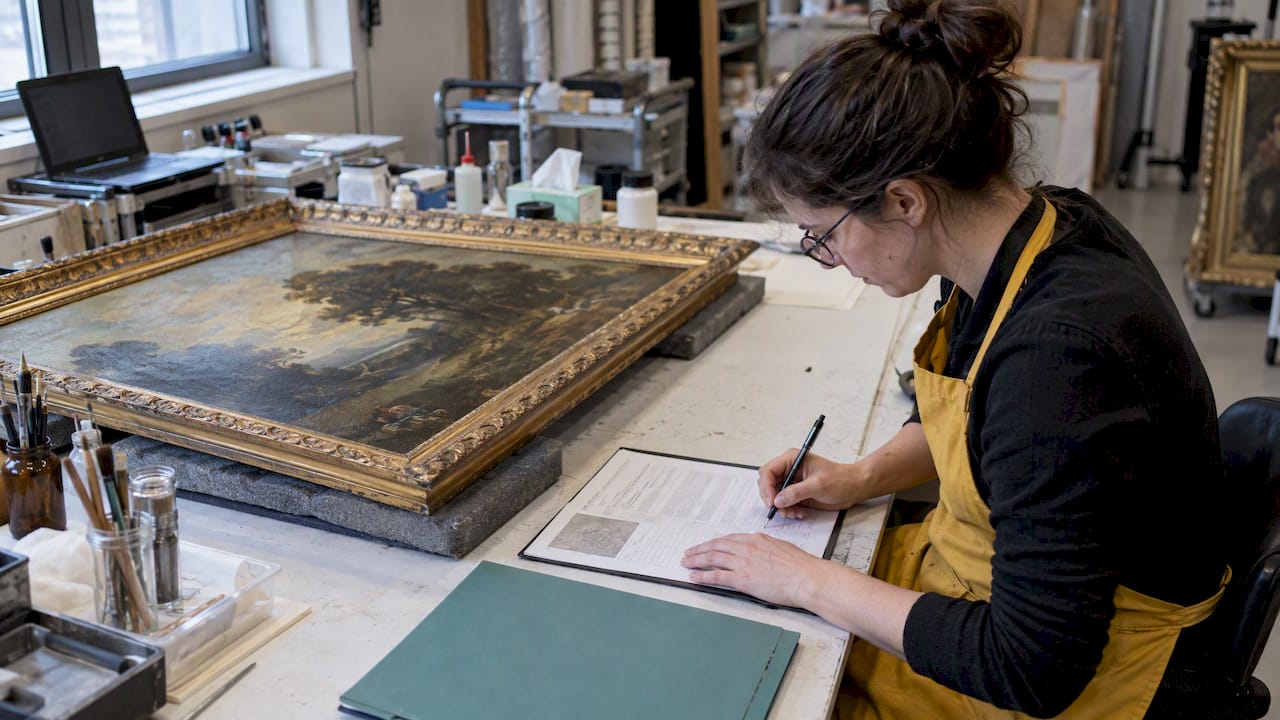
The Catalogue Raisonné is the most authoritative scholarly record in this process. It catalogs every known work by an artist, with attributions, dimensions, provenance notes, and exhibition history. Inclusion in a catalogue raisonné is widely treated as the gold standard of authentication, and its impact on price is measurable and significant. Traditional connoisseurship, which relies on stylistic analysis and expert eye, works alongside scientific methods such as pigment analysis and infrared reflectography to build the full evidentiary picture.
- Provenance dimensions: pedigree, exhibition history, literature coverage, and certification each contribute independently to price formation.
- Connoisseurship: stylistic and historical analysis by recognized experts establishes attribution.
- Scientific analysis: technical testing confirms material consistency with the claimed period and artist.
- Catalogue raisonné inclusion: the definitive scholarly record that anchors market confidence and supports valuation.
- Certification: physical testimonials from artists, foundations, or expert committees add a formal layer of trust.
Authentication also reduces the information asymmetry that makes art markets inherently risky. Buyers in an unregulated, illiquid market cannot independently verify what they are purchasing. Expert authentication and documented provenance serve as the market’s substitute for the transparency that regulated financial markets provide by default.
Who authenticates art and how their opinion shapes market value
The authentication ecosystem involves several distinct professional categories, each carrying different levels of market authority. Appraisers assess value based on comparable sales and condition. Art historians and connoisseurs evaluate attribution through stylistic analysis and archival research. Artist foundations, such as the Andy Warhol Art Authentication Board (which operated until 2011), hold the highest authority for their respective artists’ work. Expert committees assembled by auction houses or independent bodies provide collective scholarly judgment.
The Hephaestus Authentication Protocol represents a high evidentiary standard used by market-leading institutions. It combines provenance research, technical analysis, and expert review into a structured, documented process that courts and major auction houses recognize as credible. When a work passes this protocol, the documentation it generates carries weight in subsequent resale negotiations.
- Independent appraisers: provide valuation and condition assessments; useful for insurance and estate purposes.
- Art historians and connoisseurs: establish attribution through scholarly analysis; their published opinions directly affect price.
- Artist foundations and boards: hold definitive authority for specific artists; inclusion or rejection by these bodies can make or break a sale.
- Auction house specialists: combine market knowledge with scholarly access; their pre-sale authentication decisions set reserve prices.
- Expert committees: provide collective judgment that reduces the risk of individual bias or conflict of interest.
Fee structures for professional authentication services are typically based on the effort and expertise required, not on the artwork’s value. This structure protects impartiality. Collectors are generally advised to pursue formal authentication for artworks valued above $5,000; scientific testing is reserved for works above $50,000, since the cost-to-benefit ratio below that threshold is poor.
Pro Tip: Time authentication to coincide with planned sales or major exhibition opportunities. A freshly issued expert opinion or foundation certificate carries more market weight than documentation that is several years old, and scheduling authentication six to twelve months before a planned sale gives time to address any questions that arise.
Conflicts of interest are a persistent challenge in this ecosystem. Curators, gallery owners, and foundation board members all have financial stakes in the supply and attribution of works they oversee. For this reason, independent authenticators and auction house specialists are often the more reliable choice when impartiality is critical to a transaction.

Scientific methods that support higher valuation tiers
Scientific authentication does not replace expert opinion. It supplements it, adding a layer of objective, reproducible evidence that strengthens the overall case for attribution. The combination of traditional connoisseurship and technical analysis creates the most defensible authentication record in the market.
- Pigment analysis: identifies the chemical composition of paints to confirm consistency with the claimed period and region.
- Radiography (X-ray): reveals underdrawings, pentimenti, and structural changes invisible to the naked eye.
- Infrared reflectography: maps underdrawings and compositional revisions, particularly useful for panel paintings and Old Masters.
- Carbon-14 dating: establishes the age of organic materials in canvas, wood supports, or binding media.
- Dendrochronology: dates wooden supports by analyzing tree ring patterns, highly reliable for pre-1900 panel paintings.
- Ultraviolet fluorescence: detects later restorations and overpainting that may affect attribution or condition assessment.
- Multispectral imaging: captures reflectance data across wavelengths to reveal hidden layers and surface details.
Scientific testing is reserved for high-value works, generally those above $50,000, because the cost-to-benefit ratio below that threshold is unfavorable. A full technical analysis from a qualified conservation laboratory can run from several thousand dollars to well above $10,000 depending on the methods required.
| Method | Primary Purpose | Valuation Impact |
|---|---|---|
| Pigment analysis | Confirms period-consistent materials | Rules out modern forgeries; supports attribution |
| Radiography | Reveals underdrawings and revisions | Corroborates artist’s working process |
| Infrared reflectography | Maps compositional changes | Strengthens Old Master attributions |
| Carbon-14 dating | Dates organic materials | Establishes age range for support materials |
| Dendrochronology | Dates wooden supports | High-precision dating for panel paintings |
| UV fluorescence | Detects later restorations | Clarifies condition and originality |
| Multispectral imaging | Reveals hidden layers | Adds depth to attribution evidence |
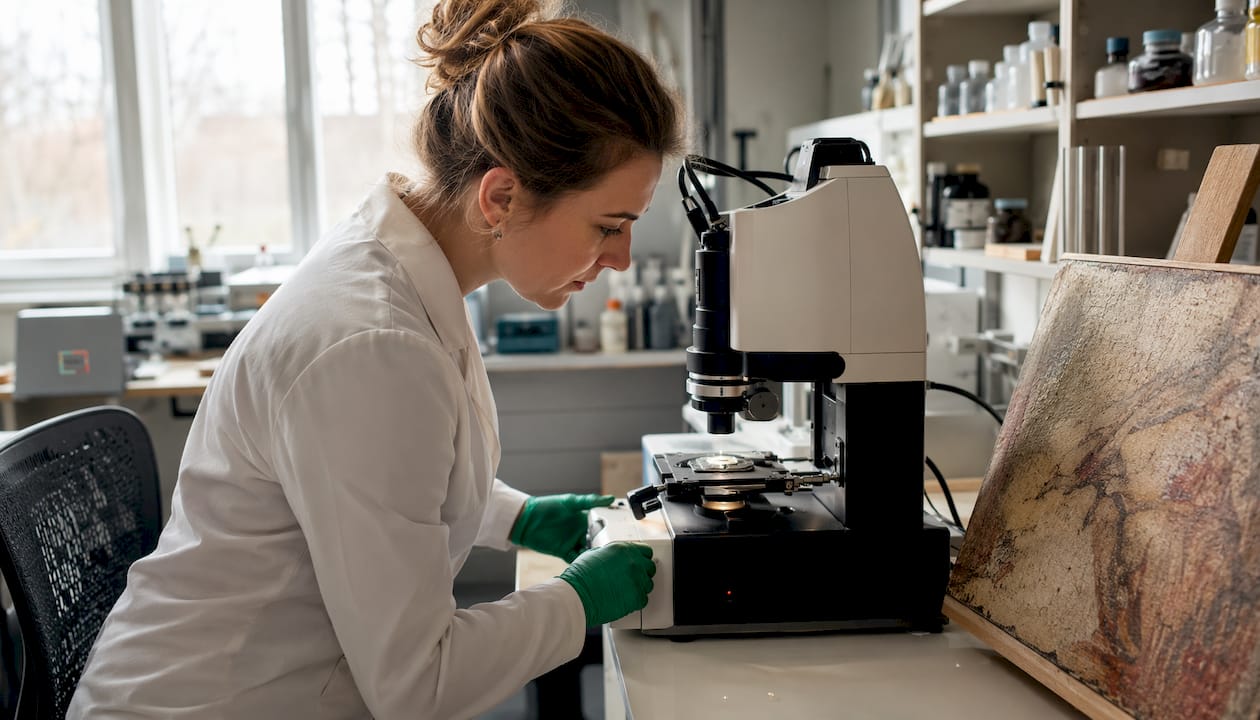
Technological advances continue to refine these methods. Machine learning models trained on authenticated works are now being applied to stylistic analysis, offering a computational layer that complements human connoisseurship. For collectors acquiring works in the $50,000 and above range, a technical analysis report from a recognized laboratory is increasingly expected by institutional buyers and major auction houses.
Legal and market forces that tie authentication to price
The legal consequences of a failed authentication can be severe. When a work is proven to be a forgery, legal pressure often compels the owner to mark or destroy it, rendering it commercially worthless regardless of its aesthetic qualities. This outcome is not theoretical. The Metropolitan Museum of Art’s Odalisque en Grisaille, long attributed to Jean-Auguste-Dominique Ingres, lost roughly 90% of its attributed value after scholars determined it was painted by his apprentice Armand Cambon, dropping from approximately $1,000,000 to $100,000.
The Salvator Mundi case illustrates the opposite trajectory and its fragility. The painting sold for $60 in 1958, was authenticated by da Vinci specialist Martin Kemp using infrared reflectography and X-ray evidence, and sold at Christie’s in November 2017 for $450.3 million. Subsequent doubts about the attribution surfaced immediately after the sale, and the painting has not been publicly exhibited since. The price held, but the reputational damage to the authentication was immediate and lasting.
- Forgery risk: undetected fakes suppress prices across an artist’s market when discovered, affecting all owners of works by that artist.
- Deauthentication: revocation of a prior authentication can cause catastrophic value loss, sometimes exceeding 90%.
- Legal liability: sellers who knowingly misrepresent attribution face fraud claims; buyers who relied on false authentication may seek rescission.
- Negotiation leverage: a well-documented authentication record strengthens the seller’s position and reduces buyer demands for price concessions.
- Market reputation: in the US and UK, reputational mechanisms drive greater price stability and authentication transparency than formal state regulation.
France’s Marcus Decree, enacted in 1981, attempted to regulate the authentication process through state mandate. Comparative research shows it had limited impact on price formation or attribution volumes compared to the self-regulated systems operating in the US and UK art markets. Market-driven reputational accountability, enforced through auction house policies and expert network standards, proves more effective at maintaining pricing integrity.
The Hahn v. Duveen case remains instructive. Expert Joseph Duveen publicly questioned the attribution of a painting without having examined it, and the mere expression of doubt was enough to collapse a pending sale to the Kansas City Art Museum. Authentication disputes do not need to be resolved against a seller to destroy value. The question alone is often sufficient.
Research findings that quantify authentication’s price impact
The financial case for authentication is well documented in peer-reviewed research. Provenance information, the primary proxy for authentication quality in auction data, increases hammer prices by up to 54% and raises annualized returns by 5%–16% compared to works sold without documented provenance.
Each provenance dimension contributes independently. Literature coverage, including catalogue raisonné inclusion and citations in authoritative art history publications, drives hammer prices up by 53.5%. Exhibition history adds 41.9%. Pedigree documentation raises prices by 20.7%, and certification by recognized experts or foundations adds 13.9%. These are not cumulative in a simple additive sense, but works with multiple strong provenance dimensions consistently outperform those with thin documentation.
The Peter Brueghel the Younger case provides one of the clearest natural experiments available. When leading expert Klaus Ertz published a definitive catalogue raisonné in 2000 clarifying attributions among autograph works, atelier pieces, and follower copies, buyers became willing to pay roughly 60% more for confirmed autograph works at auction. The catalogue raisonné did not change the paintings themselves. It changed what the market knew about them.
- Provenance increases the probability of a work selling at auction by up to 4%.
- Exhibition in prominent museums raises sale probability by up to 5.4%.
- Literature coverage, including catalogue raisonné inclusion, raises sale probability by 2.4%–5.1% depending on the type of reference.
- Authenticated works with strong provenance see annualized returns 5%–16% higher than comparable unauthenticated works.
- Professional authentication is recommended for works above $5,000; scientific testing above $50,000.
Deauthentication scenarios show the reverse with equal force. When forgeries are discovered within an artist’s body of work, the contamination effect depresses prices for all works by that artist, including genuine ones. Collectors holding authenticated works by artists whose markets have been compromised by forgery scandals face collateral damage even when their specific pieces are not in question. This underscores why art identification and traceability matter not just at acquisition but throughout the holding period.
Authentication is also a self-reinforcing market mechanism. As prices rise, the financial incentive to obtain expert authentication increases. As more works receive credible authentication, market confidence grows, which supports higher prices. This cycle benefits collectors who invest in thorough documentation early, because the documentation compounds in value alongside the work itself.
Protect your collection with Artworksoft

Artworksoft gives collectors and investors the documentation infrastructure that authentication demands. The platform supports the creation of Certificates of Authenticity, structured provenance records, and professional valuation reports, all organized within a single collection management system. Every artwork profile can store expert opinions, exhibition history, literature references, and condition reports, the exact provenance dimensions that research links to higher hammer prices and stronger resale outcomes.
For collectors managing works across multiple locations or preparing for sale, Artworksoft’s art inventory system connects authentication documentation directly to transaction records, so the full provenance chain is always accessible and presentation-ready. Turn your collection into a documented asset that buyers and auction specialists can evaluate with confidence.
Key Takeaways
Authenticated artworks consistently command higher prices, sell more reliably, and generate stronger returns than works with thin or disputed provenance documentation.
| Point | Details |
|---|---|
| Provenance drives premiums | Documented provenance raises hammer prices by up to 54% and annualized returns by 5%–16%. |
| Catalogue raisonné inclusion | A definitive catalogue raisonné can increase buyer willingness to pay by roughly 60%, as the Brueghel case shows. |
| Authentication thresholds | Formal professional authentication is advised for works above $5,000; scientific testing is recommended only for works valued above $50,000. |
| Deauthentication risk | A revoked attribution can reduce a work’s value by 90% or more, as the Ingres/Cambon case demonstrates. |
| Market reputation over regulation | US and UK reputational systems produce stronger price stability than state mandates like France’s Marcus Decree. |